Showing posts with label Steven Spielberg. Show all posts

Thursday, July 7, 2016

Film Friday: The BFG (2016)

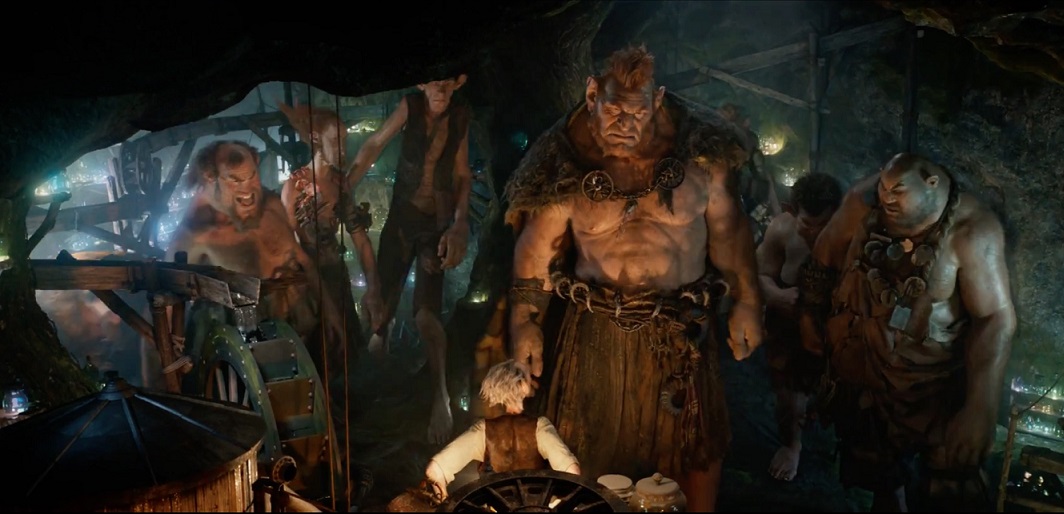
When Steven Spielberg announced he was turning Roald Dahl’s book The BFG into a movie, I suspect a lot of people had the same reaction I did: “huh… I never heard of it.” But kids movies are big business and Spielberg is a talented director and a lot of the people who do know this book currently have kids, so I assumed it would be huge. But it wasn’t. And I know why it wasn't.

The Plot

The BFG is a kids story from the 1980’s. It involves a giant who roams Britain at night blowing dreams into the rooms of little kids. Why he does this isn’t very clear except that he captures dreams and then seems to like dispensing them to some kids because that gives him charm.

One night, this giant is spotted by a little girl who lives in an orphanage. Her name is Sophie, and she’s an insomniac. In a panic, the giant grabs the girl and takes her with him back to giant country. He does this because he’s afraid that humans would hunt the giants if they knew that the giants existed. As an aside, the other giants are all cruel, “cannibals” (they eat humans). The BFG eats rotten vegetables.
After the kidnapping, we learn that the giant is a moron. He makes up words and gets confused – some of the words will be familiar from Willy Wonka. He also no think good, but that’s ok because he’s a comfortable cliché. He’s the simple working man/janitor who dispenses wisdom... earthy wisdom... magic negro wisdom. He also can’t get enough of telling us just how stupid his is.

Anyways, the moron and little girl go through the motions of fearing each other and then become fast friends. We also learn he calls himself The Big Friendly Giant, and likes the way some kid he previously kidnapped shortened that to the BFG. So the girl calls him that and all is well.

But there is a problem. See, even though this giant is nice and cuddly, it turns out that there are other giants who are much bigger and much nastier and they kidnap and eat children. What’s more, the other giants have come to suspect that the moron has a human stashed somewhere.
The BFG realizes that he can’t protect the girl and he decides to return her to the human world. But that won’t work so the girl comes up with a plan to solve their problem. They visit the queen of England and get her to authorize a military strike against the evil giants. She does and the day is saved.

Meh

I’m actually a little torn about this film. On the hand, this film is beautifully shot. The effects are fantastic and believable. The acting is good. The story moves along at a good pace. There is little I can fault throughout the film. It’s even quite earnest and without cynicism... something I really do appreciate. So overall, I see where this film should have been a huge success and part of me wants to tell you to go see it.
Sigh.

But story matters and this story just never got interesting.

At no point does this story ever reach any sort of climax, and that makes the film dull. Take the meeting with the giant. Sophie gets taken by the giant. She gets dragged to his cave. In the cave, she hides from him, but he always knows where she is... so there’s no drama. The giant says he will keep her forever. She resists at first, but she’s an orphan with nowhere to go... no drama. Then she decides she wants to stay, though the BFG has done nothing to earn it... no drama. Now the BFG wants to return her, except we already know the bad guys know about her, so he can’t leave her... no drama.
Then Sophie comes up with a plan to go to the queen and convince her to attack the other giants. Before she goes, we meet the queen and see that she’s the nicest, most caring woman on the planet and it would be impossible for her not to help anyone in need. So there is no drama when Sophie makes her sales pitch. Then the queen calls out the military. She gives a command that is so simple that the film's writing is telegraphing that the plan can’t fail. Sure enough, right before the soldiers attack, all but the worst giant get knocked out of the fight with bad dreams. That makes the fight a walkover. And almost the moment the soldiers attack, it's over. No drama.

The key to any good story is to keep the audience unsure of what will happen next. Be it the outcome of a fight or battle, the need for reconciliation between two characters, the roll of a dice or the execution of a plan, the more uncertain the audience is of the success of the character they want to win, the greater the tension and the more the audience will be interested. Yet, at every single turn, The BFG telegraphs how a particular conflict will be resolved basically at the point it is mentioned.
Ernest Hemingway was brilliant in many ways. His two most important skills were his ability to make the complex seem incredibly simple (something imitators don’t understand) and the way he could take a simple point of conflict in a story and torture you by stretching it out. For Whom The Bell Tolls, for example, starts with a man who is about to explode a bridge. It seems like the bridge is going to explode in the next sentence. But it doesn’t. Instead, Hemingway spirals away to tell his story, always using the about-to-be-exploded bridge as a way to tell his story and ratcheting up the tension the whole time. Spielberg in BFG completely misses that. There is nothing that isn't resolved the moment it first gets mentioned and Spielberg spends the film defusing such tension before he even tells you there is tension.

This is why the film comes across as so utterly dull. Imagine being shown a football game, but first being handed a list containing the details of every score. How exciting would that game be? It’s the same thing here.

It’s sad. This was a film with tremendous potential. All the pieces were there, and Spielberg knows how to tell a story. This time, however, he failed... and the blame really does lie with him.
[+] Read More...

Thursday, June 25, 2015

Film Friday: Close Encounters of the Third Kind (1977)

Close Encounters of the Third Kind is an amazing and fascinating film. Normally, I don’t review films that have been written about this much, but this time I think it’s worth it. Close Encounters is the film I think of when people talk about the 1970’s film renaissance, when I think of Spielberg’s real talent, and when I think of films done right. This is a film you should see and appreciate.

Plot

Close Encounters involves the convergence of two separate but related stories. The first story unfolds in small vignettes that take their time to explain what is going on. In the first vignettes, a group of men race through the desert to find a collection of World War II era fighter craft, Grumman Avengers, in pristine condition. We don’t know this yet but these are the planes belonging to the doomed Flight 19 which vanished without a trace off of Florida. In the second, the same men find a ship, the SS Cotopaxi (which sank on her way to Cuba), in the sand dunes of the Gobi desert. In the third, an air traffic controller hears two planes report seeing UFOs flying near them. In the forth, the men are in India, where they seek villagers who claim to have seen something in the sky. These villagers provide the men with a series of musical tones which the men conclude are a form of communication.
Each of these vignettes builds the puzzle and brings us to the conclusion that aliens are seeking to communicate with the human race and they have chosen Devil’s Tower, Wyoming as their place of contact.

The second story, which is interspersed between these vignettes, involves Richard Dreyfuss as Roy Neary, an electrical lineman from Indiana. Roy is out looking to fix a downed wire when he has a close encounter which sunburns half his face. This piques his interest and he starts to investigate UFOs. In the process, he meets a single mother named Jillian, who also has had a close encounter. Her son will be kidnapped by the aliens while she is in the house.
As Roy investigates, he becomes increasingly erratic in his behavior. This causes his wife to take their three children and leave him. The specific event that causes her to leave is when Roy starts dumping garbage in their living room so he can build a life-size model of Devil’s Tower. He feels compelled to do this even though he doesn’t even know that it’s Devil’s Tower until he sees a report on the news that the military is evacuating the Devil’s Tower area because of a supposed nerve gas spill. Roy is drawn to the area and, believing the military story to be false, he makes his way there.
At the foot of Devil’s Tower, the two stories converge as Roy is picked up trying to sneak into the area. There the men from the vignettes question him and try to send him away. But Roy escapes and reunites with Jillian, who also has been drawn here. They make their way up the mountain until they find the secret landing base the government constructed. Soon enough, the aliens arrive.

What Makes This Film So Awesome

Close Encounters is an awesome movie. It’s beautiful shot. It’s incredible well written. You really care about these characters. The plot is engaging. The mystery of what is going on is fascinating the first time through and still engaging even when you know how it will turn out. The movie has iconic music and sounds. It has amazing special effects too, blowing away those of today.
The movie is historically interesting too. For one thing, this film allowed science fiction to grow up. Before this, science fiction was about spaceships and laser guns and battling aliens. This was the first film that foreswore that and said that science fiction could be a character drama about how we finally make contact with an alien race. Indeed, the film’s view of realistic aliens as peaceful is essentially groundbreaking.

It’s also historically interesting because of the way it influenced UFO believers. Before this film, UFO abductees all over the world reported seeing very different aliens. But after this film, they all saw the small gray eunuchs with large heads and large eyes. So in a way, this film unified the UFO story, which has made the industry stronger... even though it should be discrediting.

Anyway, what makes this film so fantastic is the way Spielberg handled it. This was probably the film that cemented Spielberg’s empire, coming on the heels of Jaws and being a world wide mega-hit, and the reason why is that Spielberg was at the top of his game. This was Spielberg before he succumbed to commercialism and before he started using shortcuts to generate emotion. This was Spielberg when he took his time and told the story as it should be told.
What Spielberg did so well can be seen in the characters. First, and most importantly, he takes his time. Spielberg never rushes. This is so rare in modern cinema, where every second that can be removed from a film is for various reasons. Secondly, there are no villains. Some want to see the military as villains, but they aren’t. The military chases everyone out of Wyoming and tries to keep Roy and Jillian from getting up the mountain because they want to avoid a chaotic first contact. Notice that they never use violence to stop these people, and there are no armed soldiers or weapons at the landing site. Doing a film without a villain is a rare achievement in modern cinema because it is harder to write conflict without a villain.

The real key, however, is in the wide array of characters who get solid screen time. Roy is the everyman skilled laborer. His wife (Terri Garr) is the frustrated wife. Jillian is the overwhelmed single mom. David Laughlin (Bob Balaban) is a cartographer who is enlisted in the search for clues because he can translate French into English. Claude Lacombe (Francois Truffaut) is a French scientist and specialist in UFOs who leads the search for clues. Other prominent characters include an Air Force officer assigned to Project Blue Book, the Army commander in charge of clearing out Wyoming, air traffic controllers and the pilots to whom they speak, police, co-workers of Roy, Roy’s kids, a UFO crank, the men in charge of communicating with the aliens, and so on. Each of these characters feels real to us because we learn tons about them. In fact, we know more about them than we know about the lead characters in most modern films, and that makes the film feel real.
What's more, Spielberg gives us this wealth of information in only a few clever moments or lines of dialog. Consider Roy’s wife Ronnie. She seems like a loving wife on the surface, but we quickly see that she’s rather lazy, from her wardrobe, and she’s more concerned with appearances than with Roy’s problems as she tries to hide his sunburn and get him to stop talking about it. And, most tellingly, she blows up at Roy at the very moment where he asks her for emotional help. This tells us so much about her and it explains why Roy acts so erratically. As an aside, she would not exist in a modern remake except as an off-screen ex-wife.

Now take Laughlin, who is a sort of narrator for the vignettes. He never tells us anything about his life, except that he was a cartographer who also speaks French. But we soon learn that he’s rather meek, that he’s amazed by what he’s seeing and wants to believe, that he’s a kind man, that he never once worries that the aliens might be a danger, and that he’s rather bright. We learn this in an intensely clever scene where he solves the key mystery. In this scene, Laughlin realizes that the signals sent by the aliens represent coordinates on a map. In most movies, he would blurt this out and the scene would end. But Spielberg doesn’t do this.
Instead, we see Laughlin figure it out. He takes a moment to be sure of what he thinks he’s found. Then, rather than slamming this in the faces of the supposed geniuses who are debating all around him, he politely turns and says, “excuse me.” Then he humbly explains his conclusion. And then, having solved the key mystery, he goes right back to being a simple interpreter. This tells us so much about his character. And again, this is exactly the kind of character films no longer use because they want the main character to handle everything and they don’t care about letting you get to know the minor characters.

In fact, while we are talking about that scene, I think the brilliance of that entire scene deserves mention, as Spielberg converts a scene involving men talking into an action scene. He does this by having all the characters talking over each other and moving their arms around, which gives the impression of motion. Then, rather than grabbing a map, they find an enormous globe, which they free from its holder rather than carry back to their room and they let it roll toward the camera as they chase it. Again, this gives a sense of motion and urgency, and strangely it makes the audience tense as they wait to see if the men can catch the globe, just as it's tense waiting to see if Laughlin can interrupt them to be heard - in a similar moment, Roy is distracted by his wife as the television shows Devil's Tower in the background and it feels very tense as you wait to see if he will turn around in time to see it. Finally, rather than just finding the spot on the map, we watch two fingers trace the longitude and latitude lines until they connect, giving the audience a feeling of a race and a treasure being found, and then suddenly the room explodes in voices again.

The end result is that a scene which essentially only involves some men pondering the meaning of some numbers and looking it up on the map, turns into an action scene with a dramatic punch. Spielberg does this throughout the movie. This is what Spielberg used to do so well and which so few others ever managed to copy - make boring moments into heart-pounding scenes filled with real characters. Sadly, no one does this today. This is why this film is so amazing.

Thoughts?

As an aside, notice that the rolling globe and the tracing of lines will appear again in Raiders of the Lost Ark.
[+] Read More...

Friday, January 10, 2014

Film Friday: Super 8 (2011)

I’ve never been a huge fan of The Goonies. The film is ok, but it feels lite to me, like Spielberg really didn’t put his all into it. Worse though, his penchant for ugly stereotypes really rubs me wrong in that one... the fat kid who can’t stop eating, the Asian kid who makes gadgets, the abusive jock. Blech. Anyway, Super 8 stinks. It’s like a low-rent version of The Goonies and the film is just a mess.
The Plot
Written and directed by J.J. Abrams, Super 8 is a mix of The Goonies and Close Encounters with a nasty streak. The film opens with a group of kids who are shooting a movie. The asthmatic kid wants the hot chick, but he’s forbidden from talking to her because her father skipped work, which resulted in the asthmatic kid’s mother taking his shift and thereby dying in a drunk driving incident which soured the relationship between their fathers. The fat kid also wants the dream girl and gets upset that the asthmatic kid stole her. The director kid is obnoxious. The dream girl’s father probably beats her. There are some other kids too, but honestly, neither I nor the film cared enough about them to remember who they are.
The kids go down to their local railroad station at night to make their film. As they are filming, they see a pickup truck drive up onto the tracks and strike an oncoming train head-on. This somehow derails the train right into the station but hurts none of the kids. Afterwards, the kids examine the wreckage and see little metal boxes everywhere.

Then the Air Force arrives. They refuse to talk to the local law enforcement or anyone else and they act like an invading force. They clean up the wreckage and then search the town for the notes of the man who drove the pickup track. He just happens to have been one of their scientists who told them they were evil and he now teaches at the local school.
Naturally, the Goonies investigate. As they do, the town starts to suffer mysterious attacks with equipment vanishing, electricity going out, and people getting killed... all from an invisible monster. The Air Force takes over, which upsets the asthmatic kid’s father, who just happens to be the new sheriff after the original sheriff is killed. But his attempts to stop the military come to naught as the military stages a false disaster and evacuates the town... but wait, the sheriff and the guy who “killed” his wife through no fault of his own sneak back into town to find their kids, who stayed for no reason I could make out. With all the main characters back in town, the alien suddenly appears, sucks up all the metal in town, including the necklace worn by the asthmatic kid with a picture of his dead mother in it, builds a spaceship out of it, and blasts off into space. Everyone cries. Roll the credits.
What This Film Does Wrong
This film is just really poorly thought out... kind of like Abrams’s prior projects. The motives are hopelessly muddled and everything is more complex than it needs to be. For example, rather than being a scientist on the run, the scientist needs to have first gotten a job in this town for some length of time... which raises the question of how he knew the train was coming or why he waited to do this or why the military waited to arrest him if he stole all the records he stole. The drunk driving death wasn’t just a drunk driving death, it was complicated by the whole “didn’t go to work” element that isn’t needed and which absolves the characters of real blame and creates confusion about why there is so much anger. For no reason I can see, the sheriff isn’t the sheriff, he’s the deputy until the sheriff is killed by accident.
Even worse, things like the motives get forgotten a few minutes after they are announced. For example, the asthmatic kid and the fat kid compete for the dream girl, and the fat kid seems upset, until he isn’t. The whole story they set up for the fat kid and the director kid actually just stops halfway through the film as the characters are essentially ushered off the screen and never reappear. Similarly, the two fathers hate each other, until they suddenly don’t... even though they do nothing that would trigger a reconciliation. Indeed, what causes their reconciliation is that the sheriff nonsensically demands the help of the drunk when he learns that their kids have stayed behind in the evacuated town... something his character would never do in real life.

The monster is a mess too. It’s invisible so you never really see it until the end. When it first appears (after escaping the train), it steals electrical equipment from around town in some manner that can’t be explained, but is suggested to involve magnetic power. It also kills several innocent bystanders. So it’s an evil monster right? Well, maybe. But near the end, we see film footage from the teacher who started everything and he claims it’s just a lonely monster trying to get home, i.e. ET, except that the big bad military guys have been making it angry... hulk angry... and we wouldn’t like it if we made it angry. A few minutes later, in a heavily manipulative scene, the monster sucks up the pendant worn by the asthmatic kid and suddenly we’re supposed to believe it’s a wonderful happy creature and we should feel sad about it leaving... ignore the bodies of the innocent people it killed. None of this is set up or consistent with the actions of the monster. In fact, we know nothing about the monster, except that it kills, until right before the moment we're supposed to suddenly fall in love with the monster.

To give you a further sense of how poorly thought out this film is, the film takes place in 1979 for no apparent reason whatsoever. The fact it happens in 1979 never once comes up or means anything. You might not even notice it, quite frankly.

Incidentally, the film is called Super 8 after the type of film the kids are using, and they do film the train wreck, but ultimately their film is irrelevant to the plot. There’s no discovery from the film and the fact they have it never moves the plot.
What this film feels like is someone looked at Spielberg’s old catalog and took out pieces of his films without grasping the substance of what gave them their appeal. Then he wrote a minimalist story around those ideas and filled in the gaps with motives with overly-complex backstories, motives that would be forgotten the moment the filler scene ended, and relationships that are set up but then dismissed as the film progresses. The end result is a film that’s watchable, but pointless. There is nothing at all creative or original in this film. There isn’t a character you care about. There isn’t a plot point that is at all exciting. And even the mystery of the monster isn’t enough to pique your curiosity.

In all honesty, this is how J.J. Abrams rolls. He’s all about false potential. He takes well-known images but abandons their substance. Then he puts them into uninteresting knock-off stories. The one time he didn’t, i.e. Lost, he set up false mysteries with no clue how to pay them off. Abrams is a pretentious Michael Bay.

Blech.
[+] Read More...

Wednesday, June 26, 2013

Hollywood Will Implode!!! Or Not

A week or so ago, George Lucas and Steven Spielberg both predicted that the film industry would “implode.” That drew a lot of attention, but honestly, I think they are mistaken.

What Spielberg said was this: it is inevitable that there will be a year where half a dozen $250 million movies will flop at the box office. Those losses will cause a “meltdown” which will change the industry forever by changing the way they handle films. In his view, the end result will be that the film industry will split into two parts. The first part will make only true blockbuster films, like the superhero films today, and those tickets will cost a bundle. He said they would likely cost $25 – George Lucas upped this to $150 and compared it to sporting events or concerts. The other films, like his Lincoln, would remain with $7 tickets or, more likely, would end up being made for HBO.

I don’t think so.

What Spielberg has said is simultaneously not at all shocking and simultaneously rather bizarrely doomsday-oriented. On the one hand, it’s not at all shocking that Hollywood would like to charge more for films if it thinks it can get it. So I would expect ticket prices to continue to rise. I also suspect $25 tickets are coming soon enough no matter what happens. Nor is it unlikely that theaters would discount less popular films. It’s also not shocking that a lot of films will drift to television. For one thing, television provides a lot of positive aspects that cinema doesn’t. It provides the chance to go well beyond two hours. It seems to be a lot cheaper too as audiences aren’t expecting huge CGI-extravaganzas. Not to mention that television has taken on a new level of sophistication and respectability. Even more importantly, older audiences have abandoned cinema for home theater, and that is the audience for things like Lincoln. So what Spielberg says makes sense and isn’t all the shocking.

What’s doomsdayish about this is the idea that he thinks it will take a near-bankruptcy level disaster to cause what is already happening (Lucas’s idea of a $150 ticket is similarly doomsdayish, but Lucas is a fool – no one will pay that for a movie). But let’s assume we do have such a summer. Assume that this summer half the films fall flat. What would be the likely response? Would it be an abandonment of the theaters for all but big tent pole films and massive ticket price increases for those? I doubt it because that doesn’t make sense – why repeat what just failed while trying to drive away your audience by pricing your product so far beyond the substitutes?

So what would Hollywood do instead? They would do what corporations always do: cut costs. First, I think studios would buy CGI firms and bringing them in-house so they could essentially get their work at cost. You would probably see a lot of film production moved to places like Romania and India. You would probably see a concerted effort to reduce what all but the top actors get paid. You might see films made in bunches so as to share the costs of sets, costumes, and extras.

There would be an outside chance you might also see more innovation, such as alternate endings to create country-specific films. For example, the Chinese character might win the day in the Chinese version, the Mexican character in the Mexican version, and the American in the American version. You might see more tie-ins to merchandise and games as well – “Defiance” tried this, but it sounds like they just didn’t do well with either the show or the videogame. You might even see things like season passes for movies to get people to pay for bad films as part of the season as the cost of seeing the good ones.

Sadly, you will also probably see more remakes and reboots, as those are the safest bets out there.

The one thing I think you won’t see is ticket prices increasing to $150.

Thoughts? What would you expect?
[+] Read More...

Wednesday, November 14, 2012

Rex Reed: Not Enough Hate In Lincoln

I wonder about liberals sometimes. This time I’m wondering about liberal movie critic Rex Reed. He just wrote a review of Steven Spielberg’s Lincoln which pans the movie for being “sanitized and sentimental.” That’s liberal code for “doesn’t fit my worldview of how evil these people really were,” and that’s exactly why Rex doesn’t like this film. Oh, and he’s an idiot.

Rex’s review of Lincoln is rather an interesting read. For one thing, it’s full of politics and it’s laughably ignorant. To start, Rex tries to basically claim Lincoln for liberals and accuse the Republicans of being pro-slavery by claiming that the Democrats of the era were “rabid right wing conservatives in those days” and he calls the Republicans “liberal, left-wing.” This is untrue, but typical of Democrats. Somehow, in their world, all good deed were done by leftists and evil regimes like the Nazis and the Soviets somehow were conservative/libertarians.

He then refers to the screen play negatively as “a whopping drag” whose “verbosity does to movies what a House filibuster does to action on a health-reform bill.” Well Rex, filibusters occur in the Senate, not the House, which is really basic civics. . . even for liberals. And the House didn’t stop the health-reform bill, that’s only in your twisted liberal imagination. Indeed, when it was passed, the Democrats controlled the House. . . and a supermajority in the Senate. That means it couldn’t be filibustered, Rex. I guess liberals don’t know that though as they keep blamed Republicans for somehow interfering with Obama passing Obamacare. . . which never happened.

He also points out that the film is based on a book by “historian Doris Kearns Goodwin,” and he describes it as “noble, civic-minded, [and] exhaustingly researched.” He does not mention that Goodwin is a liberal sycophant with a real love for the Kennedys and a close relationship with the Democratic Party. Indeed, her husband was a speechwriter and advisor to Kennedy and Johnson, both of whom she’s also written biographies for. Nor does he point out that she’s been accused of significant plagiarism. Nope, she’s just identified as an “historian.” Do you think he would be as neutral about a conservative? Doubtful.

Finally, we get this ironic ending: “In a divisive election year when the Sunday morning pundits knock themselves out debating whether the political system still works, it’s a good time to revisit a year when it did.” Yes, the Civil War was indeed a time when the nation’s political system worked. Idiot. Even if he’s just talking about Lincoln affording blacks legal protection, it would take another 100 years before that actually happened. What did you think those Civil Rights marches were about in the 1960s Rex?

Anyway, let’s get to this idea of the film being “sanitized and sentimental.” Rex points out that the following bad things are in the film. Thaddeus Stevens, the passionate abolitionist, is presented as having a secret black mistress, and his “personal motives don’t always extend to the country’s best interests.” And Lincoln “threatens his wife with the madhouse” over her grief over the death of their son. But then our political and historical genius Rex mentions some things that don’t get included:
(1) “In reality, Lincoln believed in equality under the law, but not racial equality; he had no use for blacks and maintained a strong personal belief that whites were a superior race.”

(2) “Honest Abe was not so honest either. He and his cabinet of rivals were not above bribery, lies, suspending habeas corpus or bending the Constitution to break the South’s economic infrastructure. These are facts Spielberg conveniently overlooks.”
There you have it. This film was evil because it didn’t show Lincoln as a deeply corrupt white supremacist. Because of this, Rex calls the film “Spielberg’s bloated $50-million history lesson” and “a colossal bore” and “so pedantic, slow-moving, sanitized and sentimental that I kept pinching myself to stay awake—which, like the film itself, didn’t always work.”

This really highlights the problems with liberals. For one thing, Rex doesn’t know jack, yet he’s smug enough to try to give a history/civics lesson. Consequently, anyone who reads Rex’s review and believes any portion of it, will basically be a dumber American than when they started. Nice work, Rex.

Secondly, he’s so blinded by his need to see the past as full of evil people that he's incapable of enjoying a film about someone unless it shows their dark side. Talk about cynical! Not to mention, consider his inability to separate out his political views from the review. He can’t enjoy the film for what it is, he attacks it for what it is not, and what it is not is cynical enough to suit his view of history. This is why you can’t trust liberals, because they are incapable of separating their beliefs (unfounded or otherwise) from everything else they do.
[+] Read More...

Friday, August 17, 2012

Guest Review: Back to the Future Part III (1990)

by ScottDS
As I mentioned in my last review, I watched the Back to the Future films in reverse order, so Part III was my first glimpse inside the universe created by filmmakers Robert Zemeckis and Bob Gale. I don’t remember how I stumbled across it one Saturday night in the early 90s but something about it kept my interest and two hours later, I was a fan.

1955 Doc (Christopher Lloyd) has just sent Marty (Michael J. Fox) back to the future when, all of a sudden, Marty re-appears! Marty from the second film, that is, with news that the DeLorean was struck by lightning, zapping Doc back to 1885. From the Western Union letter, we find out that Doc has been doing fine, working as a blacksmith in Hill Valley. He buried the DeLorean in a mine, along with repair instructions, so Marty can take it back to 1985. Doc also warns Marty not to come get him, lest the space-time continuum get disrupted again. While retrieving the DeLorean, they stumble across Doc’s tombstone. It turns out that, one week after writing the letter, Doc is shot in the back by Buford “Mad Dog” Tannen (Thomas F. Wilson), the great-grandfather of Marty’s nemesis Biff Tannen. Marty decides to go back and rescue him.
Marty, dressed in a ridiculous faux cowboy outfit, arrives in 1885 in the midst of a Cavalry charge. He hides the DeLorean in a cave but discovers that an Indian’s arrow has punctured the fuel line. He takes off and falls down a hill, where he’s awakened by his great-great-grandparents, Seamus and Maggie McFly (Fox and Lea Thompson). The next day, he makes it into town where he’s accosted by Buford and his goons who try to hang him, but is rescued by Doc. While figuring out how to get the DeLorean up and running again, they notice an out of control buckboard and rescue it’s driver: the lovely Clara Clayton (Mary Steenburgen). It’s love at first site for Doc and Clara. That night, Buford tries to kill Doc but Marty intervenes – he’s ready to leave well enough alone but Buford calls him “yellow” which Marty can’t deal with. Buford challenges him to a duel the next morning.

After loading the DeLorean onto a rail spur (only a train is fast enough to push the car to 88 m.p.h.), Doc tells Clara the truth but she doesn’t take it too well. The next morning, Marty finds Doc, who falls unconscious after one swig of whiskey. Buford shows up but Marty wins the duel, thanks to the metal firebox door he has strapped to his chest (this was nicely set up in the previous film). Doc and Marty then take off for the train, hijack it in the name of science, and use it to push the DeLorean to 88 m.p.h. Clara discovers Doc’s model of the time machine in his workshop and catches up with them. Doc uses the hoverboard (which Marty had kept in the car) to rescue Clara from falling off the train as Marty is sent back to 1985, where the DeLorean is quickly destroyed by a passing train. It turns out everything is okay, with alternate 1985 having returned to normal. On the way back to the wreckage, he and Jennifer (Elizabeth Shue) run into Needles (Flea), who challenges him to a street race. Marty thinks for a moment, having learned his lesson, and reverses instead, avoiding a terrible accident. Jennifer opens the “You’re fired!” note she kept from 2015 and the words vanish.

After checking out the wreckage, a time-traveling train appears, manned by Doc, Clara, and their two kids (Jules and Verne). Doc gives Marty a framed photo of the two of them that had been taken in 1885 in front of the new town clock. Jennifer inquires about the “You’re fired!” note but Doc reminds them that their future hasn’t been written yet. “No one’s has! Your future is whatever you make it! So make it a good one!” The train then takes off for the friendly skies as the words “The End” appear on the screen. Cue the ZZ Top song and away we go…
I’m sorry but I can’t stress it enough – I love these movies. They’re not perfect, mind you, but taken together as a whole, they don’t get much better than this. As far as this movie goes, it’s... good but not great. The love story between Doc and Clara is sweet and I always liked the idea that the thing that brought them together was their mutual love of all things science and science fiction. It was geek love before geeks became a pop culture thing. Oddly, this is the second time Mary Steenburgen fell in love with a time traveler, having fallen for Malcolm McDowell’s H.G. Wells in Nicholas Meyer’s 1979 film Time After Time. As per usual, the visual effects and other technical details are more or less top-notch. A couple of split-screen shots don’t hold up but the art direction and costume design are excellent. This was, for all intents and purposes, my first western. I even refer to this film as a “gateway western” for parents who want to introduce their children to the genre without going straight to John Wayne and Gary Cooper.

Speaking of John Wayne, the filmmakers used this opportunity to pay homage to him and John Ford. Marty’s arrival in 1885 was shot in Monument Valley, which you’ll recognize from many John Ford/John Wayne westerns. John Wayne stock company regular Harry Carey Jr. appears in the saloon, along with Dub Taylor and Pat Buttram, with Richard Dysart playing a barbed wire salesman who tries to console Doc, and whose small talk on the train tips off Clara that Doc still loves her. This film has what the second film lacked, which was colorful supporting characters and a sense of fun. The second film has its fun moments, too, but with a very dark and serious second act. Mention also needs to be made of Tom Wilson’s performance as “Mad Dog,” which is an absolute tour de force!
I want to use this opportunity to mention Roger Ebert’s review. He gave the film a marginal thumbs down, claiming that the Old West of this film was the “sitcom version” – he preferred a more realistic portrayal, citing McCabe and Mrs. Miller as an example. For what this film is and for what it sets out to accomplish, 1885 Hill Valley is just fine. It’s a family movie from the Spielberg/Amblin Entertainment factory (back when that meant something) and a dark, gritty setting wouldn’t have been appropriate. Plus the filmmakers were huge western fans and simply wanted to pay homage to their heroes. I also learned that, since westerns were mostly out of fashion by this time, every stuntman in Hollywood wanted in on this film since so many of them grew up on the genre and you don’t get to do horse falls every day.

Now… here’s where I give this film a thumbs half-mast: while Doc’s story is sweet, Marty’s is kind of frustrating. His Achilles’ heal was set up in the second film and, once again, if he didn’t care about people calling him “chicken” or “yellow,” it would’ve made things so much easier for everyone. There are so many close calls and a few dei ex machina, that after watching this film so many times, one begins to see the wheels turning. To be fair, you can watch any movie enough times and start to see the flaws, but with any story dealing with time travel and paradoxes, either the science needs to be perfect, or the film needs to be so damned entertaining that we don’t have time to think about the problems. The first film is borderline perfect but the sequels, not so much.

I also had a recent epiphany which explains why I prefer the second film to this one. In Part II, the major conflict is caused by character: Marty buys the sports almanac, thinking he can cheat the system by placing a few bets in 1985, knowing he’ll win since he has all the scores. This is a perfectly understandable and human thing: greed is something we all have to deal with and it makes you wonder, what would you do if you had access to forbidden knowledge? However, in Part III, the conflict is caused by an Indian’s arrow. The reason they can't go back to the future is because a random arrow, shot by a random Indian we never actually see, causes the DeLorean’s fuel line to leak. If only the DeLorean had been a few feet to the left or right, everything would’ve been fine. I understand why they made this choice but it’s just one of those forehead-slapping moments. Also, the second film has so much going on with it, that the viewer is left with much to ponder, whereas this film is more of a straight western/romance, with all the clichés thereof.

As of this writing, the Back to the Future ride at Universal Studios has been replaced, but the actual ride footage can be found online and on the latest DVD/Blu-Ray releases. There was also a Saturday morning animated series, of which I have fond memories. There was also a recent video game, though I don’t know much about it. I’ve remarked on more than one occasion that I wish these films had a series of novels to go with them. There is so much backstory and so many alternate universes and “what-if” scenarios that I’d love to explore one day. If seemingly every background character from the Star Wars and Star Trek franchises can get their own backstories, why not this one?

Lastly, I have to give props to co-writer/producer Bob Gale. While he’s mostly been working in the comic book world all these years, he’s been a great steward of the Back to the Future legacy. He’s there to supervise DVD and Blu-Ray transfers, he’s there to contribute to audio commentaries and documentaries, he’s available to consult whenever a company makes a licensing deal, and don’t worry, as long as he and Robert Zemeckis are still standing, there won’t be a fourth film! (I only wish certain other filmmakers cared that much.)

“You're just not thinking fourth dimensionally!”

[+] Read More...

Wednesday, August 15, 2012

Guest Review: Back to the Future Part II (1989)

By ScottDS
Ah, there’s nothing like the Back to the Future trilogy. These films are staples of my childhood and I still watch them every couple of months. Funnily enough, I originally saw them in reverse order but by the time I got to the first film, everything made sense. While the original 1985 film is rightfully considered a modern masterpiece – the perfect alchemy of characterization, smart writing, and summer spectacle – the sequels continue to get a mixed reaction. Some folks love the second film and hate the third and vice versa. Me? I love ’em both... but I give a slight edge to Part II.

We pick up with Marty (Michael J. Fox) and Jennifer (Elizabeth Shue replacing Claudia Wells) about to share a kiss when Doc (Christopher Lloyd) suddenly pulls up in the DeLorean. Clad in a futuristic raincoat and transparent necktie (which I love), Doc tells the two lovebirds that the future of their future family is at stake: “It’s your kids, Marty!” The car takes off to the rainy skies of 2015 where it turns out that Marty Jr. will get involved with some local thugs led by Griff (Thomas F. Wilson), the cybernetically-enhanced grandson of Marty’s nemesis Biff. This event will cause a chain reaction that will destroy the McFly family, so Marty takes the place of his future son so he can refuse Griff’s invitation. After an exciting hoverboard chase (sorry, they’re not real!), Marty purchases a copy of Gray’s Sports Almanac, which includes sports scores for the latter half of the twentieth century. He intends to place a few bets but Doc is horrified by this, explaining that the purpose of time travel is not to win at gambling. Meanwhile, the police have picked up Jennifer (who was left by Doc and Marty, unconscious, in an alley) and take her home – her future home. Marty and Doc pursue, but Old Biff gets his hands on the almanac (which Doc had thrown out) and follows them.
Doc and Marty eventually pick up Jennifer, who’d fainted after encountering her future self. They make it back to 1985 but some things have changed. The neighborhood looks like a demilitarized zone, a different family lives in the McFly house, and there’s now a gaudy skyscraper in the middle of town, owned by Biff! We learn that Marty’s dad is dead and his mother (Lea Thompson) is married to Biff - now a corrupt multimillionaire - instead. Doc realizes that Old Biff must’ve stolen the DeLorean while they were rescuing Jennifer in the future and given the almanac to himself at some point in the past: November 12th, 1955 to be exact – the date that Marty went back to the future in the first film. They travel back to 1955 where Marty eventually trails Biff to the school dance. After several run-ins with Biff, Biff’s goons, and a car/hoverboard chase, Marty destroys the almanac, causing the future to return to normal. However, the DeLorean is struck by lightning, zapping Doc back to 1885. After a Western Union man (Joe Flaherty in a fun cameo) shows up with a telegram – written by Doc in the past – Marty realizes there’s only one man who can help him: 1955 Doc. “To Be Concluded...”

Man, that was confusing to write! You can't imagine how confused I was after watching this film. I had just seen the third film yet it didn’t occur to me to rent the first film and work my way forwards. Instead, I rented this film and worked my way backwards. I’ve always been a fan. I love what they came up with for 2015, from flying cars to hoverboards to some of the more ridiculous fashions. God, 2015 seems so close now, doesn’t it? Of course, some of it is pretty dated now, too. The movie is a lot of fun just like a good 80s summer movie should be, though it’s also very dark. The alternate 1985 scenes almost come across as something shot for another film entirely. Director Robert Zemeckis rightfully compares this film to It’s a Wonderful Life and alternate 1985 to Pottersville. Oh, and I love the central gimmick: the idea of going back and revisiting the first film from a new perspective. I imagine it takes most people a few viewings to soak it all in and get all the subtle connections. ILM’s Oscar-nominated visual effects are 98% top-notch, along with the other various technical details. Christopher Lloyd is excellent as usual and both Michael J. Fox and Lea Thompson (mostly) do a good job playing various generations of their characters. Tom Wilson gives an absolute tour-de-force performance as alternate 1985 Biff, who’s just a total psychopath.
[Sigh] However, the film is definitely flawed, and repeat viewings haven’t helped one bit. When I said Fox and Thompson mostly do a good job, I meant that their acting in 1955/1985 is fine but 2015 is a different story. Fox plays future Marty (who’s only in his late 40s) like he’s at least twenty years older and Thompson does the same with old Lorraine. The make-up effects guys, who did such a great job on the first film, don’t help them – the old-age make-up is cranked up to 11 and it just becomes a distraction. Then there are the usual plot holes inherent to any time travel story. I could go on ad infinitum but the few issues that have always stuck with me are: 1.) When Old Biff comes back to 2015 with the DeLorean, shouldn’t it be an alternate 2015? (The filmmakers speculate that the infamous “ripple effect” may not have happened yet.) 2.) When Marty and Doc leave 2015 for 1985, they don’t notice that the “last time departed” display on the time circuits reads 1955. 3.) All of a sudden, the time circuits are malfunctioning, causing the 1885 date to appear out of nowhere. There are several deux ex machina moments, not to mention Marty goes from smart to stupid to smart again, sometimes in the span of one scene.

To be fair, the development and production of this film was quite hectic. The ending of the first film was done as a joke – there was never a sequel planned, and the words “To Be Continued” were added for subsequent video releases. After all, says Robert Zemeckis, if they’d planned for a sequel, they never would’ve put Jennifer in the car! The original idea involved Marty and Doc going back to the 60s where Marty endangers his own conception. There would be hippies and flower power and protests, etc. However, this idea felt like too much of a retread and Zemeckis and co-writer/producer Bob Gale hit upon the idea of going back to the first film, which is what really sets this film apart in my opinion. I can’t even begin to imagine the logistical nightmare this entailed, from recreating sets and wardrobe, to scheduling and continuity. This film was originally written as one long movie with a fourth act set in 1885 but the studio took the bold move (now commonplace) to split it in half and shoot two movies simultaneously.
However, this leads me to what I think is the film’s biggest problem: Marty’s Achilles’ heal. Apparently, he hates it whenever people call him “chicken.” Fair enough, but since a sequel was never planned, the filmmakers never thought to set this up in the first film… and since this film ends on a cliffhanger, it doesn’t get resolved until the next film. In 2015, we meet future Marty’s boss (played by Flea of all people, from the Red Hot Chili Peppers), who involves Marty in some kind of shady business deal. None of this works on its own and it’s not until the last five minutes of the third film when it’s all resolved. The problem that Gale and Zemeckis faced was this: in the first film, Marty doesn’t change – his dad does. For the sequel, Marty would have to change, but it’s introduced in a somewhat awkward fashion, and if it wasn’t for this whole “chicken” thing, the movie could’ve been wrapped up in 20 minutes! Speaking of Marty’s dad, the reason why he doesn’t play a more prominent role in this film is because a deal with Crispin Glover couldn’t be made. That’s actor Jeffrey Weissman as future George McFly, where the make-up (and futuristic upside-down back brace) help disguise him.

At the end of the day, I find this film endlessly fascinating. Even now, there are so many little details to pick up on. The Café 80s scene in 2015 is pretty fun with the Max Headroom-style “Ronald Reagan” and “Ayatollah” video waiters and a young Elijah Wood (in his film debut!) who’s disappointed that an arcade game requires actual tactile contact. A few of the split-screen shots with multiple actors don’t hold up but many of them do, including a dinner table scene with Michael J. Fox playing three roles. Robert Zemeckis says this might be his most interesting movie and I’m inclined to agree. I look forward to showing these films to my future kid(s) – they still manage to hold up after all these years, and that’s the true test of any film’s success. “Roads? Where we’re going, we don’t need roads.”

(Ironically, I had intended to review both II and III in one article but the first part got too long, so, just like the filmmakers did, I’m splitting this in two. Find out why I prefer this film to the third one on Friday.)

To Be Concluded...

[+] Read More...

Wednesday, March 28, 2012

Guest Review: Innerspace (1987)

By ScottDS

When Steven Spielberg was at the height of his powers (and still had talent to match), his production company Amblin Entertainment cranked out family-friendly hit after hit, including the masterpieces Back to the Future and Who Framed Roger Rabbit. Amblin also produced several other fun films we still fondly remember today, like The Goonies and Gremlins. My personal favorite of those is Joe Dante’s underrated sci-fi comedy Innerspace, starring Martin Short, Dennis Quaid, Meg Ryan, and a menagerie of character actors.

Dennis Quaid is Lt. Tuck Pendleton, a fun-loving test pilot who is participating in a top secret miniaturization experiment. He’s supposed to be injected into a rabbit but the lab is raided during the process. The scientist in charge escapes with the syringe into which Tuck’s submersible pod has been transferred. He makes his way to a nearby mall and, after being fatally shot, manages to inject the syringe into the ass of Jack Putter (Martin Short), a hypochondriac grocery clerk. Using the pod’s technical capabilities, Tuck is able to make audio and video contact with Putter. At first, Putter thinks he’s crazy but Tuck convinces him otherwise. His oxygen supply is running out and they need to find one of the microchips needed for the re-enlargement process – one is in the pod but the villains have the other one. With Tuck’s investigative reporter girlfriend Lydia (Meg Ryan) in tow, they manage to find the bad guys, steal back the chip, and get back to the lab so Tuck can be restored to his original size.

The plot is simple but the above paragraph doesn’t do it justice. We complain today about convoluted plots, redundant characters, and unnecessary twists, but it’s a credit to Joe Dante that everything is managed. There are so many characters and ideas on display but we’re never lost. Tuck is working for Vectorscope Labs. Dr. Ozzie Wexler is the scientist in charge and he’s not even played by an actor – he’s played by John Hora, who was Dante’s director of photography on previous films. Character actors Mark Taylor and Harold Sylvester play project leader Dr. Niles and government official Pete, respectively. Putter works at Safeway where his ditsy co-worker Wendy is played by Dante regular Wendy Schaal and his manager Mr. Wormwood is played by the late Henry Gibson. His physician Dr. Greenbush is played by William Schallert. Lydia’s editor is played by Orson Bean.

And now, the bad guys. The late Kevin McCarthy plays Victor Scrimshaw, a man with a criminal past and no principles: he’s only in it for the money. His scientist Dr. Canker is played by Fiona Lewis and their one-handed hit man Mr. Igoe is played by Vernon Wells (who played the villain in Commando), complete with swappable hand accessories. There are a couple of unnamed henchmen who get a couple of funny moments and I haven’t even gotten to the weirdest character yet: a Middle-Eastern terrorist who deals in stolen technology yet loves American culture. He’s known as The Cowboy and is played by Dante regular Robert Picardo. There are also cameo appearances from Kathleen Freeman, Kenneth Tobey, Chuck Jones, Short’s SCTV cohorts Andrea Martin and Joe Flaherty, and Dante perennial Dick Miller.

Scrimshaw needs to get the microchips to The Cowboy so he can sell them overseas. They have photos of Jack and a hitman almost kills him in his apartment. To say Jack is timid would be an understatement but Tuck manages to help build his self-esteem as the film moves along. They make it to the lab where Niles and Pete mention that Tuck only has a limited supply of air. When Pete asks why Tuck couldn’t take the pod down to Jack’s lungs, Niles reminds him that the change in pressure would cause the pod to explode. Their only opinion is to get the chip back. Tuck tells Jack to meet with Lydia. She believes Jack, who’s been ordered by Tuck not to tell her the whole truth. (Things are complicated between the two.) Lydia already has Scrimshaw and The Cowboy on her radar and they follow The Cowboy to a dance club he likes to frequent on his trips to the U.S. Lydia decides to go with The Cowboy back to his hotel room and Jack is to follow. Once there, Jack knocks out The Cowboy and ties him up.

Now here comes the weird(er) part. Tuck is able to alter Jack’s facial nerves, in essence, restructure his face to look like that of The Cowboy’s. What makes this scene work is simple: Tuck puts on reading glasses and looks at an instructional manual – little touches which make the science and technology much more plausible. For the next scene in which he needs to convince Lydia, Jack is played by Robert Picardo with Martin Short dubbing the voice. When they meet with Scrimshaw and Canker, it’s still Picardo but with his own voice, doing a bad Martin Short impression doing a bad Cowboy impression. Scrimshaw shows them the chip but, suspicious of his real identity, Igoe threatens him with his blowtorch hand. This wreaks havoc on Jack’s nervous system and, in a show-stopping display of animatronic effects, his face reconstitutes itself.

They decide to inject Igoe into Jack so he can get the chip out of Tuck’s pod, a process that will most likely kill them both. Lydia overpowers the group with a fallen henchman’s gun and orders everyone into the miniaturizer. (The bad guys’ tech is much more advanced than the good guys’ tech.) Jack and Lydia escape with the chip but not before Igoe is injected into Jack. Scrimshaw and Canker are miniaturized as well, but only by half. After a bizarre car ride in which a pint-sized Scrimshaw tries to get the upper hand, they make it back to Vectorscope. Tuck kills Igoe by dropping his pod in Jack’s stomach acid and Jack manages to sneeze Tuck out onto Niles’ glasses. The scientists re-enlarge Tuck and everyone lives happily ever after. The film ends at Tuck and Lydia’s wedding. Jack now has a much healthier self-image and he’s no longer in need of his doctor’s services. He quits his job and, after seeing that the newlyweds’ limo is driven by The Cowboy, he takes off: “Jack Putter to the rescue!” Sadly, this open ending never led to a sequel.

Wow, what a movie! Despite all the bells and whistles, there’s a genuine heartfelt story here. Tuck is a drunk and he screws up the one night he spends with Lydia at the beginning of the film. At one point, Jack and Lydia kiss and Tuck is thrown into Lydia’s body where he comes face to face with his future child. Jack becomes a better person by virtue of being forced out of his comfort zone and Tuck realizes what he has in front of him as he sees Jack interact with Lydia. We also have a supporting cast of veteran character actors, all of whom have at least one memorable moment. The technical aspects of the film are top-notch. ILM’s Dennis Muren won his fifth Oscar for producing visual effects so realistic that Roger Ebert thought they had put a miniature camera inside Martin Short. Jerry Goldsmith’s score combines elements of romance, sci-fi, Americana, and every time The Cowboy shows up, we get a comical twang.

I’m thankful that I grew up in the late 80s and early 90s. It might be my rose-tinted glasses but I’m beginning to believe that movies were simply more fun back then. I realize many people blame Lucas and Spielberg for the commercialization of movies but even 25 years ago, it wasn’t as bad as it is today, where your film won’t get made if the marketing flunkies can’t picture the poster in five seconds… and if you can’t sell it to China? Forget it! While Joe Dante was never an A-lister, Spielberg is still cranking out hit after hit, but would you rather watch Transformers and Cowboys & Aliens, or Gremlins and Back to the Future? At some point, he went corporate and all of his productions today come across as pre-packaged concepts that play it safe. With the movies in the 70s and 80s, there was a certain “devil may care” attitude on display. Also, filmmakers didn't see the need to put kid sidekicks in a lot of their films. The thinking today is, “Kids need someone in the film they identify with.” Bullshit. When kids saw Raiders of the Lost Ark, they wanted to be Indiana Jones! They didn't need an on-screen surrogate! And as I mentioned in my last review, political correctness hasn’t done film any favors. Even leprosy patients have their own lobby now!

Two quick items. . . there’s a scene a third of the way through the film which doesn’t move the plot, but it’s a nice relationship scene where Jack and Tuck get to know each other. Tuck wants a drink, which means Jack needs to drink. He downs a bottle of Southern Comfort, gets drunk, and dances around Tuck’s apartment to Sam Cooke’s “Twistin’ the Night Away,” as only Martin Short can. (There may or may not be a home movie of my brother and I re-enacting this scene!) And sadly, co-writer Jeffrey Boam passed away in 2000 at the young age of 53. Here are some of his other credits: The Lost Boys, Lethal Weapon 2 and 3, Indiana Jones and the Last Crusade, and The Adventures of Brisco County Jr. I always wondered what he could do with a Star Trek film but let’s face it: today, he’d be working in television!

P.S. I know I've been on an 80s kick lately but for my next review, we're off to the 90s!

“When things are at their darkest, pal. . . it's a brave man who can kick back and party.”

[+] Read More...

Wednesday, February 15, 2012

Does Tom Cruise Die In War of the Worlds?

Does Tom Cruise die at the end of Steven Spielberg’s War of the Worlds. You’ve probably never heard that before and there’s no direct evidence that he’s dead, but I think he does.

Think about the odds that Cruise can walk from Staten Island to Boston in the middle of this alien invasion AND finds that these aliens have somehow missed the neighborhood where his ex-wife lives in the heart of Boston. Keep in mind, the aliens literally wiped out every other building along the way. Doesn’t that seems oddly coincidental?

Further, his ex-wife and her parents all look happy and normal, just like they’d stepped out of a J.Crew Catalog. There are no signs here of people who fled from aliens, people who have been living without water, food or electricity for days/ weeks, people who have been living in fear of death.
Also, Cruise’s son is with them. This kid was last seen charging into a hopeless battle, a big mass of fire. Yet, somehow, he survived and decides to give up his incredible desire to fight back so he can rush to his mother’s house in Boston? How does he arrive before Cruise? And why is he dressed the same as when Cruise last saw him? He lives here, his clothes are here, why not change out of what he wore to walk from NYC?

None of this rings true.

Also, why does Tom’s son suddenly respect Cruise when he has hasn’t throughout the film and when Cruise has done nothing to earn his respect that he could possibly know about? The ex-wife suddenly being so friendly with Cruise also seems odd. Yes, Cruise brought back her daughter, but he let her son run off into a battle.

None of this is impossible to believe, it just feels “too perfect.”

Tom’s destruction of the tripod which captured him seems odd as well. How can they be that easy to destroy? And why didn’t anyone else try this before? Even the soldier with the grenades didn’t think to try this, why not?

And what about that walk to Boston? This film meticulously followed Cruise’s every moment of the journey right up to the point where he blew up the tripod. Suddenly, we skip days or weeks ahead right to where Tom heroically tells the military to shoot the stumbling tripod and then skips again to his ex-wife’s house where we get an overly-happy ending where everybody looks just like Tom remembers them and all sins are forgiven? None of this fits the early part of the film. It feels more like a dream.

And that brings me to the final clue. This whole final scene is bathed in a strange, fuzzy light, which is normally reserved for “other worldly” sequences or dreams.

I suspect what’s going on here is that Tom died in the tripod and what we are seeing as an ending to the film is either a last second heroic fantasy Cruise has before he is killed or this is Cruise in the afterlife. Either way, I think he’s dead.

Thoughts?

Also, can you think of any scenes from other films which aren’t what they appear?


[+] Read More...

Wednesday, November 30, 2011

Defending Temple of Doom

by ScottDS

Few films stir up more conversation on this blog than Indiana Jones and the Temple of Doom, Steven Spielberg’s 1984 sequel (prequel, actually) to Raiders of the Lost Ark. I love the first three Indiana Jones films equally and while Raiders is rightfully accepted as a masterpiece, Temple of Doom does nothing but divide. It’s either an action-packed piece of pulpy fun... or an annoying mess of a movie – Spielberg and George Lucas doing nothing more than indulging themselves at the expense of the audience (and, at times, their stomachs).

I don’t think Temple of Doom is better than Raiders but it isn’t nearly as bad as its detractors suggest. It accomplishes exactly what it sets out to do, mainly serve as a delightful throwback to the two-reel serial adventures of old. It’s still more fun and more action-packed than most summer blockbuster movies made today. Having grown up watching these films on television, it never once occurred to me that this film was inferior. The central Macguffin may not be as relevant or meaningful as that of the first film (Sankara stones vs. the Ark of the Covenant) but does it really matter? After all, it’s only a plot device. Did anyone watching North by Northwest care about the secret microfilm? If Indiana Jones – played once again by Harrison Ford who’s game for anything – is interested, then we’re interested, and since the exposition is handled relatively well (i.e. not boring or confusing), then we know all we need to know and we’re not confused an hour into the film.

This brings me to sidekicks. Short Round never bothered me. In the pantheon of kid sidekicks, he is far from annoying and, unlike so many unnecessary supporting characters, he doesn’t just pop up out of nowhere (like Jar Jar Binks). Using history as a template, it’s established that Indy befriended Short Round after the kid’s parents were killed when the Japanese bombed Shanghai. The relationship between the two is rather endearing and “Shorty” gets a few good lines of dialogue as well.

And then there’s Miss Willie Scott. I know what you’re thinking… she does nothing but scream her way through the film. But that’s exactly what a sheltered showbiz dame like that would do in those situations. (It’s a miracle Kate Capshaw married Steven Spielberg after the arthropod hell he put her through!) I suppose when people watch this film, they can’t help but compare her to the strong, feisty Marion Ravenwood from the first film. Willie is your classic damsel in distress and her rocky relationship with Indy results in a fun seduction scene that is equal parts romance and screwball comedy. Besides, it works both ways: people who like her don’t have a problem and people who hate her get to see her put in uncomfortable situations!

As for villains, while Indy and Belloq had an interesting working relationship, Mola Ram, high priest of the Thuggee cult, is just a badass! He was played by an imposing Indian actor, the late Amrish Puri, and just oozes villainy without being campy. Subtle? Not at all. But he’s no 60s-era Batman villain either, speechifying with cheesy catchphrases. His sheer physical presence makes up for the lack of a previous “relationship” with Indy and the basic idea of the Thuggee cult is horrifying enough without any mustache twirling. He’s certainly more memorable than Walter Donovan, the Nazi villain from The Last Crusade, and Agent Spalco from Crystal Skull. Roy Chiao appears to be having a blast as the Chinese gangster Lao Che in the opening of the film and Roshan Seth plays the bespectacled Chattar Lal, sneering Prime Minister of Pankot Palace and Thuggee acolyte.

As for the film itself, it’s beautiful to look at and to listen to. The cinematography by Douglas Slocombe B.S.C. is lush, vibrant, and he and Spielberg knew how to take advantage of the widescreen 2.35:1 frame. Interestingly, Mr. Slocombe never used a light meter – he would simply judge the amount of light based on the shadow his thumb cast over the rest of his hand. Unlike many summer blockbuster films made today, the action is easy to follow, geography and spatial relationships are properly established, and the film is bathed in more than two colors. (Seriously, did you ever notice most action films today are a mix of blue and orange?)

Ben Burtt’s sound effects give the film a creepy ambience (as if the insects didn’t do that already) and the music score is one of John Williams’ masterpieces. He reuses his famous Raiders march from the first film and develops a love theme, a theme for Short Round, a march for the slave children, and he even reprises the Raiders “sword trick” music for a gag in which Indy reaches for his gun to dispatch two sword-wielding bad guys... and finds his holster empty. Even Cole Porter gets in on the fun with an opening musical number featuring Willie performing “Anything Goes” in Mandarin. I have no idea what audiences were thinking at the time but I applaud the filmmakers for doing something different. Imagine if The Bourne Supremacy began with Jason Bourne attending a performance of Cats!

The Oscar-winning visual effects by ILM are top-notch. Miniatures, stop-motion, matte paintings on glass – they simply don’t make movies like this anymore. I’m not a member of the “CGI sucks!!” brigade – computers are just a tool – but the limitations of real-world objects and the photochemical process meant filmmakers more often than not had to improvise. For instance, a modified 35mm Nikon still camera was used to film the mine car miniatures. Speaking of mine cars, the last twenty minutes of this film are non-stop action: the fight in the temple, the aforementioned mine car chase, the waterfall, the rope bridge, the death of Mola Ram, and the arrival of the British riflemen... it simply never ends and it takes real talent to sustain that kind of excitement over an extended period of time without overwhelming the audience. Unlike most of the Star Wars films, we’re not constantly cutting from one battle to another and unlike the other Indy films, it’s less stop-and-start and more “This goes to 11!” Now that I think of it, the opening 20 minutes are a rollicking ride, too: an old-fashioned music number, a melee in the club (in which Indy accidentally punches a cigarette girl!), a car chase on the streets of Shanghai, a plane crash, and an inflatable boat ride down the slopes of the Himalayas and a raging river, all scored with wall-to-wall John Williams music.

In conclusion, this film has plenty to offer. It may not be fair to compare it to its predecessor or action movies of today but it does pass one very important test: if it comes on TV, I don’t change the channel!

“Kali Ma!”

[+] Read More...

Friday, October 21, 2011

Film Friday: Screamers (1995)

I like Screamers. It’s a decent science fiction film about machines turning on man. The story is unique and inspired and the plot handles the story well. There really isn’t anything about this film I would change. Yet, I can’t call it a great film. In fact, if I were to rate it, I’d give it a solid B. I find that fascinating.

** spoiler alert**

Based on Philip K. Dick's short story “Second Variety,” Screamers involves a group of soldiers stuck in a genocidal war on a formerly rich mining colony. The year is 2078. A dispute over the profits from mining a rare mineral on Sirius 6B has caused Earth to split into two warring economic groups: the Alliance and the New Economic Block. War begins on Sirius. But the Alliance is outnumbered, so they invent a new weapon: the mobile autonomous sword (a screamer). These are power-saw- like robots that travel beneath the ground and kill anything living -- Alliance soldiers are protected by wrist bands which mask their heartbeats. The war devastated the planet and few soldiers remain on either side.

As the story opens, a N.E.B. soldier is killed outside the Alliance bunker. He’s carrying a proposal directed to Alliance commander Joe Hendricksson (Peter Weller) to negotiate a peace treaty. The mineral has been discovered on another planet and, thus, their war has become irrelevant. So Weller and a newly-arrived soldier (Private Jefferson) set out to negotiate with the N.E.B. commander, Marshall Richard Cooper. Only, they don’t find Cooper. When they get to the Alliance bunker, they find only three survivors. It turns out the screamers have been busy evolving and now there are several varieties. . . and some of them look human.

Here’s what fascinates me. I typically judge the quality of a film by asking how I would improve the film. The less I would do differently, the better the film. On the surface, Screamers is a film with little to change. The actors are good, the sets and effects are good, the plot works well and moves quickly. The characters are interesting and the twists are solid and unexpected. So I should rate this film very highly. But I can’t.

At first, this had me wondering if my test doesn’t really work. Could it be that some stories simply have a ceiling of how good they can be no matter how much you tinker with them? I’ve always worked on the assumption that you can take any story and keep adjusting it until you reach a point that it becomes a great story. But maybe that’s not true? Maybe a story like Screamers simply can’t ever become more than an average story no matter what you do differently or what you add to it?

What about another director? Could Steven Spielberg make this a better film? Based on his adventures in the world of Dick with Minority Report, I doubt it. Minority Report left me deeply underwhelmed. Christopher Nolan handled complex questions of who you can trust well in Inception and Memento, but I also doubt he could help Screamers. And the reason I doubt Nolan can help is because I know what’s wrong with Screamers and it’s the same thing that’s wrong with Inception and with Minority Report: they lack humanity.

The film we should be looking at is Blade Runner. What makes Blade Runner so special isn’t the film noir feel brought to science fiction or even the new take on dystopia, it’s the humanity of Blade Runner. Blade Runner hooks us by asking us to find out what lays behind Harrison Ford’s tough guy veneer, to find out how Rachel deals with discovering she’s not human, and to learn what causes Roy’s epiphany at the end of the film. Blade Runner asks us what makes us human and then lets us peer deeply into the souls of three people to find out.

This is where Screamers and Minority Report went wrong. Minority Report is a shallow Tom Cruise film at heart. Despite the attempt to cram Spielberg-style emotional ploys into the film, there is no moment where we can really look into Tom’s soul. Watch the film a thousand times and you still won’t know anything more about him than you did staring at the poster before the movie began. But go back and watch Roy’s split-second change of heart or the shock on Rachel’s face as Ford lays bare the lie of her childhood or the anguish in Ford as he realizes he’s been taking genuine lives, and you’ll peer right into their souls.

Screamers fails this test. I like Peter Weller and his character. Jefferson is a fun guy to watch. The N.E.B.s are interesting too. Becker is a twisted psycho on the edge and Ross is a man whose nerves are so shot he’s visibly falling apart. But there isn’t a single moment in this film where you ever look into their souls or where you are shown the difference between a human and a machine pretending to be human.

To fix Screamers, it must be refocused on what makes Hendricksson human in the first place. Don’t just give us two minutes of dialog telling us about some old girlfriend or telling us what he drinks or what kind of music he likes. Show us what makes him tick. Show us how he resolved some emotional struggle so we understand him. Show us he has a soul, so we can peer into it at the key moment of crisis.

In fact, I am thinking this may be the key to all science fiction. Too often science fiction feels flat. And when I think of the films that did work, I realize that what worked was not the plot, it was the moments the characters became real. It was watching Sean Connery admit on a racquetball court that he needed to prove his own worth to himself in Outland. It was the brief moments mentioned above in Blade Runner. It was learning who Jim Kirk really was week after week in Star Trek and seeing each week’s main character deal with their own humanity in very inhuman circumstances on The Twilight Zone. It was watching the crew come together after bickering and picking on each other in Alien or the moments of bravery rather than bravado in Aliens. It was the flirting moments in Empire Strikes Back. Etc. These are the moments we remember.

So the lesson here is if you want to write enduring, quality science fiction, don’t write a story about a thing or place or event, write a story about people who happen to encounter a thing or place or endure an event.

[+] Read More...