Showing posts with label Hollywood. Show all posts

Tuesday, February 17, 2015

Mini-Major Discussion: New Line Cinema

by Jason

New Line Cinema was, in a word, awesome. This studio put out some of my favorite movies growing up, like Teenage Mutant Ninja Turtles, Mortal Kombat, and Blade. New Line seemed to be tops at creating movies that teenagers and young adults enjoyed. Sometimes they were hits like the aforementioned three movies, other times they would go on to be cult favorites, like The Cell, The Lawnmower Man, or Dark City. Then New Line struck box office gold by adapting J.R.R. Tolkien’s Lord of the Rings trilogy into three hit movies, with the third film earning over a billion dollars worldwide and netting 11 Academy Awards. How could a studio with such a track record possibly fail? Just read on...

Who Were They?

New Line Cinema was created in 1967 by Robert Shaye as a film distribution company that supplied foreign and art films for college campuses in the United States. One of the company's early successes was its distribution of the 1936 anti-cannabis PSA film Reefer Madness. Starting in 1976, New Line started making its own movies, but it wasn’t until 1984 that it released its first big hit, A Nightmare on Elm Street. New Line earned the nickname “The House That Freddy Built,” as further sequels fueled the studio’s coffers. The studio scored another big win with the smash hit Teenage Mutant Ninja Turtles (1990). From there, New Line just took off.

What Were They Known For?

Movies that appealed to teens and young adults, mostly horror, martial arts, comic book or video game-inspired flicks, comedies, and some offbeat cult hits. In its later years, the studio would also distribute some critically acclaimed films like Boogie Nights and Magnolia.

The Studio’s Peak Moment

Arguably the release of the Lord of the Rings trilogy. For sheer prestige and box office success, it was hard to beat. However, for regular studio output, I’d probably nominate the mid to late 1990s. This was the era where the studio was releasing big hits like The Wedding Singer, as well as Blade, Austin Powers, Rush Hour, with successful sequels to follow.

The Studio’s Most Notorious Movie

North. New Line co-produced it, so it gets a share of the blame.

For movies that the studio is solely responsible for, Son of the Mask may be the top contender. A Jim Carrey-less sequel to The Mask, is considered one of the worst follow-ups ever made.

The Studio’s Up and Comers

Quite a few, actually.

First, although New Line didn’t actually produce the film, it did distribute director Sam Raimi’s cult hit The Evil Dead, which would launch his and star Bruce Campbell’s careers.

Second, Jim Carrey. Ace Ventura: Pet Detective launched him into superstardom, but his next two movies, The Mask and Dumb and Dumber, were made and released by New Line Cinema. Their successes proved that Ace Ventura wasn’t a flash in the pan. The Farrelly Brothers also count, as Dumb and Dumber was their first directorial credit.

New Line also launched Jackie Chan’s American film career. Chan had tried to break into American films before with The Big Brawl and The Protector, to no avail. But he scored big when New Line distributed Hong Kong-made Rumble in the Bronx in the states in 1996. The film was a big hit and began the flood of Chan’s Hong Kong output into the states. New Line would give Chan an American-made hit two years later in Rush Hour.

The studio also boosted the directorial careers of two guys named Paul Anderson. First, there was Paul W. S. Anderson, (he of the Resident Evil films fame) who got the director’s chair for Mortal Kombat, his second picture ever. Then there was Paul Thomas Anderson, whose breakout film Boogie Nights was distributed by New Line, and later the studio would release another movie directed by Anderson, the ensemble cast film Magnolia.

Finally, the studio also rescued director David Fincher’s career from the ashes of Alien 3 by making his sophomore effort, Seven.

Notable Movies.

The original Nightmare on Elm Street series plus Freddy v. Jason, the Critters movies, the Lawnmower Man films, the first three Teenage Mutant Ninja Turtles pictures, the Austin Powers trilogy, the Lord of the Rings trilogy, the Blade trilogy, the Rush Hour trilogy, the Hobbit trilogy, the Mortal Kombat films, the Sex and the City films, the Final Destination films, Drop Dead Fred, Seven, The Mask (and its prequel), Dumb and Dumber (and its prequel), The Cell, Spawn, Dark City, Lost in Space, Pleasantville, Rumble in the Bronx, Elf, the Final Destination movies, Wedding Crashers, Snakes on a Plane, About Schmidt, Magnolia, Mr. Deeds, Hairspray, We’re the Millers, and Horrible Bosses.

What Killed the Studio?

After bankrolling a lot of movies the public wanted to see, New Line started bankrolling a lot of movies the public stayed away from.

Town and Country. A Warren Beatty-starring flick that ended up making just 10 million worldwide, yet cost 90 million (!) to make.

Dumb and Dumberer: When Harry Met Lloyd. At the time, Jim Carrey wasn’t interested in doing sequels to his old works, so New Line tried the prequel route. Manages not to count as a total flop because it barely cost anything to begin with, but it made nowhere near the money the first one did.

Son of the Mask. Again, no Jim Carrey, so we focus on a different character played by Jamie Kennedy, who sires a baby that ends up born with the powers of the mask. The result was the scariest film baby since the babies from Superbabies: Baby Geniuses.

The Last Mimzy. An E.T.-esque sci-fi family flick directed by Shaye himself that tanked even after a lot of studio spending on marketing.

Rendition. Because anti-Iraq war movies were proven box office gold. Really.

Snakes on a Plane. Believe it or not, creating a Samuel L. Jackson internet meme actually does not result in box office dollars.

Semi-Pro. One Will Farrell sports comedy too many.

The coup de grĂ¢ce finally came in 2008. The studio, pressured by its failures and the need to recreate the success of Lord of the Rings, sought out another fantasy franchise to fill its coffers. Hey, this looks promising. A best-selling fantasy trilogy written by a British author? Sold! Let’s option the His Dark Materials trilogy!

Hey, did I mention the series is a blatant screed attacking theism and specifically the Catholic Church?

Yeah, this was not going to end well.

Desperate to recreate the magic of the LOTR adaptations, New Line sank about 200 million dollars into the movie and nabbed Christopher Lee for a cameo role and cast Ian McKellen as the voice of a drunken bear (I’m not joking). To even get the movie financed, New Line presold the foreign rights to the movie in advance, which effectively dug the studio’s grave. The movie would bomb in the U.S. but make over 300 million overseas, money that New Line would never even see because it went to foreign distributors instead.

Warner Bros, which by now owned the studio, had finally had it and absorbed New Line into the company. Almost all of its employees were summarily fired.

Legacy

New Line Cinema is still around, but as an imprint of Warner Bros; its days as an independent studio are over. Its biggest successes so far have been the three Hobbit movies, although they haven’t been as acclaimed as the LOTR films. They’ve also done well with comedies like We’re the Millers and Horrible Bosses, so New Line is at least enjoying a good second life, even if it isn’t the scrappy indie studio that we remember.

The failure of New Line stemmed from expensive investments in very bad movies and it seemed the studio just forgot its roots. It seemed to be on the cutting edge for so long that the fall it took is all the more astounding. At its best, the studio made modest but reasonable investments in cool pictures that either showcased up and coming talent or in the case of Mike Meyers, Burt Reynolds and Jackie Chan, reinvigorated existing talent. But once the studio got the taste of big success with Lord of the Rings, they wanted it again too badly and paid dearly for it.

So what is your favorite New Line Cinema picture? What do you think of the studio? Any other thoughts?
[+] Read More...

Tuesday, February 3, 2015

Mini-Major Discussion: Carolco Pictures

by Jason

Welcome to the debut of a new series of articles I call “Mini-Major Discussion.” These articles will look at film studios that aren’t one of the “major” studios (Warner Bros, Fox, Paramount, Disney, Universal, Columbia) but independent studios that once were big enough to be called “mini-majors.” Mostly, I’m looking at past studios that have for one reason or another gone under, although I plan to look at a few still-active ones, too. And what better pick to kick off Mini-major Discussion than Carolco Pictures. Think of some of the greatest blockbusters of the 1980s and 1990s. Chances are they came not from Paramount or Twentieth Century Fox, but from this independent outfit. This is the studio that gave us Rambo, Terminator 2, Basic Instinct, and Total Recall. So…how did Carolco crash and burn so badly?

Were They?

Carolco Pictures was founded in the late 1970s by two foreign-born film producers, Mario Kassar and Andrew Vajna. After a few forgettable outings, the studio scored its first big hit with First Blood, an adaptation of David Morrell’s novel of the same name. Kassar and Vajna secured a loan from a European bank on the power of Sylvester Stallone’s name to finance the project. However, Carolco really took off with the megasuccess of the Rambo sequel, First Blood Part II, released on the tenth anniversary of America’s pullout from Vietnam. Critics hated it, but audiences loved it, and Carolco was on its way.

What Were They Known For?

Huge-budgeted action and sci-fi movies that audiences love to this day. Carolco knew what the movie going public wanted (well, mostly, we’ll get to that later) and gave it to them. The studio cannily outbid the major studios in getting big stars like Stallone and Schwarzenegger and directors like Paul Verhoeven and James Cameron. Kassar and company raised a lot of dough for their films by going to foreign distributors and pre-selling the film rights in those territories. Basically, Kassar recognized the power of the foreign film market and played it to his advantage in financing his films, and in making movies that would play well worldwide.

The Studio’s Peak Moment

Terminator 2. One of the best sequels ever made, a landmark in computer-generated special effects, and perhaps the height of Ah-nolddom. T2’s production budget was also the highest up to that point.

The Studio’s Most Notorious Movie

Showgirls. Although in development by Carolco, it was later sold off to MGM with Kassar maintaining producing credit and a chunk of the profits when Carolco was starting its death throes. Basic Instinct may qualify as a runner-up, as might Cutthroat Island, mostly because it was such a colossal flop that killed its studio.

The Studio’s Up and Comers

Screenwriter Dean Devlin and director Roland Emmerich. The duo worked on their first major studio film under the Carolco aegis, the Jean Claude Van-Damme/Dolph Lundgren sci-fi action vehicle Universal Soldier, written by Devlin and directed by Emmerich. Later, Kassar produced the duo’s sleeper hit Stargate, one of the last films to be made under the Carolco umbrella. Had Carolco survived, Independence Day might have been made at Carolco and not Twentieth Century Fox.

Notable Movies

The first three Rambo pictures, Extreme Prejudice, Angel Heart, Red Heat, Total Recall, Terminator 2, Basic Instinct, DeepStar Six, Jacob’s Ladder, L.A. Story, Air America, The Doors, Chaplin, Universal Soldier, Stargate, Cliffhanger, Showgirls, Cutthroat Island.

What Killed the Studio?

Spending too much, making too many smaller films that lost money, and in the end making a really stupid choice to finance a movie in a genre that was pretty much dead by that point.

Mario Kassar definitely lived large. On top of personal spending and big salaries for big stars and directors, Kassar indulged in hefty favors for his pals, like giving Schwarzenegger a 17 million dollar jet as a gift during the making of T2 on top of Arnold’s 14 million dollar salary. But while Carolco made the crowd-pleasing blockbusters, they also made a lot of movies that didn’t make back their budgets. One of them was Robert Downey Jr.’s Chaplin, a critically acclaimed biopic of silent screen legend Charlie Chaplin, but projects like these began taking their toll, plus a lack of spending control on the part of Kassar and pals, all of which sent Carolco spiraling into financial oblivion. It got so bad that while the 1993 Stallone-staring actioner Cliffhanger was a big hit, Carolco took in virtually none of the proceeds because they had to sell most of the distribution rights to Tristar Pictures just to get it made.

The killing blow came when Kassar was faced with a decision to finance one of two films. One was a Paul Verhoeven-helmed flick set to star Arnold called Crusade. This is a pretty famous film in the annals of development hell legend, a medieval war film that would have featured Arnold as an imprisoned thief who has a cross burned onto his back, which would convince his jailers that he had received a sign from God and allow him to join the Crusades. Would the movie have been any good? We’ll never know, as Kassar didn’t have enough faith in the project and turned to a prospective pirate flick named Cutthroat Island. With Michael Douglas looking at the script, Kassar seemed to have the star power to make it work, even if pirate flicks hadn’t been hot in ages.

However, Douglas ultimately bowed out, and producers scrambled to find anyone to take the primary male lead. It would finally go to B-lister Matthew Modine, but the movie’s focus grew to encompass its female star Geena Davis so it hardly mattered. The film’s budget wound up at $98 million. It made $10 million. And with that, Carolco went on the chopping block.

Legacy

Post-Carolco, Kassar and Vajina teamed back up to make Terminator 3 and Basic Instinct 2 under the new aegis of C2 Pictures, but neither film recaptured the duo’s glory days. T3 was a modest hit, but BI 2 bombed.

Carolco arguably pioneered the art of making big budget pictures that would not only play well in America but throughout the world. At the time, those pictures were still dependent on big stars, but today the FX-driven Transformers, the Marvel pictures, etc, really don’t rely on big name stars any more. There were signs that Carolco could have easily transitioned into the modern era of blockbuster filmmaking. Kassar had tried to acquire the rights to Spider-Man for Cameron to direct, and had he succeeded, Carolco could have kicked off the Marvel superhero craze. Likewise, if Carolco had made Independence Day or possibly even Cameron’s Titanic, it could still have existed to this day.

Finally, Carolco’s success in an encouragement that an indie studio can make a hit as big as a Paramount or a Universal can produce. The fact that Kassar and Vajna could operate outside the studio system and produce such memorable films proved that you don’t need to be one of the “Big Six” to create great, big-budgeted entertainment.

So what is your favorite Carolco picture? What do you think of the studio? Any other thoughts?
[+] Read More...

Tuesday, December 16, 2014

Movie Executives Are Despicable People

Hollywood studio exes are assh*les! Really? They say racist and obnoxious things? SHOCKING!!! They hate the smug stars with whom they work? I'm stunned! Actually, I'm not.

For those who don't know, a group of hackers calling themselves Guardians of Peace ("GOP") hacked Sony's computer network and made off with a ton of information related to their studio operations. This includes employee data, phone numbers, aliases used by stars, complete scripts, budgets and emails. The suspicion is that this was done by North Korea in retaliation for Sony releasing a film called The Interview, in which Seth Rogen and James Franco play film producers who attempt to assassinate North Korean leader Kim Jong Un... who had his uncle eaten by dogs and looks like the nerd who sings "Gangam Style."

Anyway, for the past few weeks, they've been releasing these emails bit by bit, freaking out everyone in Hollywood. What the emails have shown is that much of what we suspected about Hollywood is true: it is populated by vile, hateful people. Indeed, read the following and tell me if you see a pattern:
● Sony pays its male executives a lot more than they pay their female executives.

● Sony lobbies against Google (which they call Googliath) out of spite in retaliation for Google not doing enough, in their opinion, to stop pirates.

● More movies make money than Sony admits publicly.

● Many of these emails were written by illiterate executives who don't know the difference between words like lose/loose, their/there/they're, and to/too. Foul language is the order of the day.

● Sony employees don't like Adam Sandler films, which they consider "formulaic"... though I wonder what they produce that isn't formulaic.

● Studio execs called Angelina Jolie "a spoiled brat" and complained about "the insanity and rampaging spoiled ego of this woman." When one exec was told to get Jolie's project under control, the response was: "DO NOT FUCKING THREATEN ME"

● The head of Sony pictures only knew Michael Fassbender because of the size of his penis, which he had seen on screen.

● They describe Leonardo DiCaprio as "actually despicable."

● Despite contributing heavily to Obama and supporting him, studio execs engaged in a racist discussion in which they tried to come up with a list of films Obama must like, each of which involved black actors.

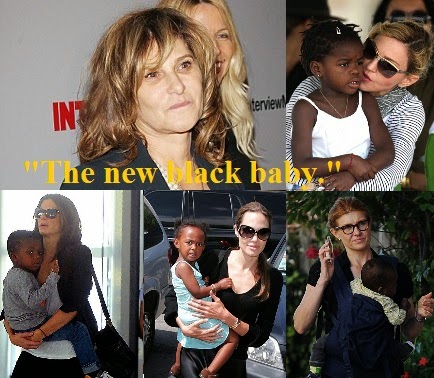
● Studio co-boss Amy Pascal implied that actors adopt black orphans as accessories, and she described stars looking to work in television instead of in film as "the new black baby."

● Studio execs called Kevin Hart, who is black, "a whore."

● Studio execs described David O. Russell, who directed American Hustle, as "a loon" who "got in trouble" for feeling up his teenage transgender niece.
And so on. In response to this, these executives have claimed that these emails are not who they really are as people. Yeah right.

I find this interesting on many levels. First, the most obvious is that these studio execs are clearly odious people. They are hateful backstabbers who lie, in-fight, and think nothing of openly racist behavior. Yet when confronted with their own shameful actions, rather than being shamed, they claim "this isn't who I really am!" That's delusional. Of all things, you are the person you act like in private among people you view as confidantes.

Further, keep in mind how liberals react to suggestions of racism. When it's someone they don't like, they feel happy convicting you on the basis of their own belief about what must be in your mind. The slightest hint of verbalizing something as these people have done would bring instant groupthink howls that the person must be an unrepentant racist, followed by calls for termination of employment and social blacklisting. Yet as these are good liberals who give money to Obama, this will be excused with an apology. Is it any wonder, the public no longer buys claims of racism from leftists? Also, is it any wonder that leftists think everyone must be racists, as they clearly are?

Next, how blind do they need to be to attack a Sandler film for being formulaic, but somehow not see that every... other... film... they... produce... is formulaic these days? Not to mention, how do people who can't spell or choose their words correctly end up with power in the film industry?

None of this is surprising. Hollywood loves to be smug and liberal, but every time the curtain is pulled back we see evidence of racism, sexism, and corporate privilege. We see hypocrisy, perversion, and the worst traits of humanity offered up as evidence of superiority. This is just more of the same; it is nothing new, and it explains why Hollywood has devolved to the point that it can no longer tell a good story... because the shit floated to the top.
[+] Read More...

Wednesday, March 26, 2014

Noah... This Is God. Riiiiight.

That's a Bill Cosby reference for those who don't know. Anyways, it looks like Hollywood has done it again. After Mel Gibson showed them that there are billions of dollars waiting for anyone willing to make religious films, Hollywood set out to exploit this market. But their efforts haven’t been well received. Why? Because they keep messing with the message.

The latest example of this is the film Noah, which is making the rounds now. This film has pissed off bunches of Christian and Muslim groups – Muslims apparently consider Noah a prophet. It’s gotten so bad actually that the film team has sent out their cast to do damage control.

This may sound familiar. Whenever a film angers people who love some “property,” they trot out the actors to assure everyone that they have stuck strictly to the source material, and those complaining are just crazy whiners. Hence, the cast and crew of The Lord of the Rings ran around swearing that they all carried copies of The Lord of the Rings with them on set and that if there was some dispute about how the book went compared to the script, they would sit down and make sure they followed the book precisely. Yeah, that was a lie.

When Nicole Kidman starred in The Golden Compass, she actually ran around telling people how Catholic she was and how she would never ever ever do any film that was anti-Catholic or which promoted atheism. That was a lie too. In fact, while she was saying this, the writer-director was busy assuring the atheist community that he would not water down the book’s anti-Catholic, pro-atheist messages. And indeed, he didn’t.

There are many other examples, particularly involving religious films, where Hollywood puts out a film that is so not what the Bible says or what Christians believe yet they swear on their dark little hearts that those people complaining are the crazies. And that brings us to Noah.

You know the story of Noah, right? Noah was a meek man who was contacted by God to build an ark. I believe he sold insurance. Humanity had gone awry and God intended to wash the evil out of them with extreme prejudice. Noah was told to build an ark and fill it with heterosexual livestock. Noah was in a bit over his head, but he managed. He also tried to warn those around him, but they wouldn’t listen because they was busy fornicatin’. Then bamo! God goes all Erwin Allen! Rain, floods, evildoers washed away... the slate is wiped clean. Finally, the waters recede. Noah lands his Ark in Turkey and he opens the doors to release the animals and the people to go forth and never do evil again.

That’s basically the story that billions of people know and believe. That’s the story you get from the Bible and the Koran (with a few “dirty infidels!” thrown in). But that’s not the story Hollywood made.

From quotes gleaned from people who’ve seen the film and from the cast, this Noah is a Biblical grade ASSHOLE. Seriously, he’s a monster. At one point, his son even rebels against him, saying, “I thought you were chosen because you were kind.” To which, Noah like the Dark Knight responds, “I was chosen because I can get the job done.” Seriously, could anyone in their right mind picture Noah as the Dark Knight? He’s supposed to be meek and kind. He’s supposed to be out of his league. He spends his time trying to warn all the people who mock him as if he were in Revenge of the Nerds. That's part of the message -- that God picks people you overlook to deliver his message. Noah is not a bad-ass action hero. Nor is he a colossal jerk. Interestingly, they also never use the word “God” in this film.

So why would Russell Crowe act the character this way? Why would director Darren Arnofsky allow/choose this? Because to them, these stories are fiction. To Christians and Muslims, they are fact. And that difference is key. If these stories are fiction, then you can improve them and make them more entertaining. Sure, let’s make Noah into a warrior or King of the Assholes, it will add some great fight scenes when he holds off the Orc invaders and it will add dramatic gold when he reconciles with his gay son... I smell an Oscar. But if you see these stories as fact, then any change is an affront to reality. Making changes or filling in the gaps with obviously fake “interpretations” is as fraudulent and insulting to you as it would be to liberal Baby Boomers to add a gay sex shower scene to a JFK biography or have Obama selling crack out the back of the White House in his inevitable biography.

That’s really what’s going on here. When Hollywood has made religious films that stick to the material, no matter how messed up that material may seem to nonbelievers, the believers have responded with an outpouring of love and cash. But when they’ve treated these stories as fiction to be massaged, they’ve failed.

And then to send out the cast and lie about what they’ve done just adds insult to injury.

Thoughts.
[+] Read More...

Monday, December 16, 2013

The Lesson of Gene Autry

Gene Autry is a national icon. He rose from telegraph operator to Hollywood hero to owner of the Los Angeles Angels. He was known as a humble and decent man who made lifelong friends. He was a beloved hero to millions. He was also a solid conservative who supported Ike, Nixon, Goldwater and Reagan. Over the past few months, I’ve watched almost his entire film catalog and I’ve found many interesting lessons in these films. But there is one I want to talk about today.

In the 1940s and 1950s, Autry was a Top 10 Box Office star, and he remained super popular until his death. In fact, his popularity was astounding. What made Autry so popular? To put it simply, Gene Autry was essentially impossible to dislike because he came across as genuinely nice and he came across as someone who actually cared about everyone. Indeed, he always smiled, no matter what the circumstances. And he always remained relentlessly positive. Even when he faced the bad guy, he still smiled and chose to counter the villain’s conduct good-naturedly rather than with anger.

More importantly though, he cared about everyone. No issue was too small for him to want to help and there wasn’t anyone he was unwilling to help. In fact, in his films he rejects racism, classism and genderism. At one point, he created a Cowboy Code which he shared with tens of millions of kids and that code specifically said that a genuine cowboy “must not advocate or possess racially or religiously intolerant ideas.” It also said that a genuine cowboy must “respect women,” may not take unfair advantage, must always tell the truth, must help people in distress, must be gentle with children, the elderly and animals, and must never go back on his word.

Right now, I can hear some people mocking him as “a Boy Scout,” but that says more about their cynicism than anything about Autry if they dislike people who display all the virtues we claim to prize.

Anyways, he was forgiving too and never acted in anger. Indeed, Autry never gave up trying to talk the villain out his plan because he wanted the best solution for everyone, not just victory. He would use violence sometimes, but only in genuine self-defense (not fake self-defense like modern heroes). Interestingly, he was also the kind of guy who would race to save a villain who had fallen over a cliff and would beat himself up for failing to save the villain from falling to his death.

Compare that with modern “heroes” who are cynical, nasty, and presume the worst. They only seem happy when they are kicking ass or killing bad guys. Autry never did that. Autry simply wanted to help people. He was the kind of guy who never failed to give the shirt off his back at the first sign of need. He never ridiculed anyone, never spoke ill of anyone, and never wished harm upon anyone... friend or foe. He had tremendous patience and was always willing to forgive. He was humble, honest, and he genuinely cared about everyone. This is what he projected on film and all indications are that this is who he really was.

Ok, so why am I telling you this? Because this is what made Autry irresistible to the American public. They loved him.

Now look at Ronald Reagan. How did Reagan come across to the public? He came across as humble and honest, and he genuinely seemed to care about everyone. He talked about making “all boats” rise, not just those of his friends, his donors, his voters, or people of a certain color or class. He spoke proudly of all Americans of any gender, race or religion. He never tried to section people off under the law and he never sold his policies as hurting or getting even with people he didn't like. He never ridiculed anyone, never spoke ill of anyone, and never wished harm upon anyone... friend or foe. Even as Tipp O’Neil and the MSM savaged him and tried to destroy him, Reagan kept his sunny disposition and treated them as friends.

And do you know what? The public loved him! He became the most loved politician this country has ever produced. Just think back to his funeral and you’ll see that. Think back to the hundreds of thousands of people who turned out to see his body, who lined the streets, and who openly cried that a man they hadn’t seen in 20 years had died. That is an amazing emotional connection, the same connection Autry achieved.

This is the lesson. It’s no secret how to be popular. When the public believes that you care about everyone equally, and that you do genuinely care and want to help people... when the public sees you as humble, honest, and decent... the public will love you. Ronald Reagan, just like Gene Autry, won over a massive majority of the public because the public knew that these were decent men who cared about everyone and wanted the best for everyone. That created the trust which caused the public to give Reagan a chance and to stick with him. If we want to regain the public’s trust, that is the course we need to take. It’s not about ideology, it’s about attitude.

To put a fine point on this: if conservatism wants to win back the public, it needs to learn to care about all Americans again, not just those it likes. Drop the anger, drop the exclusion, and drop the cynicism that is the essence of talk radio. Embrace America. Embrace Americans... every American. This is the greatest country on earth and her people are amazing. Give them the opportunities and trust them to excel. Be someone the public will love and respect and the public will love and respect you. It’s that simple. Remember this the next time a candidate tells you what his goals are.
[+] Read More...

Wednesday, December 4, 2013

Hollywood And Holidays

We’ve touched upon this a couple times in the past: Hollywood doesn’t do the holidays well. That’s kind of fascinating if you think about it, since the holidays seem like they are ready-made for storytelling. Not only are they well defined, they are a common experience, and they have their own emotional base. That should make for a heck of a fertile ground for stories. So what’s wrong?

Here are some possible answers. I suspect they are all in play to a degree, though some less than others.

Hollywood Is Out of Touch: This is a pretty standard talk radio conservative line. The argument is that Hollywood is run by who-knows-what, and they hate us and our traditions. The problems with this are obvious, however. (1) Hollywood isn’t actually “run” by anyone. Hollywood is whoever has the money to produce films. So any theory that relies on a monolithic Hollywood misunderstands the structure. (2) This doesn’t explain why old Hollywood didn’t do any better. So while some people may be like this, this theory simply doesn't make sense to explain the issue.

Stories Need Angst: This argument goes that audiences don’t want to see films that are puppies and unicorns, so if you do a holiday fail, it generally needs to be darker. This is why you get stories like Planes, Trains and Automobiles and Jingle All The Way, which are about the negative side of the holiday experience. But negative doesn't sell during the holidays. So few holiday films are made.

I disagree with the angst argument. Good stories need conflict of some sort, i.e. something that the hero must accomplish despite challenges, but those conflicts don’t need to be negative, nor do they need to be presented negatively. One of the things that makes The Wizard of Oz so engaging, for example, is that while Dorothy must overcome various evil hurdles, Dorothy is relentlessly positive and all the other characters feed off her strength. So I don’t accept that this angst argument is true. That said, however, I do firmly believe that a lot of people believe the angst argument, so I can see this motivating Hollywood to avoid more positive holiday portrayals.

It’s All Been Done Before... By Icons: Hollywood isn’t really concerned about originally, far from it. But every once in a while, an iconic film comes along and you can’t make anything remotely like it without people calling it a rip-off. An example of this would be Star Wars. No one has tried to copy the elements of Star Wars because they know people will be upset. In fact, the first real copy I can think of was Eragon, which was written 35 years later and even then was panned for being “Star Wars with dragons.”

When you look at the stories that dominate the holidays, you see a couple iconic stories that really do eat up large parts of the holidays. Foremost among those, you have the claymation Rudolph the Red Nosed Reindeer, which completely dominates the story of Santa, and you have A Christmas Carol, which completely dominates the idea of repentance which comes with Christmas. What does that leave really? Rudolph encapsulates the “story” of the holiday (apart from the religious aspect) and Christmas Carol dominates the emotional aspect. Between them, that's everything that has meaning about the holiday, and any story you write that touches upon either of those will be seen as little more than a knock-off (the religious aspect is covered by the Nativity Story). That leaves only pieces at the edges, like the shopping experience (Jingle All the Way), and parodies like Bad Santa (parody of A Christmas Carol) or Elf (parody of Rudolph). Indeed, ask yourself what Christmas tale you could tell that doesn’t feel like you are borrowing heavily from one of these icons.

I think there is a lot to this. Anyone doing a Christmas movie will find that the more they strive to include an emotional impact, the more they are accused of copying. That creates a pretty strong incentive to make something else... or just to do a remake of A Christmas Carol.

Fantasy Won’t Do: Finally, we come to the reason that I think really keeps Hollywood out of the holiday business. Hollywood is about fantasy. They get rich by selling us dreams, stories we would love to witness but which will never happen in our lives. In effect, they are selling “The Vicarious Experience.” But you can’t do that with the holidays because we’ve all lived it.

Think about it this way. When you watch a sport movie, you get to imagine yourself as the sports star you never were who overcomes incredible odds to win the game on the last play in an amazing manner. When you watch action films, you get to dispense justice against criminals and terrorists you can’t touch in real life. When you watch a romance, you are the suave lover with all the right words who makes all the right decisions and in the end wins true love with the ideal mate – people who don’t fart or burp or forget to shower or get drunk watching a ballgame, people who only care about you every waking moment. You love these things because for that brief moment in that film, you get to experience something real life will never give you.

But what do you get out of a holiday film? You get a sense of being with people you love. Got that. You get a sense of happiness as people give you presents. Got that too. The holiday spirit. Ditto. You get a chance to fix relationships that aren’t always grand throughout the year. Yep, got that too. See the problem? There is nothing a film about Christmas can provide you that you can’t already feel yourself. People don't see films that offer them nothing they don't already have. And all this really leaves, again is parodies, like Christmas Vacation or Jingle All the Way, which poke fun at what you've experienced, or the retelling of classic stories. But those things don't sell all that all. So again, it's better to avoid the issue and make a different movie.

Thoughts?
[+] Read More...

Wednesday, September 18, 2013

Good Does Not Mean Simple

Last week we talked about how Hollywood only shows one kind of racist: the neanderthal. Our general conclusion was that Hollywood lives in terror of being misunderstood. Today's article relates to that, as you'll see. Today's article is about the way "good people" are portrayed by Hollywood. It irritates me.

Have you ever noticed how good people (other than the hero) get portrayed by modern Hollywood? You know who I'm talking about. These are the people the hero must defend, the people the villain slaps around, the people we will see in the happiness montage when the film ends... salt of the earth types. These people are typically older whites, with a rainbow of color mixed in behind them. Their leader is a man in his 50s who has gone gray. They keep their heads down and smile softly. They are childlike. They keep their hands clasped before them like they are praying. They move slowly... shuffling. They speak in short, simple sentences that are packed with gratitude, hope and helplessness. Yep. Awww.

Let me describe this another way: they are f**ing useless. They are neutered and passive. They are the definition of meek. They are so meek that I honestly find myself wanting to smack them around on principle. It's no wonder films are full of so many villains. These people are sheep, and as Eli Wallach says in The Magnificent Seven, "If God did not want them sheared, He would not have made them sheep." I hear ya, Eli, I hear ya.

Look, here's what bothers me. First, "good" does not mean "simpleton." It does not mean "meek." Those are not even synonyms for good. There are many simpletons who do evil things, just as people who are meek are typically passively aggressive... not good. Good is about doing the right things, caring about those around you, standing up to evil. Good is not about shuffling your feet or weeping that you need help from a hero. That's pathetic, not good. In fact, people who are good are typically a hell of a lot stronger and more confident than those who aren't because being good requires you to stand up for what is right, not succumb to what is easy. Being good is anything but being passive. In fact, I would argue that you can't be passive and be good. If you are passive, the best you can be is neutral.

It frustrates me that Hollywood is misrepresenting what it means to be good and selling it as such an unpleasant thing. It also frustrates me that the whole idea is rather fascist. Yeah, fascist. Superman saving good people from a power they struggle against but cannot defeat alone is cool... it makes him a superhero. Superman saving people who are too fricken timid stand up for themselves is a tale about how useless the public is and how they need superior men to lead them. That's a creepy, fascist message.

You know where I think this comes from? Did you ever seen Willem Defoe play Jesus in The Last Temptation of Christ. He started this. He presented Christ as a meek simpleton... and everybody ran with this. Since that movie, so many people really have come to think of Christ as a man who never raised his voice, never complained, and never spoke back to anyone. And since Christ is considered the model for good, that has become the model they use when they want to show these "good people". Grrr. For the record, that wasn't Jesus. How do I know? Because I've read the Bible. Christ was passionate, with a gift for oratory. He was aggressive. He called a spade a spade. He attacked the money changers in the temple. He stood his ground against the Romans. Those aren't things these meek, pathetic creatures Hollywood is selling as "Christlike" could ever do.

Hollywood isn't good at portraying subtlety anymore. So when they portray villains, they make them cartoon villains so everyone knows what they mean. And when they portray the "good people" the hero needs to help, they go in the other direction. They try to make them Christlike so no one could possibly think they are anything but good (as an aside, making them useless also makes the superhero seem stronger by comparison). But they are using the wrong model. They aren't making them good or Christlike. No. They are making them useless. They are making them the kind of people who deserve the blame when evil prevails because they don't stand up to. That's not "good." "Good" is people who are confident in their convictions and stand up for them. They don't allow evil to control them or others around them. Meek is people who are too afraid to speak their minds.

You know what else is interesting? I've been watching a lot of Gene Autry films lately. It's fascinating to me that in the supposed age of "black and white simpleton thinking" (i.e. not the modern sophisticated world), things were much more nuanced. The public in Autry's films weren't helpless. They weren't pathetic. To the contrary, they were a little hot-headed actually. They had had enough and they were looking to set things right on their own. It took Gene to come into the picture and to calm everything down to make sure everyone acted correctly. When I look at old Superman shows, again, the public was doing their best to solve the problem. They didn't have the firepower to defeat the bad guys, but they were trying. No one stood by helplessly wishing to be saved. That's a twisted stereotype modern Hollywood inflicts on the past in a sneering way, but it's really modern Hollywood that it applies to.

I think this tells us something worth noting about Hollywood. Hollywood today doesn't seem to get the difference between good and meek, and they see the public as meek, helpless, and unwilling to help themselves. I find this frustrating because it flies in the face of reality. The American people are action oriented. They stand up for what they believe. They help those in need. They try to stop evil where they see it, and are constantly working to make the world better. Why does none of that appear on film anymore?
[+] Read More...

Wednesday, September 11, 2013

Why Only One Type of Racist?

Someone posed an interesting question to me the other day: why are racists always portrayed in films as snarling, one-dimensional neanderthals? You know the types. They're losers who work in manual labor jobs or athletics (e.g. coaches). They're stupid. They spout racist quotes freely to everyone around them. Their families don't respect them. Their kids hate them. Why is that the only type of racist you see on film?

Here's the thing. The world is full of all kinds of people and all kinds of racists. Sure, you have the snarling idiots, but outside of Appalachia or a Black Panther meeting, you just don't find those people anymore. Instead, you find casual racists. These are people, typically liberals, who condemn racists and talk about how not-racist they are and how racist everyone else is. Yet, these people talk condescending about minorities, whom they view as childlike, and they think nothing of whipping out a racist joke at a party because "I'm not racist, I can tell this joke." These people also get racist when things go wrong for them economically: "Why is the government helping them (insert preferred racial epitaph) when we real Americans need help!"

You also have racist professionals. These are people like lawyers (or Harry Reid) who publicly profess disdain for racists, but wouldn't hire a minority on a bet and will whip out all the stereotypes when amongst friends... remember the Duke Brothers from Trading Places? Or how about the liberal artisan, like a fashion designer or movie star, who whips out the n-word when drunk?

Then you have an elite black class who profess all kinds of liberalism, but think nothing of describing interracial marriage and non-black adoption as "racial genocide" and smearing black conservatives in terms that would make the KKK blush. Obama invited some of these to the White House last year. They also falsely scream racism as if it were the phone-a-friend lifeline whenever they start to lose arguments.

If Hollywood really wants to oppose racism, why doesn't it show any of those people? Why only the neanderthals?

Ultimately, I think there are two things going on here. First, the problem with portraying these kinds of racism is that this would implicate most of the liberals I've met... and I'm sure Hollywood liberals are no different. Thus, admitting that people who don't hire blacks, who tell racist jokes, who spout racist stereotypes to their friends and who believe the government should care for "real Americans" first before it cares for minorities even as they profess hatred for racism are actually racists would point the finger at much of the liberal world and probably most of Hollywood. That's no good. Liberals don't do self-reflection.

Secondly, I think there is a fear of being accused of being racist by showing a racist as something other than a monster. Essentially, if you wrote a character who is otherwise charming or funny or likeable, but that character also says or does racist things amongst close friends, then I suspect that the thought-police would come down on you for making a racist out as a nice person. They would accuse you of being a racist yourself, and all kinds of problems would follow. Who wants that?

In some ways, this reminds me of the way portrayals of Nazism have changed in Hollywood. In the 1950s and 1960s, you still saw films with good Nazis. The Great Escape is a classic example. The commander of the camp is a decent man. He doesn't like Hitler or the SS, but he is doing his duty as a German soldier. Today, such characters no longer exist. If you are a German circa-1933-1945, you can be one of three characters: (1) a blood thirty monster, (2) a member of the underground who smuggles Jews to Uncle Gunter's cabin, or (3) a Jew in hiding. I can't think of the last average German from that era Hollywood portrayed as just a normal, decent person. And I think the reason is that all it takes is one member of the hive-mind that is liberalism to decide that you were too nice to an presumed evil group and they will start screaming about you being a Nazi-lover. That's bad press. I think it's the same thing here. Subtlety is lost on the permanently offended and if you make a racist anything other than blatantly evil... why, then you must be saying racists are good people! You're a racist!!!

This is why I think Hollywood only shows racists as monsters even though those racists no longer exist outside the meth industry. I think they genuinely don't want to recognize their own racism and they are afraid that presenting someone who is defined as evil as something less than 100% evil means you are endorsing that evil.

Thoughts?
[+] Read More...

Wednesday, August 7, 2013

Serial Killers... Ug

I despise lazy writing, and serial killers are lazy writing. Serial killers are how people who don’t know good from evil try to make sure their audience KNOWS they mean evil. It’s sad.

Before we get into the problem with serial killers it’s worth pointing out a recent study that found that serial killers are a growth industry on television. Seven television shows about serial killers were added this season, bringing the total to twenty. Seems excessive, doesn’t it?

Well, Hollywood likes to claim that they “only reflect the violence in society.” So said, CBS president Nina Tassler, NBC Entertainment chairman Robert Greenblatt and Fox chairman Kevin Reilly. They also claim they don’t encourage/cause violence. But there’s reason doubt this. Consider these facts:
● Hollywood claims influence when they want to, such as claiming that their positive portrayal of gays “increased approval ratings of homosexuality of among youth.” So the claim that they don’t influence people is belied by their own contrary claims.

● Copycats occur fairly regularly. At least three brutal murders and one attempted murder were inspired by Dexter with each killer specifically mentioning the show as influencing their thoughts. Do I believe that television causes serial killers? No, but I do think it provides encouragement to those already out there, and I think it changes the culture in lesser, yet significant, ways... to be discussed below.

● Most importantly though, the claim that they “only reflect” society is statistically wrong. The FBI puts the number of serial killers between 35 and 50. Yet, there are now 20 shows about them on television. Even worse, they are the go-to villain. Criminal Minds alone has featured more than 100 serial killers in its past seven seasons. Thus, Hollywood dramatically overstates the number of serial killers both in real terms (raw numbers) and percentages. Keep in mind that roughly one million criminals are in jail right now and many more remain at large. So the percentage of serial killers to criminals is almost zero, yet Hollywood portrays it at around 50% or more. That is not reflecting society, that is distorting society.
So what bothers me about this?

Hollywood uses serial killers because it needs clearly identifiable good guys and bad guys, but modern Hollywood doesn’t know how to write such characters. It’s sunk so deeply into the well of moral relativism and identity politics that it no longer knows how to explain the difference between good and evil, because in their minds, good and evil depend on your perspective. Serial killers are different. Anyone can explain away a single murder as justified or an accident or whatever... he had it coming. But no one can explain away a dozen murders.

Moreover, serial killers can be made white, middle-aged men of indeterminate nationality (ignore that most display homosexual tendencies), and their motives are all internal, i.e. they kill because they are evil. This means they can be scrubbed of all ethnic, political, religious, sexual implications. . . they can be genericized.

The end result is a character who is undeniably evil, but who has no motive whatsoever that can be pinned upon them which will bring out a protestor or generate sympathy in any member of the audience. They are the human version of the Terminator... a motiveless machine with no possibility of sympathy. This is lazy writing. It’s cowardly writing. It’s like making Satan or secret Nazis your villain.

And what bothers me is both that I am totally bored with villains who are nothing more than walking murder weapons, and that I fear this is dulling the public’s senses to what evil really is. If one killing doesn’t make you evil, then something is wrong with our value system... yet, Hollywood suggests evil requires many killings. It suggests that evil is melodrama and motiveless. It misses the fact that real life evil is banal and selfish. It teaches people that evil requires a really high threshold, when it doesn't... it just requires indifference to the harm you cause.

That’s the real problem. Not the idea that some dipstick is going to copycat one of these characters, but the idea that average people will start to define evil up.
[+] Read More...

Wednesday, July 31, 2013

Weepy Ain't That Great

It’s time to earn an Oscar. “Why!! Why!! Why did little Commentarama Jr. have to catch inoperable lumbago?! And now of all times as the main site just lost its job at the blog packing plant and the bank is threatening to foreclose on our e-home. There is no Gaaawd!” Solid.... gold. Remember that when it comes time to vote.

I’ve been thinking about acting lately. Specifically, I’ve been thinking about something that has always bothered me. Have you ever noticed that when people talk about great ACTING! they always talk about someone doing a scene where they are depressed and angry. You know exactly what I’m talking about. The actor clenches their fists and stumbles against something and proclaims that all hope is lost because little Jimmy wasn’t found at the bottom of a well after all, and now their sham marriage will fall apart. End scene. Critics applaud like trained seals and actors tear up and start gushing about how brave the actor was for making it through that scene.

Wha??

Look, these people are handing you a clichĂ©. Somewhere along the way, probably in 1934, some actor came up with this routine. They used it in some movie that everybody saw... The Maltese Lupus. By 1935, it was all the rage and everybody was doing it on screen. Since that time, everyone has done it and only it. It’s become the go-to way to handle drama. So whenever drama is called for, the actors don’t summon some knowledge of human nature from within, they just copycat... this... same... damn... scene. There’s no skill in that. There’s no talent required. It’s impossible to do it better than anyone else either. And yet, they get praised for it like they just invented acting. It’s a massive Hollywood circle-jerk.

If you really want an acting challenge, then convince me you’re in love. And I don’t mean doggy-style love... “oh boy oh boy, the master’s home!”

Wait.

Something about that doesn’t sound right. Let me try again.

If you really want an acting challenge, then convince me you’re in love. And I don’t mean the meeting of lost lovers scene where everyone jumps into each other’s arms. No. I don’t mean the post-sex scene where someone says, “I love you.” No. And not a “you saved me from that giant robot, I love you” moment either. I’m talking about two characters minding their own business with nothing special going on at that point in the film... just two people hanging out (in a fully clothed way), and make me believe that those two people love each other in that moment.

That’s a real challenge.

It’s the same thing with comedy. Comedies never win awards because they get looked down upon by critics. But comedies require skill. They require timing. They requiring aligning your behaviors with the need to hit the right comedic notes. I would suggest that few actors can do comedy. Yet, weepy gets the awards even though everybody can do weepy.

I think back to Ayn Rand at times like this. Shut up, yes I do. As I read The Fountainhead, Rand is talking about “those who cannot” and how they creep into positions of authority like professorships and regulatory positions. Then they warp the rules to punish the true creative geniuses so their own flaws can’t be exposed. Basically, since they lack genius, they redefine the rules to declare what they can do as genius and to stop geniuses from showing otherwise.

I suspect there is something similar going on here. I suspect that most actors in Hollywood can do the cliché weepy stuff, but they would be completely lost in things like comedies and where genuine emotions like love need to be shown. The result is that they look down on the things they cannot do as beneath them and they instead elevate the things where no real talent is needed and no true distinction is possible. Call it the tyranny of the mediocre. They essentially make themselves gatekeepers of legitimacy by telling you to look down on the things where people with superior skill can shine.

That’s how I see it.

Thoughts?
[+] Read More...

Wednesday, July 10, 2013

Mockery = Failure

With an opening weekend that was only a few dollars better than Battleship, White House Down is a certifiable flop. So is The Lone Ranger. After Earth was a financial turd too. So what happened? Well, I saw an interesting dissection of why White House Down failed and I think it makes some valid points that apply to all three.

As always with these kinds of postmortems, the analysis I read took great pains to talk about competition, blah blah. But the truth is that movie dollars are not limited. If five great films come out at once, audiences will see all five. So “competition” really is just an excuse which translates into “people didn’t think ours was worth seeing.” So let’s ignore that.

There was also the issue of the movie being hard to describe to us peon audiences. Was White House Down a political thriller? An action film? A father-daughter drama? Whatever. Audiences don’t look at a single trailer and dismiss a film because they aren’t sure what it is. To the contrary, some of the greatest marketing campaigns involved total confusion... teasing. The real marketing problem is that even a glitzy campaign can’t hide a bad film. Not to mention that once the word of mouth kicks in, the advertising means nothing. And let’s be honest, while I do believe that the marketing hurt Scott Pilgrim by warping people’s expectations, White House Down is clearly nothing more than a generic action flick and the possibility of confusion is pretty close to zero.

So what did hurt White House Down and how does that relate to the other films? How about this: alienation.

Look at who is involved in White House Down. First, you have anti-American director Roland Emmerich, who was last seen pissing on conservatives, Fox News and Dick Cheney in The Day After Tomorrow. Emmerich is also a Hillary Clinton fundraiser who likes decorating his home with murals of communist figures and who likes collecting art that mocks Jesus, the Pope and Princess Diana. The film stars Jamie Foxx, whose stock and trade now is black racism, and Maggie Gyllenhaal, who is an open advocate for leftist causes.

Then it gets worse. Foxx plays a Barack Obama-like character who finds himself under attack in the White House. Choosing to model your hero on a divisive figure like Obama is simply foolish. He’s one of the least popular presidents ever, and even suggesting his name is enough to turn off about 50% of the country. What’s more, the audience for this film should have skewed toward white males, the very group Obama lost by around 65%. Adding insult to idiocy, all the villains were conservative white men.

When a film sets out to offend its core audience, it will fail.

Now look at The Lone Ranger. Westerns are a specialized genre with a sizable audience, but little crossover from the general public. In other words, fans of westerns like westerns, but the rest of the country doesn’t. So the last thing you want to do when you make a western is to insult fans of westerns. Yet, that is exactly what this film apparently tried to do. A Texas Ranger who doesn’t like gun violence? A sidekick who spends the film mocking the hero? Those are not things fans of westerns will take kindly too. Add in what are apparently attacks on American industry and the American military, again the target audience for westerns, and you have a problem. Unless you can swing enough other people into a genre they generally don’t like, you will fail. They couldn’t and they failed. By comparison, serious westerns like the remake of True Grit respected their core audiences and they got rich.

Finally, consider After Earth. Right before After Earth came out, there was a lot of talk that this film was Scientology propaganda. Science fiction audiences tend toward agnosticism or the light version of something like Christianity. The last thing they want is a film based on dogma – not Christian dogma, not Muslim dogma, not Scientology Dogma. And they really don’t like the idea that a film was trying to slip such dogma past them.

This is the lesson Hollywood needs to learn: people don’t like being mocked. And if you can’t look your audience in the eye and tell them honestly what your intent is, then you probably aren’t going to win them over with the finished product.

By the way, as an aside, this same lesson applies to pretty much any industry, including politics.
[+] Read More...

Wednesday, June 26, 2013

Hollywood Will Implode!!! Or Not

A week or so ago, George Lucas and Steven Spielberg both predicted that the film industry would “implode.” That drew a lot of attention, but honestly, I think they are mistaken.

What Spielberg said was this: it is inevitable that there will be a year where half a dozen $250 million movies will flop at the box office. Those losses will cause a “meltdown” which will change the industry forever by changing the way they handle films. In his view, the end result will be that the film industry will split into two parts. The first part will make only true blockbuster films, like the superhero films today, and those tickets will cost a bundle. He said they would likely cost $25 – George Lucas upped this to $150 and compared it to sporting events or concerts. The other films, like his Lincoln, would remain with $7 tickets or, more likely, would end up being made for HBO.

I don’t think so.

What Spielberg has said is simultaneously not at all shocking and simultaneously rather bizarrely doomsday-oriented. On the one hand, it’s not at all shocking that Hollywood would like to charge more for films if it thinks it can get it. So I would expect ticket prices to continue to rise. I also suspect $25 tickets are coming soon enough no matter what happens. Nor is it unlikely that theaters would discount less popular films. It’s also not shocking that a lot of films will drift to television. For one thing, television provides a lot of positive aspects that cinema doesn’t. It provides the chance to go well beyond two hours. It seems to be a lot cheaper too as audiences aren’t expecting huge CGI-extravaganzas. Not to mention that television has taken on a new level of sophistication and respectability. Even more importantly, older audiences have abandoned cinema for home theater, and that is the audience for things like Lincoln. So what Spielberg says makes sense and isn’t all the shocking.

What’s doomsdayish about this is the idea that he thinks it will take a near-bankruptcy level disaster to cause what is already happening (Lucas’s idea of a $150 ticket is similarly doomsdayish, but Lucas is a fool – no one will pay that for a movie). But let’s assume we do have such a summer. Assume that this summer half the films fall flat. What would be the likely response? Would it be an abandonment of the theaters for all but big tent pole films and massive ticket price increases for those? I doubt it because that doesn’t make sense – why repeat what just failed while trying to drive away your audience by pricing your product so far beyond the substitutes?

So what would Hollywood do instead? They would do what corporations always do: cut costs. First, I think studios would buy CGI firms and bringing them in-house so they could essentially get their work at cost. You would probably see a lot of film production moved to places like Romania and India. You would probably see a concerted effort to reduce what all but the top actors get paid. You might see films made in bunches so as to share the costs of sets, costumes, and extras.

There would be an outside chance you might also see more innovation, such as alternate endings to create country-specific films. For example, the Chinese character might win the day in the Chinese version, the Mexican character in the Mexican version, and the American in the American version. You might see more tie-ins to merchandise and games as well – “Defiance” tried this, but it sounds like they just didn’t do well with either the show or the videogame. You might even see things like season passes for movies to get people to pay for bad films as part of the season as the cost of seeing the good ones.

Sadly, you will also probably see more remakes and reboots, as those are the safest bets out there.

The one thing I think you won’t see is ticket prices increasing to $150.

Thoughts? What would you expect?
[+] Read More...

Wednesday, June 5, 2013

Why World War Z Is Probably Doomed

There have been quite a few articles warning us that Brad Pitt’s World War Z will be a dud... a bomb... a flatulent schnauzer. It wouldn’t surprise me. What’s interesting though is the reason they think it will be a bomb compared to why I think it will be a bomb. They are, of course, wrong.

WWZ is a zombie movie. It’s based on a novel by Max Brooks and the story is basically about the UN trying to stop the outbreak. Yeah, I know there’s more to it... ask me if I care and you can find out all you want about it here => LINK. Seriously, aren’t we done with zombies yet? There’s a million fricken zombie movies already and they’re all the same! A retarded chimpanzee with a camcorder can made a zombie movie these days! Why make another one? &^#%$%$! I am looking forward to it.

Anyhoo, Brad Pitt is producing this turkey and it’s been a mess. In particular, the ending as originally shot was considered abrupt and incoherent and it left the studio in shock. Paramount Studio President Marc Evans described it thusly, “It was like, ‘Wow, the ending of our movie doesn’t work!’” So they went about re-shooting it. They spent between $15 and $20 million to re-shoot the ending and now production costs have blown past $200 million into Battleship and John Carter territory (another $125 million will be spent on marketing). Sadly for them, most everyone apparently agrees that they made the ending worse.

As an aside, they say they needed to re-shoot “the ending,” but they apparently re-shot 40 minutes of film. That’s more than just the ending, that’s a whole new film!

So now Wall Street thinks the film is doomed because it had production problems which caused cost overruns. Hence, no one will see it. Hollywood types think the film is doomed because it now has a reputation for being a bad film. Hence, no one will see it. Personally, I don’t buy it. The public doesn’t care about production management, they just care about the quality of the film. As for the perception of the film being lousy, that won’t kill the film either... if it’s good. What that will do is cause audiences to move slowly and to wait to hear word of mouth. If the film passes that test, it will do well. If it doesn’t, it will bomb. In fact, they can probably save the advertising money because studio ads won’t matter at this point.

Anyway, I think the film will probably bomb. And what tells me that is this one idea that keeps popping up about why they needed to re-shoot the ending. Said one insider on the topic:
“The original ending was meant to launch a trilogy, but it took Pitt’s character down an obvious hero path — battling zombies mano-a-corpse in Russia — and it was implausible and unsatisfying.”
Do you notice any key words of doom in that? How about “was meant to launch the trilogy.” Yep. Screwed. When you set out with the idea of using your current product as a means to sell people more stuff in the future, you are asking for trouble. People go to movies because they want to see stories, they don’t go because they want to be prepped for future shakedowns.

This reeks of Golden Compassism. That was a film that (putting aside all its other garbage) failed at a fundamental level because the story never engaged the audience because it was constantly setting up sequels. . . sequels that never came, mind you. It constantly felt like they were showing you things and telling you, “Ok, well, that doesn’t matter now, but remember it for the sequels, will ya?” Forget it! Audience want everything in a movie to wrap up in that movie. Yes, your villain can escape in the sequel and start over again, but he needs to be stopped in this film. Yes, sometimes like in Empire Strikes Back, your resolution can call out for a sequel. But you can’t treat a film as a primer for future films. Audience’s don’t want to feel like they just paid to see part of a film. And if that’s the case with WWZ, then audience will stay home.

Indeed, I am hard-pressed to think of a single time when this model has worked where a film is merely a set up for future films. Perhaps, the only time it’s worked is Back to the Future II and that not only angered many people, but it was already a sequel working with characters the audience had learned to love in the first film, so it wasn’t as jarring to be told there would be more. The Lord of the Rings worked too, but that seems like it’s a special case as that’s a widely beloved trilogy of books that just contain too much to do as a single film. I don’t see WWZ having that kind of cache with the public, nor do I see what can’t be done in two hours in a zombie film.

If Team Pitt set out to make a third of a film and pass it off as a complete film (with two sequels coming) then he’s a fool. He should have made this a television series where people look less for a complete story and instead look for relationships with characters.

Thoughts? Zombies, sequels?
[+] Read More...

Wednesday, October 24, 2012

Hollywood: The Political Weathervane

We’ve talked about this before in the comments, but I think it’s worth elevating this to article status. There have been a number of celebrities who have recently “come out” as Republicans by endorsing Romney or by flat-out saying they are Republicans. And many of these are minorities, like Stacy Dash and Dwayne “the Rock” Johnson. I think this is significant.

Everybody already knew about Drew Carey, Dennis Miller, Adam Sandler, Patricia Heaton and Kelsey Grammer. And don’t forget Tom Selleck, Robert Duvall, Jon Voight, Stephen Baldwin, Clint Eastwood, Scott Baio, Gary Sinise, Gene Simmons, Jerry Bruckheimer, and a few dozen more. But they’re all old, right? So how about Jessica Simpson and Nick Lachey? Sarah Michelle Gellar?

Anyway, here’s where it gets interesting to me. In recent months, Kim Kardashian has come out as a Republican. So has Stacy Dash and Lindsey Lohan. At the same time, the ones who have come out are being much more vocal in going to the convention, campaigning for Romney, and generally expressing their views everywhere.

In 2008, for any of these people to declare that they are a Republican would have been career suicide. After 8 years of Bush, the Republican brand had become toxic. And these people depend on getting the nation’s youth, i.e. the brainless slacker demographic, to buy their films, shows or songs. The slacker demographic is notoriously groupthink in their outlook and simply cannot stomach liking the wrong things. Thus, declaring yourself a Republican in 2008 would likely have led to these celebrities losing the very audiences they rely upon. Not to mention that they work in an industry where the power-that-be are all doctrinaire liberals, and not just doctrinaire liberals, but obnoxiously anti-conservative liberals. . . the kinds of people who blacklist those with whom they disagree.

But now they are coming out and waving the flag. This is significant.

What this tells me is that the Republican brand is no longer toxic. But even more than that, it tells me that the Democratic brand has lost its luster and is no longer preferred in the culture. Otherwise, these people would still pretend to be Democrats or would remain silent. Indeed, if Kim “the Butt” Kardashian believed that her fans, who are core slackers, were Democrats, then she would never have declared herself a Republican because she knows her audience would have abandoned her. Ditto on Jessica Simpson, Stacy Dash, Nick Lachey, Sarah Michelle Gellar and Lindsay Lohan. And if the rest thought the public still saw Republicanism as some sort of disease, they certainly wouldn’t be openly campaigning. Don’t forget, in 2008, most conservatives in Hollywood were calling themselves “libertarians” or “independents,” and even well-known-conservative Kelsey Grammer was saying that his political views were not something he wanted to talk about. Now he’s trumpeting them.

How this plays out exactly remains to be seen, but I think it tells us that the cultural pendulum is swinging back. These celebrities are a weathervane for the culture, and they clearly think that average Americans are abandoning the Democrats and embracing the Republicans. Making this belief even stronger is the fact that many of these new “outies” are young women, the one demographic on which the Democrats hold an iron grip. Don’t underestimate the significance of this, this has the potential to change places like Pennsylvania, Ohio, and Wisconsin.

Thoughts?
[+] Read More...

Wednesday, April 4, 2012

Save Our Heroes!

I miss heroes. For decades now, liberals have waged a war against the idea of heroes. Indeed, they’ve systematically tried to destroy the meaning of the word by defining the most banal and often involuntary conduct as “heroic.” It’s gotten so bad that not killing yourself when you find out you have a disease is now trumpeted as heroic. Give me a break. And Hollywood isn’t helping by stripping heroes of all the things which make them heroic.

In the modern parlance, a hero is someone who undertakes selfless conduct at great personal risk. To be selfless, the conduct must be for the benefit of others, and more importantly, the hero needs to have a choice in the matter, i.e. they must be free to walk away without consequence. If the “hero” has no choice but to act, then they aren’t really heroic because they aren’t acting courageously or nobly, they are acting desperately or out of self-interest. That’s why it’s heroic to stop an armed killer from killing someone else, but it’s not heroic to defend yourself against an armed killer.

Interestingly, while the conduct must be voluntary, there is no requirement that the hero be happy about it. Some heroes, like Superman, happily seek out danger, while others only reluctantly rise to the occasion. Similarly, while there is no requirement that the hero act alone, the more the hero achieves by themselves, the greater the challenge they faced and the greater their heroism.

But Hollywood is changing this formula.

Modern heroes like Perseus in Clash of the Titans 2010, Hal Jordan in Green Lantern, and whatshisname in Tron Legacy are none of these things. For one thing, they have no choice but to act because their own lives are being threatened. Hence, none of them are undertaking selfless, voluntary conduct, and by definition they cannot be considered heroes. Heck, Perseus is even given a sub-motive of revenge. Further, each of these “hero” is supposedly a “reluctant hero.” But unlike reluctant heroes of the past, who were reluctant because of promises they made to loved ones or some other moral qualm, these guys are reluctant because they are slackers. They have no particular opposition to being the hero, they just don’t want to bother. Thus, rather than having a character who must overcome some deep personal conflict, these films use heroes who just need motivation to get off their butts.

Moreover, modern Hollywood has stripped these heroes of their independence. Perseus in 1981 had to solve each puzzle he faced on his own. He had advice from his friends, but they had no special knowledge or skills to help him. The same is true of every other hero in the past -- they all had help to one degree or another, but when it came time to overcome challenges, all the pressure and responsibility was on them.

But compare that to the modern “hero.” In Clash 2010, Perseus’s friends kill all the monsters or set them up for an easy kill-shot from Perseus. They also tell him what to do next -- at no point does he ever work anything out for himself. Basically, he’s a prop for the others to solve the film. In Green Lantern, Hal gets saved time and again by everyone around him. He does finally destroy the bad guy, but again, he does exactly what his Jedi-trainer told him to do earlier in the film. He’s essentially an idiot-proof superhero. Whatshisname from Tron is the worst of the three. He gets led by other characters from location to location until they bring him to where the film ends. Then whatshisname’s dad and Tron stop the bad guy while whatshisname fires a gun which never hits anything. He is essentially a passenger in the hero car.

And these films aren’t unique. In Percey Jackson & the Lightening Thieves, Percey walks around as everyone around him solves all the problems -- lots of deus ex machina. Harry Potter pretty much just hangs out as everyone else does the work. Voldemort even essentially accidentally kills himself to solve the story. Matt Damon is declared a hero by God himself in Adjustment Bureau even though Damon’s actions are entirely involuntary and all he does to “solve” the film is run for his life using tricks the angels told him to use. Alice in Alice in Wonderland is true plug and play as she gets moved from scene to scene and then, in her big fight at the end against the Jabberwocky, we are told that she is merely a tool for the sword she wields. . . anyone could have taken her place. And so on.

Genuine heroes aren’t dead on film, but there is a new breed of slacker-heroes who do little more than move from scene to scene as the smarter, stronger and more motivated people around them set up the final battle and then let the “hero” take the credit. This is pathetic. It’s no wonder these films stink.

[+] Read More...

Wednesday, February 1, 2012

A Conservative Opportunity In Hollywood?

I’m wondering about the future of the film industry. In particular, I am wondering if there isn’t an opening developing for conservatives? I don’t mean that Hollywood is about to open its doors to conservatives. What I mean instead is that Hollywood failed to lock the door and its audience is escaping. Maybe conservatives should think about offering them a new home? Consider this.

The entertainment industry has become an oligopoly (though groupthink basically makes it a monopoly). Six companies control 90% of all viewing hours on television: Disney, News Corp, NBC Universal, Time Warner, CBS and Discovery. These companies decide what you get to watch. They also own either in whole or in part, the major studios, who dominate the theater chains. Thus, a handful of companies are responsible for all the films and television you see. Even independent companies like Netflix or Blockbuster rely on these companies to provide them with content.

Ok, so why is that important? Because these companies have fallen into the same trap that all monopoly/oligopoly companies have fallen into before them.

When a company has “market power,” i.e. the power to exclude competitors and dictate to consumers, they get lazy and greedy. Specifically, they realize that it makes no sense for them to innovate or embrace change because their current business model gets them much higher profits than they could otherwise obtain in a free market. Thus, they put their energy into maintaining their monopoly rather than improving their products. This results in: (1) high prices which consumers see as unfair, (2) lack of innovation in the product, (3) an unwillingness to embrace technology, and (4) poor customer service.

The entertainment industry is beset by this. Films are generic so they can be marketed to the broadest possible market. No risks are taken. To make foreign sales, the film companies now strip out anything from films that would harm the films in any region, rather than customizing them by region. Hollywood also forces theaters into a destructive business model. And they fight any technological change which would give consumers greater choice. This is the exact course the music industry charted to its near death.

All of this results in falling box office attendance, falling numbers for cable subscribers, and an increase in pirating.

But here’s the thing. This isn’t 1950. Technology is giving people a way around the entertainment monopoly. The web has made it ridiculously easy to self-publish a book, a record, or even a film. Indeed, you no longer need a distribution network or a chain of theaters to get your film shown. Similarly, modern technology has made it incredibly cheap to shoot movies as you no longer need million dollar cameras and miles of film or a multimillion dollar studio backing you. All you need is a solid digital camera, an eye for using it and editing software.

My point is this. Hollywood is pricing itself out of the market right now at the exact time that technology has opened up avenues for alternatives. Moreover, Hollywood has chosen this moment to start turning out corporate computer-generated crappola for product and is busy stripping out the great dialog (too complex for foreign audiences), the cool humor (too many people might not get it), and the cool patriotic and pro-human themes audiences love (won’t play in China or Berkley).

This creates an opportunity. If conservatives are smart, they can create a new Hollywood, picking up the opportunities Hollywood won’t touch and selling them to audience over the net, either through the creation of a new film site, eHollywood, or in partnerships with the likes of Blockbuster and Netflix. This is an historic opportunity to get ahead of the curve and conservatives should seize it.

Am I right or wrong? What would it take for you to start watching truly independent films?

[+] Read More...

Thursday, August 18, 2011

Liberal Hollywood Shortchanges Actresses

Originally posted at Big Hollywood: LINK

Great films need great actors and great actresses. Unfortunately, Hollywood doesn’t do great actresses anymore. . . it does Barbies. In truth, Hollywood never was great with actresses, but it’s gotten much worse lately. Talent, apparently, no longer matters when casting actresses, just looks. To be a modern “actress,” you need to be under 35 years of age and look like every other Hollywood ditz. What’s worse, Hollywood is now trying to pass off sexual exploitation as “strong roles” for women.


Megan Fox adjusts her "talent" before their next scene.


1. Dear Hollywood: Stop The Age Discrimination

Age discrimination is a problem in Hollywood. Seriously, what is the fascination with jamming twenty-somethings into every role? It doesn’t work. These young girls simply don’t have the maturity or the depth to play the parts of women. It strains credibility beyond the breaking point when they cast some silicon enhanced girl to play the nuclear scientist or the head of a corporation or. . . well, any woman in a position of authority. I know powerful women, professional women, and women with a great deal of maturity, and none of them look or act anything like Hollywood seems to think.

And please stop casting girls as the wives of old, old, old male actors. It’s creepy. Teri Garr and Richard Dreyfuss worked in Close Encounters because they looked like a couple. Septuagenarian Harrison Ford married to Megan Fox doesn’t. Not only can we not see them getting together in the first place, but we can’t see them as a “normal, loving couple.” Instead, the words “gold digger” and “cradle robber” and even “grave robber” come to mind. And holy cow, stop casting “mothers” who are only a year or two older than their movie “daughters.” Was there a plague in Hollywood that wiped out all the women over 40?

2. Dear Hollywood: Stop Cloning Actresses

Hollywood also needs to end its cloning experiments. It needs to stop rejecting actresses if they have the slightest trace of individuality or if their bone structure is 1% off the model. Seriously, this makes it impossible to cast people who look the part. Forget the nuclear scientist mentioned above, what about the average waitress or the mother of three or the cop? Real women don’t look, act or dress like Malibu Strip Club Barbie™. This is the female equivalent of casting only musclemen as extras, and is again kinda creepy.


"We are the Borg. We are ready for our close up."


More importantly, by casting clones, Hollywood guarantees that few modern actresses will be memorable because it’s the distinct actors we remember. Indeed, few of the top male actors fall into the “pretty boy” category. Outside of a Redford, a DiCaprio, or a Cruise, few leading men look anything like male models. Bogart was a small man with a crooked face and a lisp. Stallone looks like he lost a fight with a blender. Bruce Willis beat the blender, but it took 12 rounds. Jack Nicholson is the blender. How about James Cagney, DeNiro, Bill Murray, Charles Bronson, Steven McQueen, Clive Owen, Benicio Del Toro, Alan Rickman, Adrien Brody, Daniel Day-Lewis, Dustin Hoffman, Tommy Lee Jones, Richard Dreyfuss, etc. . . not a standard profile in the bunch. And when you get into character actors, the defects and distinctions multiply. . . Steve Buscemi anyone?

I'll bet you could visualize each of these men as you read the names. Why? Because these men are memorable. They weren’t cast because they are pretty to look at, they were cast because they are distinct -- they stand out both in looks and personality.

Believe it or not, the same thing has always been true with the great actresses as well. Look at the actresses we remember. Few of them can be called “classic beauties”: Lauren Bacall was rather butch, as was Katharine Hepburn, and is Sigourney Weaver. Lucille Ball was hardly a looker. Sophia Loren and Julie Andrews were beautiful, but not in a beauty queen sort of way. Loren was gorgeous and wild. Andrews had “girl next door” beauty. Bette Davis, Barbara Stanwyck and Angela Lansbury all looked 60 the moment they were born. We remember these actresses because they stood out, i.e. because they were different. What’s more, we feel we know them because their personalities come across so strongly on the screen.

Now tell me how many of these you can visualize: Scarlet Johansson, Kate Hudson, Rosie Whitely, Cate Blanchett, Elisha Cuthbert, Rachel McAdams, Kristen Stewart, Jessica Biel, and Elizabeth Shue Banks. I doubt most people could pick them out of a line up and none of them have memorable personalities. In fact, most actresses today are so interchangeable that I wonder if anyone would notice if you swapped a couple out in the middle of the film. . . “hey, weren’t you blonder before?” And even when they do stand out, it's usually for the wrong reasons: Megan Fox. . . idiot, Lindsay Lohan. . . train wreck, Anne Hathaway. . . bleached by aliens.

Unfortunately, because Hollywood is looking purely for beauty, they aren't finding great actresses anymore. To me, the test of a great actor/actress is whether or not they could have taken on a great role. For example, could any of the actor/actresses listed above replace any of the guys in Glengarry Glen Ross? The male actors listed above could have done it. Hepburn, Bacall, Weaver, Davis, Stanwyck and Lansbury could have done it. . . Julie Andrews, probably not. But what about the modern actresses just listed? Don’t make me laugh. Nor could any of them have taken over for Bacall in To Have and Have Not or Hepburn in The African Queen. Sure, they can all take over Megan Fox’s role in Transformers or whoever's role in the next romantic comedy, but that’s about it.

3. Dear Hollywood: Stop Lying About Strong Roles

Finally, we come to the issue of strong roles. Hollywood actresses have complained for some time about a lack of strong roles for women in Hollywood. I think their complaints are valid. But Hollywood doesn’t know how to fix the problem. So instead, they try to redefine the problem. Now we’re told about an El Guapo-like plethora of strong roles involving action heroines. But this is nothing but el toro kaka public relations.

Imagine you are a director and you want your daughter to have a “strong role” in your film. Here you are describing the role: “Basically, you put on a tight leather cat suit and some S&M gear. Then you run around shooting at people and flashing your chest and your butt. I will collect money from men who will reeeally enjoy watching you jiggle and bounce across the screen. Sound good pumpkin?”


"For an extra $10, I'll do an empowerment table dance."


Hollywood apparently sees no problem with this, as that pretty much describes most roles given to female action stars. But how is this a strong role? These women are acting out an adolescent male sexual fantasy. They might as well be in Hustler.

A strong role is one you would be proud to let people watch. It involves playing a character that either brings out strong emotions in the audience or it involves being the kind of person people respect. That means using your wits and maintaining your moral code in the face of adversity and pressure to surrender. It means overcoming the obstacles you face through strength of character. The leather-clad dominatrixes and slinky spies are not demonstrating some strength of character within themselves, they're selling sex.

Mommas don't let your daughters grow up to be actresses. . .

Am I right? What actresses would you say are great? And don’t you find it a little bit strange that a place as liberal as Hollywood would be so openly sexist and ageist? Hmmm.

[+] Read More...