Friday, April 19, 2013

Film Friday: Prometheus (2012)

Prometheus is perhaps one of the most anticipated films of modern times. Tantalizingly premised on the Alien universe and directed by Ridley Scott, who has redefined science fiction a couple times, this was a film everyone wanted to see. So how was it? Well, that depends.

** MAJOR spoiler alert **

The Plot

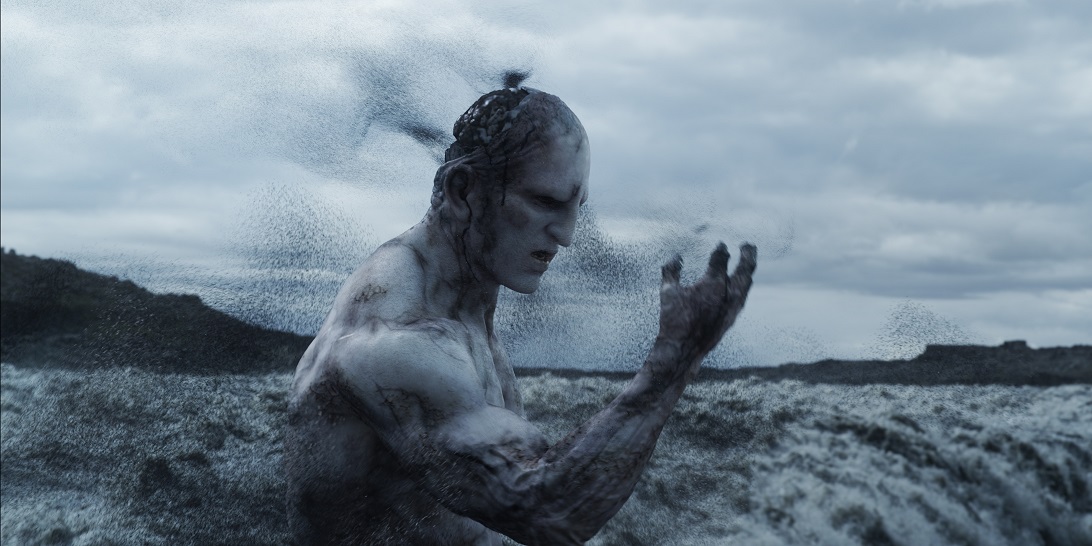
Prometheus opens with a truly inspired scene where a human-like creature kills himself so he can release his own DNA into a waterfall. This was the creation of the human race. Flash forward to two scientists (Shaw and Holloway), who discover a cave painting in Scotland, which they think tells us where we can find the beings who created humanity (“the Engineers”). Flash forward a couple more years and we are onboard the Prometheus, a spaceship on its way to that planet. The Prometheus belongs to the Weyland Corporation, the corporate quasi-villain of the Alien series. Weyland Corp. hired Shaw and Holloway to lead the expedition, but the ship is actually under the control of a woman named Vickers (Charlize Theron), though confusingly the ship also has a captain. So it’s not really clear who is in charge. Also among the crew are several scientists and android David (Michael Fassbender).
When they get to the world they are seeking, they find a man-made structure and they investigate. Inside, they learn that some disaster has befallen the Engineers. Some people die. Some twists happen. We learn the evil truth about the alien and the Engineers. The credits roll.

Where The Movie Excelled/What Sucked

This film is stunningly beautiful. It looks like science fiction should look. And if you know nothing about Alien, and you can ignore some problems, then you will also find this film to be quite impressive. The film builds a mystery quite nicely and it leads to some shocking moments. Its pacing is good. Its writing is solid for what it offers. The Engineers are beautifully designed (though the makeup to make Weyland look old is pathetic). There is a little tension now and then. And Fassbender does an excellent job of presenting us with a robot without morals.
The film also does an excellent job of raising really great issues. What if we were created by an alien species. Would that mean there is no God or just that there is a different God than we thought? The Engineers seem to be rather evil, quite frankly, so does that affect our nature? The film also raises the issue of the Engineers creating us and then deciding to kill us off. Why? Are we just a lab experiment that has run its course? Do they want the planet for something better? Did we turn out to be too dangerous? These are great questions. Too bad they’re never developed.

Indeed, this film has some serious problem, especially if you know Alien. If you’ve seen Alien, then forget everything I just said about the film creating mystery because none of the surprises will surprise you. The moment they say, “Gee, it looks like something came out of this Engineer’s chest,” you know exactly what that means and the mystery ends. From that point on, it’s just a matter of watching the alien evolve from worms to snakes to giant face huggers to finally the familiar form, though annoyingly, the film keeps acting like it’s surprising you with each step.

Moreover, the film is totally predictable if you’ve seen Alien v. Predator, because it’s the same movie. Swap out the Predator for the Engineers, set the movie in space, and you’ve got the exact same film: minority chick/scientist hired to lead expedition, Weyland comes along seeking a form of immortality, they find ancient pyramids where there shouldn’t be any, all ancient Earth cultures worshipped these creatures as gods, unleash aliens, run from aliens, scientist-chick fights back and saves the day, and aliens fight each other to the death. Same plot... same story arc... same characters. Unfortunately, this makes it very easy to guess what will happen next in scene after scene.
There are other problems too. Scott keeps trying to reach back into the prior films to take things that worked well before, but he doesn’t ask if they work here. For example, in Alien, the crew constantly argued because they were sick of each other and they were in the middle of a contract dispute. Hence, they were surly. Scott tries to recreate that here, but it doesn’t make sense because this crew consists of scientists who have only just met. Why would they in-flight and treat each other with contempt for no reason whatsoever? Scott also tries to repeat the idea of the crew being blue collar, as they were in Alien even though it makes no sense this time because this is a scientific crew, not a space freighter. Thus, even though they are all scientists who are put into stasis the moment they board, they show up dressed like grizzled lumberjacks and truck drivers in dirty work boots and flip-flops and they act like longshoremen. It doesn’t make sense.

Another problem is that most of the characters are meaningless. You could remove everyone except Holloway, Shaw, David and the Captain and not a thing would change in the story. Basically, it’s red-shirts galore. That means most of the setup, like the tension between Vickers and everyone else or between the various scientists is just pointless filler.

Even worse, there’s a frenetic twenty-minute period toward the end of the film where everything completely falls apart. It begins when Holloway is poisoned and turns into a monster and needs to be killed. Strangely, only Shaw is freaked out about this; everyone else acts like nothing happened. Would real people not care? Shaw then immediately learns that she’s been impregnated by an alien (through Holloway) and she wants it removed from her. David, however, decides to freeze her against her will. The reason isn’t given but presumably he wants to preserve the specimen -- the same idea as in Aliens. This makes sense at first, but a moment later he mysteriously lets her run away after beating up two doctors and he doesn’t even chase her. No one else tries to stop her either, or even follow her, even though they know she’s infected with something. That makes no sense.
She then reaches the surgery pod, which you would assume would be part of the ship, but they pointlessly made a big deal of it being something Vickers brought on board herself. Shaw climbs into the pod and has the alien taken out of her. It’s still alive, so she hits the decontaminate button and walks off. . . never waiting to see if it’s actually dead. What? She then stumbles around the ship like she’s dying since she just underwent major surgery until she happens upon Weyland himself, who faked his death and came aboard the ship secretly. Huh? The guy owns the company. He owns the ship. No one would tell him he couldn’t go if he wanted. So why do this in secret?

Bizarrely, neither Weyland nor David nor any of the new crewmembers with them act at all surprised to see Shaw, nor are they alarmed by her ill appearance. They chat as if nothing is happening, with the infection/freezing alien issue entirely forgotten. Shaw then leaves again to wash up. After she leaves, we learn that Vickers is Weyland’s daughter, and we just don’t care because it means nothing to the story. Not only does Vickers add nothing to the story, but her being Weyland’s daughter is never used in the plot in any way.
Suddenly, we’re off to see the last living Engineer. Once they find it, it chooses to attack them for no apparent reason. . . actually, the reason is that if it spoke to them, then it would need to say answer some questions and Scott didn’t want to answer questions. At that point, the plot returns to a simple chase film and sanity is restored. For about 20 minutes though, nothing in this film made any sense – not the actions of the characters, not the things they said, not the plot itself.

Finally, while there’s nothing wrong with science fiction films leaving ideas unexplained so the audience can fill them in, it is a cardinal sin not to at least give the audience some clues. This film, unfortunately, does this all the time. For example, it raises the issue of how the meaning of God would change if we were created by mortal beings, but it never addresses it beyond asking the question. By comparison, Tom Sizemore gives a four or five line speech in Red Planet that is deeper and more meaningful than all the discussion on this topic in Prometheus. Another example is why the Engineers would create us and then decide to kill us? Sadly, we don’t know. The film never even speculates as to a motive. Thus, there’s nothing to debate except “why might someone want to commit genocide?” which isn’t really that interesting of a question as it’s too abstract. It also strikes me that the Engineers must be clones, but that’s never mentioned. Intellectually, the film is a complete disappointment. It’s like someone suggesting topics you could discuss and then walking away without saying anything further.

Ultimately, what you get here is a film which is probably excellent for anyone who hasn’t seen Alien, but is weaker if you have. I enjoyed the film a good deal and it held up to being watched a second time. But I can’t help but feel let down. This is a film with so much potential throughout, but it always feels lazy to me. They raise ideas, but don’t address them - they don't even tease them. They constantly swipe from the prior films (almost every scene steals from prior films, right down to the heroine walking around in the same underwear Sigourney Weaver’s character wore). In fact, if this had been a film outside of the Alien universe, people would be angrily denouncing it as “a total ripoff.” They establish ideas they then ignore because they didn’t want to bother making them work. And ultimately, little in this film matters. You don’t care that any of these people are dead. There is no sense of terror that something bad will ultimately happen. And there’s no sense of wonder or the type of thought provoking that usually happens with good science fiction. That makes this a bit disappointing, especially as I think each of the mistakes was avoidable.
[+] Read More...

Thursday, April 18, 2013

Questionable Bond No. 4

Who’s the Honey? Or is that Pussy? Or was it Goodnight?

Question: "Name the Top 5 Bond girls!"


Scott's Answer: In no particular order...

1. Domino - Thunderball
2. Pussy Galore - Goldfinger
3. Teresa - On Her Majesty's Secret Service
4. Vesper Lynd - Casino Royale
5. Melina Havelock - For Your Eyes Only

Honorable mentions...
6. Tatiana Romanova - From Russia with Love
7. Anya Amasova - The Spy Who Loved Me

Andrew's Answer: In particular order...

1. Tatiana Romanova - From Russia with Love
2. Solitaire (Jane Seymour) - Live and Let Die
3. Domino - Thunderball
4. Camille Montes - Quantum of Solace
5. Teresa - On Her Majesty's Secret Service
[+] Read More...

Wednesday, April 17, 2013

American Mythology

Unfortunately, genuine analysis is becoming a lost art. Indeed, in the modern world, most analysis takes the form of uninformed opinion followed by the cherry picking of facts to fit the conclusion. This is probably because it’s easier to be right when you pick your own facts. In any event, I ran into just such an article the other day and I think it’s worth discussing.

This article was on Yahoo, a wretched hive of scum and idiocy. And what drew my attention was the assertion in the headline that Americans can’t do fantasy stories: “Where are all the American fantasy characters?” Well, this struck me as rather stupid because America wasn’t around in the time of knights and dragons, so naturally there won’t be any American fantasy characters. But it turns out this wasn’t what the writer meant. What he eventually got around to saying was that “our mythology” is based on fantasy books and Americans simply don’t write fantasy books. See, the big three fantasy books (Narnia, The Lord of the Rings, and Harry Potter) are all British and “talk about British values.” Thus, spoke the moron,
“Yet if Fantasy books make up much of our mythology, and I think strongly that that is true, then I also think that we, in America, have a problem. The problem is that most of our Fantasy isn't written by Americans about American culture and values.

* * *

English values are similar to ours, but they're still not American. And if mythology is supposed to teach a culture how to act and behave, what type of person you should strive to be, then we have a serious problem, because all our mythology is teaching us how to be good Brits, not good Americans.”
Oh boy.

Let’s take this idiot down, shall we?

First, in the article itself, he notes that it was the start of the third season of Game of Thrones which made him ask this question. Game of Thrones was written by an American. So his own article contradicts the point he was pondering. He also seems to have ignored other American fantasy writers like Terry Brooks to reach this point.

Secondly, I don’t for a minute buy his conclusion that “fantasy” is our mythology. American mythology is much more real-life, focusing on the Founders, on the Civil War, on the American West and gangsters and astronauts. American kids don’t say, “I want to be Frodo Baggins or Harry Potter when I grow up,” they say, “I want to be a cowboy... an astronaut... a gangster.”

Actually, if you really want to know what forms our mythology, it’s not wizards and dragons at all. Sure, we like dragons, but out mythology is a combination of many things: some dragons/wizards, some Ancient Greece, some Rome, some Samurai and Ninjas, lots of cowboys, lots of science fiction and some horror. And what does all of this add up to? Superman. Batman. James T. Kirk. American kids don’t get their understanding of our culture from Harry Potter, they get it from superheroes who lay out truth, justice, and the American way.

Finally, even if you look at Narnia and Harry Potter as something which resonates with kids, it’s rather selective to just pick those but ignore Twilight and The Hunger Games, both of which are American. Walt Disney’s effect on our culture is a million times that of Harry Potter. So is Luke Skywalker’s effect. So is Stephen King’s.

This is one of those theories that has some appeal for the brief moment the idea enters your head until you realize that you just picked some random stuff and invented a pattern rather than finding a genuine pattern. Sadly, in the modern age, there is no longer a filter that requires people to think before they voice their opinions authoritatively. Welcome to the net.

Anyway, what do you think makes up our mythology?
[+] Read More...

Tuesday, April 16, 2013

Questionable Jones No. 7

Joe Camel has nothing on Indiana Jones when it comes to cool. Jones oozes cool, and so do his films.

Question: "What was the coolest moment in the series?"

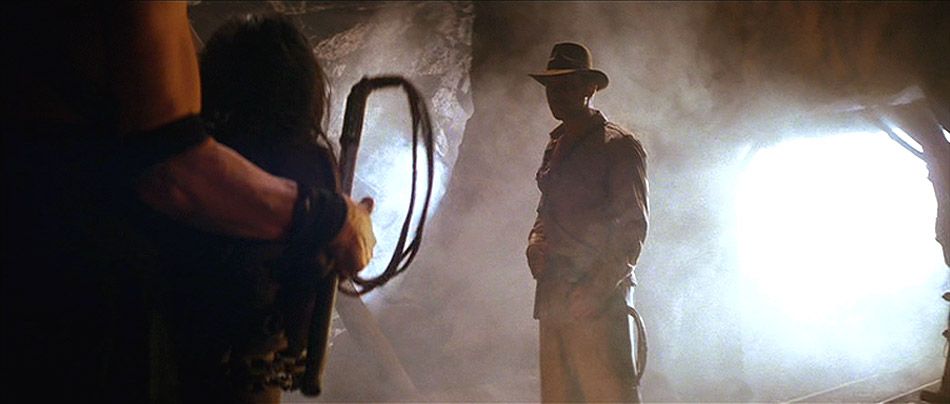
Scott's Answer: You're probably thinking, "When Indy shoots the Cairo swordsman." But for me, the coolest moment in the series is in Doom when Indy, after breaking the spell that Mola Ram had on him, punches out one of the Thugee guys. We see the slave children working as the guy literally gets punched into the frame. Then we cut to Indy, backlit and looking all badass.

Andrew's Answer: The coolest moment is when the Nazis are talking in the camp and the plane explodes over the hill and they say one word: "Jones!" What bigger compliment can you give than knowing right away that anything that goes wrong is because of one man?
[+] Read More...

Sunday, April 14, 2013

The Great (film) Debates vol. 77

With everyone's taxes no doubt finished, it's time to party! So...

What movie party should we attend?


Panelist: Tennessee Jed

I might go to a musical concert film festival: Black and White Nights (Roy Orbison and friends) coupled with Richard Thompson at Celtic Connection in Glasgow, Scotland. If it had to be films, I probably would watch The Benny Goodman Story (Steve Allen) and The Glenn Miller Story (Jimmy Stewart.)

Panelist: ScottDS

The masked orgy in Eyes Wide Shut. Just kidding!!! While it wasn't in the question, my mind immediately went to teen movies and, in particular, the John Hughes classic Sixteen Candles. Just a lot of fun, plus with Anthony Michael Hall and his pals hanging around (not to mention the Donger!), I wouldn't be the geekiest one there.

Panelist: T-Rav

Now that the Chris Nolan trilogy of Batman films has wrapped, I wouldn’t mind going to a party with all three shown back to back. Kind of a long film party, but as long as we’re talking hypothetically.

Panelist: BevfromNYC

What about the New Years Eve parties in Boogie Nights? That might be fun if you like being around porn stars. Okay, there was that one party where the guy killed himself and his wife, but other than that, there were lots of drugs and booze. What could be more fun?

Panelist: AndrewPrice

Film parties always look better than the real thing, be it a party with hot Ewok babes or the eternal damnation of partying at the Overlook hotel. But for a simple good time, I'm going with the party in Animal House.

Comments? Thoughts?
[+] Read More...

Friday, April 12, 2013

Dark Shadows (2012) v. The Addams Family (1991)

Tim Burton’s Dark Shadows and Barry Sonnenfeld’s The Addams Family are the same movie. Both are films adapted from television shows from the 1960. They involve similar plots, similar themes, similar sets and even similar gags. Both are good films too, though The Addams Family ultimately proves far superior. Here’s why.


** spoiler alert **

Let’s start with the similarities. Dark Shadows is the story of Barnabas Collins (Johnny Depp), who is a vampire who returns to his family home after two-hundred years locked in a coffin. His family has fallen on hard times because they’ve been cursed by the same witch (Eva Green as Angelique Bouchard) who turned him into a vampire and locked him in the coffin. He must work his way back into the family and must save them from the witch. By comparison, The Addams Family is the story of Fester Addams (Christopher Lloyd), who is the older brother of Gomez Addams (Raul Julia). He disappeared years before and now has returned to the family home to find his place again. Only, Fester is under the control of Abigail Craven, who is supposedly his mother but is more of a fraudster. As with Barnabus, Fester must learn to fit in with his family and then must save them from his mother.
As you can see, both films involve the return of missing heirs who must work their way back into families in which they don’t quite fit and both must save their families from evil women intent on stealing their fortunes and destroying their families. Both films even follow the same plot diagram: outsider arrives and family must adapt... adversary revealed... as the outsider begins to fit it, the adversary strikes and appears to win... the family must come together to regain their fortune and overcome the adversary.

The themes are the same too. Both families are out-of-place in the modern world. They are strange, with strange customs, and both are disliked by the outside world. They are seen as freaks – both families actually are a mix of normal humans and the supernatural. Both families also have a hint of being anachronistic, with both feeling somewhat Victorian in style and manner. This gets confused a little in Dark Shadows because Depp’s character is 200 years old and thus all the jokes about being abnormal are at his expense, but if you look at the family alone, you will see that they don’t feel “modern” either compared to the rest of the world either – Burton adds another layer of anachronistic-confusion on top of this by setting Dark Shadows in the 1970s and playing it as a sort of period piece.
Both films also involve lost family members trying to fit back into their families. The tensions are reversed in the films, with the Addams family welcoming Fester back, even though he feels he doesn’t belong, and Depp forcing himself back into the Collins family, which doesn’t want him, but the end result is nearly identical themes of acceptance and families growing together.

All of this, makes these films essentially the same movie. Nevertheless, there are key differences which make The Addams Family the much better film.

Tone: Despite similar themes and both films being comedies, their tones are rather different. Dark Shadows has a darker tone. It is driven by drama rather than humor, particularly the miserableness of the Collins family, and its humor comes from insults, from injury, and from the good guys being made to feel uncomfortable. The Addams Family does the reverse. The Addams Family is driven by how the Addamses happily endure in their own little world, untouched by reality. Its humor is based on the family succeeding in ridiculous ways, on the frustration of the bad guys, and on the avoidance of injuries. This results in Dark Shadows being much darker. But since the darker tone isn’t really used to achieve anything interesting, this only makes the film harder to enjoy.

Dark Shadows also suffers from a bit of schizophrenia in that it never can decide if it’s more comedy or more drama. Burton also floods the film with musical interludes of 1970s music, which are just too long. It feels like Burton is copying Goodfellas, but it never meshes with the film and it hurts the comedic timing.
Characters: Although both films involve unusual characters in outlandish situations, Dark Shadows doesn’t capitalize on this nearly as well as The Addams Family, because Dark Shadows doesn’t give its characters much freedom. Essentially, Dark Shadows focuses entirely on Johnny Depp, with Depp either dominating the screen or the other actors waiting for him to arrive. Thus, despite the fact the character list includes a werewolf, a ghost, a reincarnated woman who sees ghosts, a thieving father, and a witch, none of these characters ever becomes all that interesting.

By comparison, you remember all the characters in The Addams Family because each functions as a fully-formed person with their own storyline. Thus, throughout the movie, each of these characters engages in a variety of activities related solely to themselves, which gives each a chance to do memorable things. This, in turn, lets you enjoy each scene on its own, whereas many scenes in Dark Shadows feel like filler as you wait for Depp to do something.

Actors: The actors matter too. Raul Julia was Gomez Addams, Anjelica Huston was Morticia, and Christopher Lloyd was Uncle Fester. These actors immersed themselves in their roles and created characters who fit the needs of the story rather than playing themselves. Indeed, if you look at the other films done by Julia, Huston or Lloyd, you won’t find similar characters in any other film because the acting they did here was meant to portray the characters they played. The actors in Dark Shadows are not as convincing. For one thing, none of them except Depp have unique characters. They are simply “angry teenage girl” or “rotten father,” and the actors are all interchangeable. The one exception is Depp, but it really is starting to feel like Depp does the same character from film to film. Thus, while Gomez Addams felt like Gomez Addams, Barnabus Collins felt like Johnny Depp playing Captain JackWonkaHatter. This makes it harder to see the characters as real.
Cleverness: The final difference lies in the cleverness of the writing. The Addams Family involves some truly brilliant writing. It includes jokes that are hilarious and yet unexpected. It takes risks, as we discussed with Clue, by not dumbing it down. It ties its humor directly into the characters and the plot. It swerves between innuendo and child friendly, but in such a way that is safe for kids and hilarious for parents. And it uses some fantastic word play. Moreover, the storyline itself moves unexpectedly and, while you know how the story will end, you still never know how you will get there.

Dark Shadows, on the other hand, offers none of this. The humor in Dark Shadows is not witty, it is “fish out of water” humor, with Depp misunderstanding what the people around him are talking about. It is essentially him not understanding how a McDonalds sign lights up or that Alice Cooper is not a woman. The writer took no risks either as there is nothing here to make an audience think. There is so little about the writing that is memorable that I can’t even remember a favorite line. Further, everything in this film is expected. You know how the film will end. You know what each character must do before we get there. And you know exactly how things will play out.

When Depp goes to see the witch alone, you know he will be captured. You also know he will be freed at a critical moment to save the day. You know that Depp and Victoria will end up together even though there’s no chemistry between them (or even a relationship) because that’s what’s expected. You even know that Dr. Hoffman will not die when she’s tossed into the ocean... because that’s exactly what you would expect to happen. You see everything coming a mile away because this film does exactly what general audiences expect it to do.

In the end, both movies are good. Dark Shadows will keep your attention, it will make you laugh at times, and it doesn’t feel like anything else out there right now. So I do recommend it. But The Addams Family is far superior. It pulls you in much stronger and makes you care about the characters. You really come to like these people and you want to see more of them (hence, the sequel). If you can see only one comedy about a bizarre supernatural family this summer... make it The Addams Family.
[+] Read More...

Thursday, April 11, 2013

Bond-arama: No. 0020 Moonraker (1979)

Today we continue our journey through the James Bond films with No. 0020 of 0023: Moonraker. It’s fitting that Moonraker starts with a theft because everything in this film was stolen. This film uses a carbon copy villain, a recycled henchman, and a plot stolen from the prior movie. That’s really lazy writing. In fact, everything about this movie feels incredibly lazy.

Plot Quality: Moonraker tries to cash in on the popularity of Star Wars and other science fiction films. They even play the Close Encounters theme at one point. On its own, the plot doesn’t sound half bad. Crazed billionaire misanthrope Hugo Drax wants to wipe out humanity so he can repopulate the planet with his own master race. To do this, he’s built a secret space station. But he draws the attention of James Bond when he steals back a space shuttle he’s loaned to the British government. Bond investigates and saves the day.

Unfortunately, this is the exact plot of the prior film, The Spy Who Loved Me, except that Spy’s villain Stromberg built his paradise under the ocean. Again, Jaws (Richard Kiel) is brought back as the henchman. Again, Bond is quasi-competing, quasi-partnering with a hot secret agent, only this one is American instead of Russian. And, once again, Director Lewis Gilbert gives us a rage-inducing moment as Bond emerges from the ocean in a Lotus drivable gondola as we watch animals do double-takes, people stare mindlessly as others somehow don’t notice, and a f***ing drunk look at his drink as if he’s %$#@#% hallucinating!! I swear to God, Gilbert, I will p*** on your grave one day! Oops, did I say that out loud?
So... what else to say? Well, beyond that, this movie is just lazy and there seems to have been no filter on whether or not ideas made sense. Let’s start with the theft of the space shuttle. Why is a space shuttle being loaned to the British? They have no space program. Who in their right mind would load the space shuttle with fuel before putting it on the back of a 747 to transport it? The space shuttle is not even close to capable of launching off the back of a 747 in any event. Why would someone wire the 747 to give them a sensor to tell them that someone was starting the shuttle’s engines? Why wasn’t the shuttle destroyed in the same explosion it caused which blew up the 747? Why on earth did no one ask these questions and change this whole idea?

It gets worse. Doctor Goodhead (Lois Chiles) infiltrated Drax’s empire long before the shuttle was stolen, yet the shuttle theft is supposed to be the reason she’s there. I guess the CIA’s psychic branch sent her. . . they felt a great disturbance in the farce. When Bond gets to Brazil, after a brief stop in Venice, he needs more equipment, so he puts on a poncho and hops on a fricken horse and rides out into the countryside to the local headquarters of MI-6 in a fake monastery. Uh. Did no one ask why MI-6 would be somewhere Bond couldn’t get to quicker or easier? How does he plan to bring his equipment back to wherever the action is? What if he doesn’t have a horse? Did no one ask if anyone with a brain would really set up a spy agency like this?

Finally, Bond hops a boat and heads straight to Drax’s hidden lair. There is no way he would ever find the hidden lair except that Drax’s henchmen chase Bond right to it, where Bond kills a snake and finds Drax’s super-harem. Bond is captured and escapes and he and Dr. Goodhead, who was not killed for reasons unknown, sneak aboard a space shuttle as the pilots. Conveniently, the space shuttle is programmed to take them directly to the space station. Once there, they turn off the cloaking device, which allows NASA to see them and to immediately launch two shuttles so we can have a zero-G space fight. But where did NASA get the two shuttles and how can they be ready to launch immediately? How does this cloaking device work anyway? Launches are monitored. Satellites can be seen from earth. How did everyone miss this? And why build a space station at all? Wouldn’t it make more sense just to build a large bunker? And why didn’t Drax kill Bond and Goodhead? This has become such a cliché you can’t do that anymore! This is all because the writers were too lazy to work their way through problems. They just pretended the problems weren’t there.
Bond Quality: This is Roger Moore’s fourth outing and he’s well past his prime by this point. He’s lost the tough-guy Bond he played in his first couple films and by now consists largely on being smug and providing comic relief. He’s not too old yet to play the role, but he already comes across as disinterested. This is a Bond who does not run, he walks. This is a Bond with no sense of urgency. This is a Bond who does not seduce, he lazily assumes women want him because it’s in the script and he lets them do the work for him. This is a Bond who needs to take a breather during his fight scenes. This is a Bond with “low T.” And at no point, does Moore develop any chemistry with any other actors in the film.

Bond isn’t helped by the script either as Drax, Goodhead, Jaws and even Drax’s generic henchmen Chang all prove smarter than Bond at one time or another, and Goodhead is always one step ahead of him. Moreover, Goodhead and Jaws both save him during the movie. And while Drax proves more than a match for Moore’s Bond, it’s hard not to think that Connery’s Bond would have just shot him at the start of the film and been done with him. It really feels like Drax only gets as far as he does because Bond isn’t really interested in catching him.
The Bond Girl: As usual, this film has two Bond girls: Lois Chiles and Corinne Clery. Clery plays Corinne Dufour, Drax’s personal pilot. She flies Bond to the estate and tell us about Drax through exposition until she hands Bond off to Chiles. Later, she finds Bond in Drax’s study and he seduces her. She never really realizes that Drax is evil, but Drax has her killed by his dogs in any event. In a strange way, her death is unsettling. As far as I can tell, she’s the only Bond girl who is truly innocent of knowledge of the evil of the villain and whose death then goes completely unnoticed by Bond. Usually, Bond kills the evil Bond girls or laments/avenges the deaths of the good Bond girls. Corinne kind of gets the cinematic equivalent of an unmarked grave.

Lois Chiles plays Holly Goodhead, a CIA agent and astronaut, who infiltrates Drax’s space program and then competes with Bond to solve the mystery. Chiles is sexy and smart, which is good, but she’s also rather disinterested, which is bad. As with everything else in this film, she comes across like she’s going through the motions and can’t really get worked up about anything. Shoulder shrugs and “oh well” seem to be the extent of her interest in the film.

Villain Quality: Oh boy. The main villain is Hugo Drax (Michael Lonsdale). He’s an industrialist who wants to kill everyone and then repopulate the planet with his own master race. Unfortunately, he’s a carbon copy of Karl Stromberg from Moore’s prior film, The Spy Who Loved Me. What’s more, Lonsdale’s acting feels totally lazy. He speaks in a monotone. He doesn’t even move around – every scene has him standing in place or sitting. He seems bored by the film and disinterested in Bond or Goodhead or even his own plot.
His plot is kind of nonsense too. He plans to drop nerve gas on the human race from a string of satellites, but it’s not really clear how that will work. Then his team of about 50 people will “descend from the Heavens” and rebuild mankind. Sure, but why put them in space at all? Why not just build a bunker? And doesn’t that seem like a small number of people to use? Talk about inbreeding! And why bother killing everyone else anyway? Why not just buy an island and start the master race there? It doesn’t seem that Drax has really thought this through, yet he doesn’t seem crazy enough to plan what he’s planning either.

Beyond Drax, you have two henchmen. First, you have Drax’s Asian manservant, who is actually Japanese and does Japanese martial arts, but answers to a Chinese name because the writers were too lazy to think through his character. He tries to kill Bond, but fails. There’s not much more to him.

After Chang dies, Drax needs a new henchman, but the writers are too lazy to think of one, so they bring Jaws back from the prior film. . . a retread. They don’t even explain how he gets there, except through some garbage phone call which makes it sound like Drax called a temp agency. Jaws is not a great character either. Jaws is one of those henchmen who only works when everyone else gets stupid. Indeed, Jaws has no skills except the bear hug, so the people he kills need to mysteriously run out of bullets right before he arrives and then need to freeze in terror so he can grab them. Deus ex Machina is lazy writing.
Jaws arrives and tries to kill Bond by doing things with his metal teeth which just aren’t possible, but again, the writers are too lazy to do it right. Then it gets worse. After Jaws fails to kill Bond, Jaws somehow survives a crash which should have killed him – he’s tall, ergo he’s indestructible. He then meets the Swiss Miss and they fall in love on the spot. Completely against character, Drax takes both Jaws and the Swiss Miss to his space station of love, where they realize (after Bond tells them this) that they will eventually be killed by Drax to preserve his master race, which means it made no sense for Drax to bring them. Jaws then becomes a good guy and saves Bond. He also impossibly lands safely on the earth after riding debris to the surface. Lazy, lazy writing.

Conclusion

There is something about this film which makes it watchable. It has the grandeur and the big themes of a James Bond, which make it feel like a James Bond film. But the details and the execution really do stink: a stolen villain, stolen henchmen, stolen plot, uncaring Bond-girl, and a lazy Bond do not a great Bond film make. That’s why this film is No. 0020 of 0023.
[+] Read More...

Wednesday, April 10, 2013

Letting the Geek Flag Fly

By ScottDS

A few weekends ago, some friends and I went to MegaCon, Central Florida’s largest celebration of pop culture, sci-fi, horror, comics, anime, and assorted nerdery. This was my fourth visit in ten years and the crowd was as big as ever. Looking back on the trip, a few thoughts have occurred to me... social, political, and otherwise.

One event was Sci-Fi Speed Dating. Yes, really! (I was pressured into it.) There were 53 guys and 50 girls, all of various shapes, sizes, and complexions. We sat with a girl, traded pleasantries for three minutes, then rotated. Multiply that by 50. At the end, we anonymously exchanged phone numbers and I’m proud to say I got two! Some people got bupkes. Don’t get me wrong – I don’t expect anything to happen but I would’ve felt worse getting nothing. How damaging to the self-esteem it must be not to receive any positive attention from the opposite sex at a sci-fi convention! If not here, then where? After chatting with 50 girls, there seems to be a clear dividing line in fandom. Imagine a Venn diagram: on the left are games, comics, and anime; on the right are sci-fi and filmed entertainment; in the middle are Dr. Who and all things Whedon. 98% of the girls in attendance belonged exclusively to one side or the other, with only a few in the middle.
I can’t explain it. Not only that, I’m guilty of it as well, with my tuches firmly placed in the right side of the diagram. I don’t hate videogames or anime – they’re just not on my radar but who am I to question someone else’s esoteric hobbies? Most of the girls were into anime and videogames. A handful were into Star Trek, Battlestar Galactica, etc. Only one woman understood my T-shirt! One girl, when asked, said she was a fan of anything that had a good story and interesting characters. "You’d make a horrible Hollywood executive!" I thought to myself. No one mentioned anything resembling classic science fiction or any entertainment more than 20 years old (Dr. Who being an exception). We all decry the speed at which pop culture operates in the 21st century: nothing is allowed to settle and we’re always onto the next thing before the current thing has been given a chance. I had a small sample size to work with but it would seem that this thinking even permeates geek culture, at least to a small extent – the very people who you’d think would ponder the future while treasuring the best of the past.

Others may imply that there’s an element of sexism on display: in other words, that females can’t be "real geeks." I’m the last person on the planet qualified to write about the battle of the sexes but in my experience, anyone – male or female – can be a poser. Anyone can claim to know more about a subject than they actually do. And I hate to think us male geeks are so close-minded that we wouldn’t let females into the clubhouse! Are female geeks held to a higher "standard" because many of these things are seen as strictly male interests? Trust me, I’d be nervous if I were asked to go head to head with a hardcore Trekkie. Believe it or not, I don’t know everything there is to know about Star Trek! But in any subculture, there will always be arguments and a competitive streak. Sadly, it’s human nature. (As an aside, just because someone is a geek doesn’t mean they’re on the prowl for a geek companion – some of us have learned this the hard way. Even 30 Rock’s Liz Lemon fantasized about alpha male "astronaut Mike Dexter.")
There’s also a danger in geek culture being "co-opted." We’re seeing this already, with studios peddling their wares at the San Diego Comic-Con – a fun event that, in my opinion, has sold out – hoping for those coveted geek dollars. While some are easily swayed, others know when they’re being sold a bill of goods. PC Magazine’s Will Greenwald stated that, "Geek culture requires not just enthusiasm, but depth and scope. Those latter two characteristics are why geekdom will never be truly co-opted by popular culture." There’s a reason why Star Trek fans have conventions but viewers of Keeping Up with the Kardashians don’t. (If they do, call in a drone strike!) On the other hand, one can argue that conventions are celebrations of the best of pop culture, period. Breaking Bad and Dexter aren't exactly Comic-Con fodder but there's no shortage of merchandise or people dressed up like the characters. No one’s dressing up like Honey Boo Boo!

(They are, however, dressing up like characters from The Big Bang Theory, which drives me nuts. It’s nice to have smart characters on TV but their social awkwardness doesn’t help the stereotype. As one comedy writer put it, "Geeks who watch The Big Bang Theory are like black people who watched Amos ’n’ Andy!")
Then there’s the political angle. These things are 99.9% apolitical and can be enjoyed by anyone of any persuasion. It’s funny that MegaCon took place on the same weekend as CPAC, which might was well be MegaCon for conservatives. I’ve said it before but if a hack like Steve Crowder really wanted to make a difference, he’d stop preaching to the choir on Fox News and start working on his own comic book, or short film, or e-book, etc. Nothing that has to be exclusive to geekdom, mind you, and nothing political... just an interesting story well told, with conservative-friendly themes in the background. Sci-fi/comic conventions are the perfect place to interact with fans and sell your own work – capitalism in action! And geeks are early adopters – if they like something, they make sure the world knows it. And if they like you, they’ll support you through thick and thin.

I’m not saying folks on the right should cater to the geek demographic in order to win elections... then again, who do you think devised Obama’s election technology plans? It would also help if certain conservative bloggers (paging Mr. Schlichter) stopped making fun of geeks, nerds, etc. every chance they got. Sadly, in this economy a lot of people are living in their parents’ basements, and they’re not all geeks! Also, and this goes for the media in toto, it’d be wise to stop putting so much emphasis on box-office numbers. (Yeah, when pigs fly...) Money is no guarantee of quality. In most industries, that’s not true, but it is in this one and that requires a change of thinking that some people – especially market-friendly folks on the right – may not feel comfortable with. If Apple sells millions of iPhones, then it must be a good product, right? Right. If a movie like Scott Pilgrim vs. the World bombs, then it must be a bad movie, right? Wrong. So many variables are involved that it’s a miracle any movie gets released, let alone a good one. Filmmakers can try their best but no one knows what they want until it’s given to them.

And consider this when it comes to elections. Jim Geraghty of the National Review recently discussed how politicians could possibly hope to spread their message in such a fragmented culture. I’ve mentioned pop culture in this article but it might be fair to say that there is no pop culture anymore: only a variety of niche interests. In the 80s, The Cosby Show was watched regularly by 30 million people in a country of 240 million. Today, the aforementioned Big Bang Theory is watched by half that number in a country with an additional 80 million people in it. HBO’s Girls is a water cooler show in maybe three offices that have water coolers, yet it’s liked by "the right people" so it’s considered a hit with less than one million viewers! And the problem with a niche is that it can end up an "acquired taste," i.e., intimidating to newcomers. Star Trek certainly has this problem. Dr. Who’s history intimidates me. And, oh yes, a certain political party that seems to repel as many people as it attracts (such is my observation).
This brings me to a larger non-geek point. Conservatives need to pick an option: either culture is a trifle, in which case it’s not worth analyzing; or it’s important, and it’s worth taking seriously. And if it’s worth taking seriously, then realize that, behind every actor, there are thousands of talented artists and craftspeople, some of whom might be sympathetic to other points of view! And I'm all for the DIY approach but let's stop pretending that anyone can make a movie or write a book. Anyone can not do that, but they’re welcome to give it their best shot and hopefully the cream will rise to the top. I realize that many in the creative community don’t do themselves any favors when they say things like, "So and so was so brave for doing XYZ" where XYZ = putting on a prosthetic nose and saying someone else’s lines. I get that. But many conservatives do themselves no favors when they say things like, "Sure, XYZ might be a great actor but have they fought for their country? Can they plow the fields or perform open heart surgery?" It’s apples and oranges!

(You guys are good, though. Every time Andrew mentions his love of John Barry music or Tennessee Jed gives a shout-out to Douglas Trumbull when discussing visual effects, it warms this geek’s heart!)

[sigh] Well... my first semi-political article spawned from a trip to a sci-fi convention. Amazing! I suppose my point – if any – is that geek culture is like any culture; it’s a microcosm – one that Hollywood claims to love yet many of their films imply otherwise. But we’re a loyal and passionate audience... and as far as politics go, I’d like to think some of us are open-minded. So whaddya got? [smile]

(Special thanks to Orlando Attractions Magazine for the wide shot.)
[+] Read More...

Tuesday, April 9, 2013

Questionable Star Wars vol. 13

Just as a broken clock is right twice a day, there are probably a couple good things about Phantom Menace.

Question: "Say three good things about The Phantom Menace."

Scott's Answer: 1. The music - yeah, this is my standard cop out answer but John Williams' "Duel of the Fates" will be remembered alongside "The Imperial March" for years to come. And the rest of the music isn't bad either!

2. Some of the ADULT acting - yes, I know Jake Lloyd can be annoying (though he was just a kid!) but Liam Neeson brings so much authenticity and dignity to every role he plays that the movie is elevated, if only slightly, by virtue of his presence. Ewan McGregor isn't given tons to do in this one but he's always fun to watch. I must also mention some of the voice actors, most notably the great Brian "Gordon's alive?!" Blessed as Boss Nass, that green bulbous creature who resides underwater. Not a particularly well-written character but Blessed gives it his all and is fond of quoting from the film in his various TV appearances.

3. The design - between the prequel trilogy's less than sterling reputation and Lucas' (over-)reliance on digital effects, two aspects of these films seem to get buried in the mix and that is the art direction and costume design. Production designer Gavin Bocquet, costume designer Trisha Biggar, and their respective teams made these movies look great!


Andrew's Answer: 1. Liam Neeson is awesome as a Jedi. He brings the right amount of calm and kick ass all at the same time. He strikes me exactly as what I was expecting the Jedi would be when I first heard of them as the Guardians of the Old Republic. Too bad he’s the only one.

2. I like the design of the ships actually (except the silver one). They don’t really mesh all that well with the Star Wars universe, but I think the designs are pretty cool.

3. I like the fight scene with Darth Maul at the end. It’s well done. It has high points and moments of frustration, interesting pauses and a neat result... and no kid to ruin it.
[+] Read More...

Sunday, April 7, 2013

The Great (film) Debates vol. 76

It's one thing to be funny. It's another thing entirely to be funny will standing.

What is the funniest standup routine?


Panelist: Tennessee Jed

I couldn't think of any that were part of films other than concert films, so . . . my favorite all time routine is one of the legendary Bob Newhart's routines: The Grace L. Ferguson Airline and Storm Door Company.

Panelist: ScottDS

I'm a big comedy fan but I've never really followed the stand-up scene. Pryor, Carlin, Dangerfield... I have homework to do! Anyway, my favorite comedian working today is Louis C.K. and while I can't quite remember the first time I saw him, his HBO special Shameless is the one from which I can still quote. For instance, this NSWF clip. [smile]

Panelist: T-Rav

I don’t care what anyone thinks of me for this, Ron White’s “They Call Me ‘Tater Salad’” routine on the Blue Collar Comedy Tour cracks me up whenever I think of it. If that makes me slightly redneck, so be it.

Panelist: BevfromNYC

I love, love, love Eddie Izzard and his concerts. How can you not just love a man who can have an audience rolling on the floor as he riffs on the French Revolution or Nietzsche? You don’t really need to know world history to get it, but it just makes his comedy funnier when you do. Videos of his concerts are available on NetFlix and they are worth a peak.

Panelist: AndrewPrice

There are so many that I like: Pryor, Carlin, Izzard, Cosby, and so many I really can't stand: Foxworthy, Gallagher, Dennis Miller. Robin Williams used to be really funny. But the guy whose routines I remember the most are Eddie Murphy. "Half!"

Comments? Thoughts?
[+] Read More...

Friday, April 5, 2013

Film Friday: Clue (1985)

With Scott reviewing Battleship, which is based on a board game, it’s time to review one of my favorite comedies, which also happens to be based on a board game: Clue. Clue was a box office bomb that his since become a cult classic for the same reason we discussed about Highlander becoming a cult classic, i.e. this was a good film which confused the generic public.
Plot
Directed and co-written by Jonathan Lynn (My Cousin Vinny), co-written by John Landis (The Blues Brothers, Animal House), and produced by Debra Hill (who typically collaborated with John Carpenter), Clue involves an all-star cast who find themselves stuck in a mansion on a rainy night in the 1950s. Each of the people invited to the mansion has been given a false name to hide their identity and a potential murder weapon. The audience will recognize these names from the board game “Clue.” Soon, Mr. Body turns up dead and they all have motives for killing him. They must solve the murder before the police arrive. In the meantime, they need to deal with the fact that the staff and everyone who shows up at their front door ends up being killed. Simple enough, right? Well, that’s a matter of some debate.
What Makes This Film Work
Clue failed with general audiences, but has since become a cult classic. The conventional wisdom is that cult films are bad films that somehow find an audience because they are quirky and quirkiness magically finds audiences. As I mentioned when discussing Highlander, however, I don’t buy that. I suspect cult films are actually good films which fail with general audiences because they put too much faith in their audience and they don’t spell things out clearly enough for general audiences to understand them.

In Highlander, the problem was that the film lacked the exposition general audiences need. It flashed back and forth between the present and the past without a character saying, “Do you remember what things were like 400 years ago?” It also used clever dialog rather than exposition to give the audience background information, such as having a character read two words from the newspaper (“baffled” and “incompetent”) rather than having a character explain through exposition the status of the current police investigation. This was beyond general audience’s ability to comprehend.

Clue does the comedy version of this. Indeed, the film is packed with jokes that are not highlighted and punchlines that require the audience to remember what they were told earlier. For example, when Michael McKean’s character (Mr. Green) refers to himself as a plant, Leslie Ann Warren (Ms. Scarlet) quips, “I thought men like you were called a fruit.” This is a reference to his having been outed earlier as gay, but no one reminds you of this when she makes the quip. . . you need to remember. That apparently asks too much of general audiences and this film is full of these moments where the writers leave it up to the audience to piece the jokes together. In fact, the only time Clue actually reminds you of something to make sure you got the joke was when Mrs. White (Madeline Kahn) tells you that her husband is dead. This is the punchline to a joke from several minutes earlier where White was asked what her husband does and she acts cagey before responding, “He just lies around all day.” In this instance, the writers felt the audience wouldn’t get it, so they had Ms. Scarlet remind everyone of White’s earlier statement by saying, “So that’s what you meant when you said ___!” This feels incredibly clunky when it happens and it stands out as the film talking down to you. But ironically, it only feels that way because the film doesn’t do this at any other point; most films did this so often that you stop noticing they are doing it. So why would the writers of Clue do this? Because it preserves the pacing and it makes the dialog punchier and more natural when you aren’t constantly stopping to explain things to the audience.

Clue is also crawling with unexplained jokes which take a quick mind to spot. Consider this joke by Professor Plumb (Christopher Lloyd). He is asked who he works for and he responds, “The United Nations Organization.” But, someone asks, aren’t you a psychiatrist, not a politician? He responds that he works for a sub-agency called “the World Health Organization.” Nothing more is said to drive the joke home and general audiences probably didn’t even know there was a joke here. Yet, the people who would become the film’s cult audience pretty quickly realized that the initials of these organizations together are “WHO UNO,” which was actually what they were trying to figure out – who they all knew in common. This is similar to two jokes in Men in Black, where Will Smith refers to their car as a “Ford POS” and where Zed says to the failed applicants, “You’re what we’ve come to expect from years of government training.” Neither joke is ever explained and I can tell you that the audience I saw the film with missed both jokes, but a couple people got them.
Even beyond this, Clue does lots of things you have to think about to get. When they separate, for example, they manage to put the most perfectly incompatible people together as teams, such as people who threatened to kill each other earlier or how Yvette (Coleen Camp), who every man is after and who flirts with every man, gets randomly teamed up with Mr. Green, who is gay. At no point do the characters say, “hey, we’re incompatible,” but if you’ve been using your brains throughout, you quickly realize the irony in all of the pairings. Similarly, the character names are all ironic in one form or another. Mrs. White is a black widow who dresses head-to-toe in black except for a white liner on her cape. Ms. Scarlet runs a house of prostitution, i.e. a “red-light” establishment, and is later accused of being communist (i.e. a red) – Communism is then described to as “a red herring.” Colonel Mustard (Martin Mull) is a Major and reveals himself to be a coward (i.e. yellow). Mr. Green is a plant and plants are green. Professor Plumb is a psychiatrist who plumbs the human mind. Mrs. Peacock (Eileen Brennan) is an overdressed, ostentatious woman who fits the expression “proud as a peacock.” In each instance, these jokes are there for you to see them if you can spot them, but the filmmakers never explain them or point them out.

The film also includes a lot of wordplay where you need to be able connect the fact that the characters are using different means for the same words. The best example of this is when Mrs. Peacock is revealed to have taken bribes in a mensroom in exchange for delivering the vote of her husband the Senator. When this is pointed out, it gets asked rhetorically “What do you think of that?” Scarlet responds, “I think it stinks.” Peacock immediately counters, “How would you know? When were you in that mensroom?” Notice that her response not only ascribes a different meaning to the word “stinks” than Scarlet meant, but it also flips the subject of Scarlet’s comment from the bribe to the mensroom. This is a great verbal trick, but it requires the audience to think and it requires the audience to realize that a joke has been told. Most films would alert the audience to this by having a character say, “I think she meant the situation, not the mensroom stank!” and that’s the point when general audiences finally laugh. Clue didn’t do this.

This is what I suspect turned off general audiences. As with Highlander and several other cult classics that come to mind, few of the jokes were spoon-fed, and that led people like Roger Ebert (who was King of the Simps despite pretending to be erudite) to see the movie as a series of “throwaway gags and one liners” which he didn’t think were funny. Clearly though, he just didn’t understand the jokes because few of them can legitimately be called one liners, as each was carefully set up over time, and as none of the gags were throwaways as each provides clues as to the motives of the characters.
Finally, there’s one more thing which hurt this film. When the film was originally shown in theaters, they used a gimmick to market it. The film was shot with three possible endings. Depending on which theater you went to, you saw a different ending. The idea was to get people to see the movie three times (these days, all three are stuck together), but this proved a problem with general audiences because the public wants the story in a tidy package, they don’t want to work for it. Giving them multiple possible endings puts the onus on them to finish the story and general audiences don’t like that.

Ebert tries to justify his own need to have things spoon-fed to him by claiming that having multiple endings made the entire film “meaningless.” That’s a rather telling conclusion. Alternate endings are highly prized by film buffs who love seeing the “craft” and enjoy thinking about the possibilities that were considered. The idea of alternate endings also forms the foundation of the human fascination with reliving the past and asking the “what if” question that is so popular in science fiction. To see a film as “meaningless” merely because it offers you different endings to choose from speaks of a one-dimensional mind that doesn’t want to use independent judgment, not any flaw within the film.

This is why Clue struggled with general audiences but has since found a cult following, not because this is a stupid quirky film, but because it is a good, extremely well-written film which just didn’t spoon-feed general audiences enough.
[+] Read More...

Thursday, April 4, 2013

Questionable Bond No. 3

A good villain is like a box of chocolate. . . that wants to kill you. And nobody does villains like the James Bond series.

Question: "Name the Top 5 Bond villains!"


Scott's Answer: In no particular order...

1. Blofeld - You Only Live Twice (the face that launched a thousand parodies)
2. Auric Goldfinger - Goldfinger
3. Dr. No - Dr. No
4. Alec Trevelyan - GoldenEye
5. Le Chiffre - Casino Royale

Andrew's Answer: In particular order...

1. Dr. No (Dr. No). This guy set the standard for villains when he dismissed Bond as just "a stupid policeman."
2. Auric Goldfinger (Goldfinger). Brilliant plan, all the right traits.
3. Kananga/Mr. Big (Live and Let Die) Another brilliant plan and just the right amount of psycho.
4. Emilio Largo (Thunderball). Created the nuclear blackmail template.
5. Dominic Greene (Quantum of Solace). Vastly underrated.
[+] Read More...

Wednesday, April 3, 2013

Guest Review: Battleship (2012)

by ScottDS

When the first trailer for Peter Berg’s Battleship hit the Internet, that sound you heard was a collective groan: “Really? A movie based on a board game*?!” It financially underperformed in the U.S. and most likely put an end to Taylor Kitsch’s sci-fi movie career (he of John Carter infamy). However, I’m pleased – no, surprised! – to say that the movie isn’t terrible. Dumb, loud, clichéd, stupid… yes. But not terrible, and infinitely better than the last two Transformers movies.

** spoiler alert **

NASA discovers an Earth-like planet in another star system and transmits a powerful signal from their array in Hawaii. Meanwhile, Commander Stone Hopper (Alexander Skarsgård, dreamy as usual) has a problem, and his name is Alex Hopper (Kitsch), Stone’s younger slacker brother, who gets into trouble while trying to impress Samantha Shane (Brooklyn Decker), who just happens to be the daughter of Pacific Fleet commander Admiral Terrance Shane (Liam Neeson). Stone forces Alex to join the Navy and we cut to the present where Alex is a trouble-making lieutenant aboard the USS John Paul Jones (JPJ), an Arleigh Burke-class destroyer. Stone is the commanding officer of her sister ship, the USS Sampson. Their ships are engaged in RIMPAC – Rim of the Pacific Exercise – in Hawaii.
Five alien ships arrive in response to NASA’s signal. Four land in the ocean off Hawaii and erect a force field, trapping the Sampson, JPJ, and the JMSDF Kongō-class destroyer Myōkō. A fifth ship crashes in Hong Kong. The Sampson and the Myōkō are destroyed and the JPJ is damaged, forcing Alex to assume command since he’s now the senior officer. They’re unable to communicate with anyone outside the force field and the radar is on the fritz, but Myōkō’s captain, Nagata (Tadanobu Asano), who had been rescued after the initial melee, comes up with an idea involving tsunami warning buoys (to detect water displacement). The JPJ sinks two alien ships but is ultimately destroyed herself. Upon returning to the mainland, Hopper and Co. assume command of the battleship-turned-museum ship USS Missouri. They destroy the communications array on the island – which the aliens had been using to contact their comrades – and with the force field down, jet fighters swoop in to destroy the last remaining alien vessel. Alex is promoted to Lieutenant Commander and asks Admiral Shane for his daughter’s hand in marriage. Shane rejects him but the two head off to lunch, presumably to discuss the situation.

This is a dumb movie... but there are different kinds of dumb. Whereas 2012 and the Transformers sequels are offensively dumb, this movie is likably dumb. It doesn’t set its sights too high, its intentions are (kinda) good, and while there are a handful of cheesy moments, there are no cringe-worthy ones. I won’t go so far as to say it’s self-aware, but I did laugh when one tough character tells a geeky character, “Let's see if we can buy the world another day!” and the geek replies, “Who talks like that?” Is Peter Berg winking at the audience? I doubt it, but it was an appreciated moment. One wishes the characters in Transformers knew how ridiculous they were sometimes. The rest of the script – if you can call it that – doesn’t do any favors. It cobbles together scraps from Armageddon, Pearl Harbor, Transformers, Star Trek: First Contact, Battle: Los Angeles, Top Gun, and even Space Cowboys. Thankfully, we don’t get any annoying parents, or robot testicles, or robots pissing on people... oh God, has the bar been lowered that much? Are we now supposed to be an impressed when a summer blockbuster doesn’t have those things? [smile]

When I speak of the film’s intentions, I’m referring to Peter Berg who is obviously a fan of the U.S. Navy, so much so that many people have referred to this film as “Navy porn.” Contrast that with Michael Bay: he may have had good intentions with Armageddon (the space program) and Pearl Harbor (our veterans) but with the Transformers films, any good intentions he might have had (selling cars?) are undone by excess. To be fair, Battleship has plenty of that but it also has shots that last longer than 12 frames and action that isn’t blurred by shaky-cam. How novel! And it’s nice to see a third act involving actual human beings working on plans to defeat an enemy, as opposed to CGI robots duking it out, and we can’t even tell which one is which. Battleship might be clichéd and simplistic, but it’s not convoluted and it doesn’t overstay its welcome. Okay, maybe it does but only by 10 minutes or so.
Taylor Kitsch isn’t bad as Alex Hopper – not bad for this movie, anyway – and his character arc can be seen a mile away, but he’s a little more comfortable here than he was in John Carter. Skarsgård (of True Blood fame) is good, but he doesn’t last long. Neeson brings his usual gravity to the role but it’s a thankless one that could’ve been played by any actor over 50. Speaking of actors, this film includes a few whose stock in trade ain’t acting. Samantha is played by model turned actress Brooklyn Decker. She’s... okay. Could a classically-trained actress have done better with the role? Maybe, but Decker is inoffensive and when she first walks in, all I could think was, “Boobs!” [smile] The JPJ’s weapons specialist is played by R&B singer Rihanna. All her dialogue is available here. I’m wondering why she chose this movie to make her big-screen debut. It’s a nothing role – one of those characters who makes sarcastic remarks and barks orders, but maybe it worked because if the character wasn’t played by a recognizable performer, no one would care. Tadanobu Asano is very good as Nagata (and even better as a marketing hook for the Asian market), who starts off as Alex’ RIMPAC rival but ends up an ally and Jesse Plemons plays a schlub Seaman who helps figure out the aliens’ weakness.

This brings up a problem. Remember Signs? The aliens in that film arrive on Earth, a planet consisting of 75% water, yet are allergic to water. The entire crux of Battleship’s “plot” involves a NASA mission to locate an Earth-like planet that is approximately the same distance to a star as Earth is to the Sun and is capable of supporting life. So what is the aliens’ weakness in this film? Direct sunlight! How did such a race manage to evolve on a planet like ours, let alone develop space travel? Sure, they wear visors but imagine if we all had to wear visors during the day, lest we become paralyzed. The aliens are also like Star Trek’s Borg, in that they only harm people that are considered a threat. To paraphrase one of the Trek DVD commentaries, “Well, gee, if only the aliens didn’t have that particular bit of programming, they could’ve conquered the galaxy by now!” They cause plenty of destruction, both on land and at sea, but people seem to be spared because it’s convenient to the plot, or because they’re played by recognizable actors!
I want to mention a couple of things this movie has, one cornier than the other. Samantha is a physical therapist and spends most of the movie with Lt. Col. Mick Canales, an Army veteran and double amputee. Canales is played by Gregory Gadson, a U.S. Army Colonel who just happens to be a “bilateral above-the-knee” amputee. No one will mistake him for Olivier or Brando, but again, this was something that could be appreciated. If this were a Michael Bay movie, Samantha would be a stuck-up model and she’d find a way to get aboard one of the ships, even though such a thing would be quite improbable. Now for cheese... the USS Missouri is a museum ship docked at Pearl Harbor. Assisting Hopper and Co. in reactivating her are several retired veterans... who just happen to be there... and who approach the camera in slow motion. Is the actual ship maintained 24/7 by veteran officers who served as far back as WWII? Maybe... I have no idea. I’d love to visit it one day, but man oh man, was this schmaltz with a capital “S-C-H”!
Like 99% of summer blockbusters, tech stuff is top-notch. The sound design is excellent and I envy those with a state-of-the-art sound system. ILM knocked it out of the park with the visual effects and the projectiles fired by the alien ships somewhat resemble the pegs used in the original Battleship board game. By the way, the aforementioned warning buoy scene is the one scene that gives the film its title, where the characters are able to detect the ships on a grid with a letter/number system. It’s quick and obvious but also pretty neat, though I doubt there are that many buoys and I doubt they’re arranged in the ocean on a perfect square grid! There are several different alien ship designs, including a spherical “buzz saw” weapon that wreaks havoc on land – again, excellent work by ILM and a variety of vendors. Considering the state of visual effects today, these people no doubt burned the midnight oil to get the work done on time.

I can’t help but recommend this movie – it’s not high art, or even low art… or even art. But it’s harmless and inoffensive. It’s PG-13 for generic “mayhem.” Two characters say the F-word but are cut off in comically awkward fashion. Why do I mention the rating? Because if you have young boys in your family, they’re gonna love it!

“They ain't gonna sink this battleship, no way!”

*Movies based on board games don’t have to be bad. Clue is a cult classic, and maybe it was just ahead of its time.
[+] Read More...

Tuesday, April 2, 2013

Questionable Star Wars vol. 12

Everybody has an off day, but that can’t explain these moments.

Question: "What was the series’ worst out-of-character moment?"

Andrew's Answer: Pretty much every single character in the prequels is out of character. Anakin=Vader? My butt. Samuel L.=a Jedi? Uh, no. The rest are just as bad. But I am going to say that the most out of character moment is when Obi-Wan Kenobi suddenly tells Luke in Empire that truth is only true from a certain perspective. . . WTF? Where does this come from? Vader must have hurt him more than we realized at the end of Star Wars.

Scott's Answer: This is actually a tough one but the one answer that occurs to me is Han Solo in Return of the Jedi. It's not even that he's "out of character" - he just seems out of it some of the time. This is most likely due to the fact that he has no subplot or arc of his own and Harrison Ford wanted to kill off the character... but Lucas vetoed that idea.
[+] Read More...