Showing posts with label Television. Show all posts

Monday, February 23, 2015

The Best of Reality TV

On several occasions, I've reviewed shows that are essentially classified as "reality TV," even though they are anything but what people think of when you say "reality TV." Today, I'm going to give a quick rundown of some of the best shows out there that might interest you.

Alaska State Troopers... This show is somewhat similar to COPS, only it includes the added challenges of being in Alaska. The result is a fascinating look into law enforcement in some of the harshest terrain in the world. What's more, the officers they follow really prove themselves to be some of the best examples of how law enforcement is done right. These are not badge-heavy gunslingers, they are true professionals who spend as much of their time helping people as they do stopping criminals... or angry moose.

Booze Traveler... This is a surprisingly interesting show. Boston drunk Jack Maxwell travels the world looking for interesting local drinks in various countries. In the process, we learn a bit about the history of alcohol, we learn a lot about the culture of the countries he visits, and we see some really cool drinks that get you checking out the internet to see if you can order them... and I'm not even a drinker. Hmm.

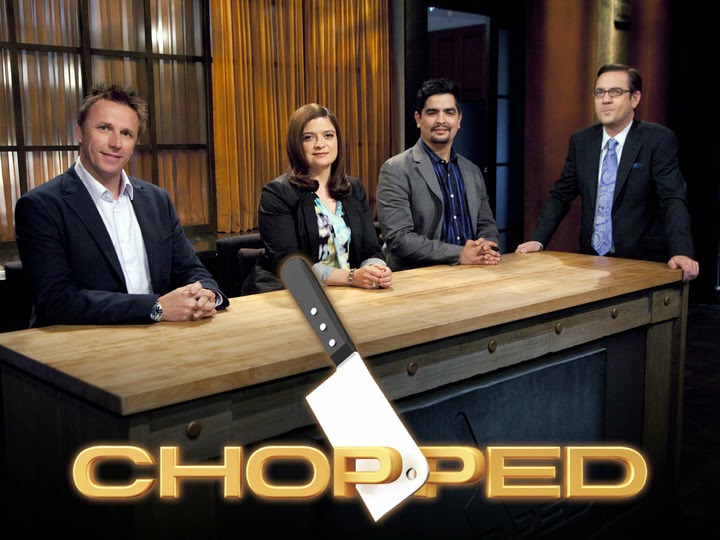
Chopped... This is one of the best cooking shows in a long time. Essentially, host Ted Allen pits four chefs against each other as they cook meals using mystery baskets of food items. Sometimes, these items are normal, like chicken cutlets. Other times, they are things you (and the chefs) have never heard of. The coolest of these episodes, by the way, involves a series of episodes using children and then teenage chefs. These kids are amazingly talented and they really represent themselves in a way that should make everyone proud.

Underworld/Drugs Inc.... I have no idea how National Geographic Channel gets their access, but these two related shows are amazing. They literally ride along with drug dealers, drug kingpins, cartel killers, guys looking to rob drug dealers, cops, DEA and anyone else who is part of the story of the underworld of drugs, people smuggling, gun smuggling and counterfeit products. The reality presented by these people is amazing, especially as it differs so much from the official story. If you want to understand what is really going on in the war on drugs, watch this show.

Carnival Eats... This show is amazing. More so than any other show on the Food Channel, this show highlights the amazing combinations of food that you've never thought of before, but which you now cannot live without trying. "They deep fried what???!!! How far is the Alabama County Fair from my house?!" This show is the ultimate in food porn.

Buying "___"... This is a real estate show, but so much more. Coming in several flavors like "Buying the Beach," "Buying Alaska," "Buying the Bayou" and "Buying Hawaii," this show gives you a really cool sense of what the real estate is like in other "exotic" parts of the country. This is where I learned that Cajuns drink out of dirty rivers, Alaskans are nuts... they use outhouses and need to fend of f**ing bears, and Hawaii is INSANELY expensive. This show provides an interesting perspective. As an aside in a similar genre, Celebrity House Hunting is not only a guilty pleasure but it shows you what a couple million can get you. You see some pretty amazing homes.

Hotel Impossible... Anthony Melchiorri has a well-deserved reputation for turning around some major New York City landmark hotels. He now roams the country offering advice to struggling independent hotels. What makes this show so interesting is that it's honestly like a master class in hotel management. Seriously, if you are in the hospitality industry and you haven't watched this entire series to see all the ideas he shares, then you are negligent.

These shows really are worth checking out. They provide lots of interesting insights and give you a cool perspective on the world around us and in particular our own country.

Anything I missed?
[+] Read More...

Tuesday, December 2, 2014

Ultimate Airport Dubai

Fifty years ago, Dubai International Airport was nothing but desert. Today, it’s a major modern transportation hub which sits within one direct flight of 90% of the world’s population. It also still sits in a desert and faces unique problems because of that. In Ultimate Airport Dubai, you get a fascinating look behind the scenes of this amazing airport and I highly recommend it.

Ultimate Airport Dubai is a reality television series that follows a group of employees around the Dubai International Airport (DIA) as they go about their daily jobs. These jobs include managing air traffic, managing the movement of cargo and luggage, customer handling, aircraft maintenance, and the construction of a brand new terminal. See, this airport, already the largest building on earth by floor space (360 football fields in size), is too small to meet Dubai’s ambitious plans for the future, so they are expanding it.
How much are they expanding it? Right now, the airport handles 340,000 flights a year, carrying 57 million passengers and 2 million tons of cargo... making it the third busiest airport in the world. They want to add another 15 million passengers a year. To that end, they’ve hired 18,000 construction workers to build the new terminal. This new terminal will then add to the 60,000 employees who already work at the airport. Interestingly, almost every single employee you see is an ex-pat, and the reason is that over 80% of the people who live in Dubai are ex-pats.

The story is fascinating.
Let’s start with the basics. This one has everything a “reality” show should have. It has amazing imagery; this airport is meant to impress and it does, and Dubai is mysterious. Moreover, the camera work gives you fascinating perspectives you will never get any other way. The writing/editing is solid. The drama is relevant to the topic too; everything focuses on the problems the employees face on the job. This is good because it results in a real feeling that you are being let into the true challenges of running this airport and solving its unique problems, rather than chasing tangential issues like the personal problems of the employees. The pacing is excellent too and the story never slows or drags. To the contrary, the story hits you so hard and fast that it's impossible to turn your eyes away. Additionally, there is such a wealth of detail crammed into the story that you feel like you need to watch it 2-3 times just to get it all. Finally, the people they follow are interesting and likeable, which makes the show enjoyable, and it has a solid, serious narrator who knows when to stay out of the action.
In fact, the people are really interesting and quickly make you interested in them. For example, you have the construction manager who is run ragged and must navigate a series of subcontractors who are much less dedicated than he is. You wonder if he will ever pull off his Herculean task. You have the engineering crew who must tear these planes apart and reassemble them. You have the cargo manager for whom every landing is a race against the clock as he tracks missing bags, the bags of missing passengers, missing cargo and other cargo that has gone wrong in some manner. All the while, he risks costing a plane its takeoff slot.
There are more too. You have the hostess who must juggle a million passenger complaints, violent passengers, sick passengers, missing passengers, and the complexities of rebooking people who often fall between the cracks and find themselves stuck at the airport. You have the customs officer who must be on the look out for drugs and black magic. And so on.
All of that makes for an enjoyable viewing experience. But the topic is the real gem. The story of this airport is a fascinating topic. It is a hidden world you knew nothing about before you set out to watch the show and it is an amazing world... a world of high engineering, human error, rules and the bending of rules, all taking place in this hidden world wrapped in the enigma of being set in Dubai with all of its idiosyncrasies and mysteries. So much of what we think we know about the Middle East isn't true here, but so much also is. And seeing it all take place amidst such intense opulence is just fascinating. This show is enthralling and I absolutely recommend it.

The one word of caution is that it’s not easy to find. It’s on NatGeo during the days right now, but seems to come and go. If you can’t find it there, it is on Youtube: Ultimate Airport Dubai.

Thoughts?
[+] Read More...

Tuesday, March 4, 2014

What’s wrong with SpongeBob?

by tryanmax

There’s something about SpongeBob SquarePants that I’ve never been able to understand: why is he so polarizing? I personally like the little yellow sponge, so it’s not hard for me to understand why other people do, too. Like any long-running show, it’s had its misses, but overall, I think it is a really enjoyable show. What I don’t get is why there are almost an equal number of people who despise him. It just doesn’t make sense to me.

From my perspective, SpongeBob carries on the tradition started by the earliest cartoons of Disney, Warner, and Fleischer. It’s comic, surreal, and employs cartoon physics. It stars a bevy of distinct, idiosyncratic characters. It’s well produced, but not too polished. And is written on multiple levels such that children and adults can both enjoy it but for different reasons.
SpongeBob also contributes some new tropes the realm of cartoons. Foremost are the underwater gags. Other cartoons have played around with mixing land and underwater physics before, but because of SpongeBob’s underwater setting, such gags are routine. There are even knowing references to this, such as an episode where letters sent from the land are illegible due to running ink, so SpongeBob and his buddy Patrick throw them into an underwater campfire.

And yet, for some reason, those are the very attributes that a lot of people cite when they claim to hate SpongeBob. I can understand some of the things that might put someone off. SpongeBob has a high-pitched, nasal voice that is pretty much meant to be annoying. And yet, some of that description fits Bugs Bunny and Mickey Mouse. So, in those cases, maybe the people just don’t like cartoons?

Then there are the made-up controversies:

Not long ago, the University of Virginia stirred up some undersea controversy by publishing a study declaring that SpongeBob makes kids dumb. More specifically, they claimed it shortened attention spans, though how you gauge a preschooler’s attention span is beyond me. I don’t intend to argue the merits of the study. I just think it’s silly to lob such criticism against a show that is clearly not meant to be educational.
Then there is the most famous controversy regarding SpongeBob’s sexuality. I don’t mean to drag up a nearly ten year old ghost, but I don’t have to; it keeps popping up again and again. This, despite repeated explanations from creator Stephen Hillenberg that SpongeBob is essentially asexual—a perfectly natural orientation for a sponge.

This controversy originated way back in 2005 when the Muppets, Barney, Jimmy Neutron and several other children’s icons besides the yellow sponge starred in an animated music video for Sister Sledge’s “We Are Family.” For some reason, Dr. James Dobson of Focus on the Family decided this constituted homosexual propaganda and zeroed in SpongeBob in particular. Since then, this accusation has been kept alive with people citing things like SpongeBob’s fastidious nature, his high-pitched voice, his physical weakness, his love of bubbles, and his *gasp* friendship with another male all as signs of homosexuality. Basically, they are saying that, because SpongeBob fits the most unflattering of homosexual stereotypes, he must be pro-gay. Yeah, that wasn’t really thought through.
One of the more well-thought criticisms against SpongeBob is that he promotes Marxism. According to this theory, Mr. Krabs, SpongeBob’s money-grubbing boss, represents the ultimate commodity fetishist. Additionally, the relationship between Krabs’ restaurant, The Krusty Krab, and its perpetually foundering competitor, The Chum Bucket, is said to portray capitalism as farcical. Finally, Mr. Krabs exploits SpongeBob by paying him a minimum wage despite his nearly limitless productivity, adhering to Marxist predictions regarding the value of labor. Truth be told, it’s a pretty airtight theory, as long as you ignore the fact that Marxism is just as much a parody of economics as any cartoon. That and…

Late last year, Nickelodeon aired a special called “SpongeBob, You’re Fired” wherein the polygonal protagonist loses his job. His chronically jobless buddy, Patrick Star, attempts to show SpongeBob the benefits of “glorious unemployment” such as free time and free food. But SpongeBob insists he can only be happy when he’s working, and eventually gets his old gig back. This, of course, made him a conservative hero, but also earned the ire of welfare champions, minimum wage earners, and the like.

So, what are your thoughts on SpongeBob? Love him or hate him?
[+] Read More...

Wednesday, February 19, 2014

TV Review: Justified (2010-present)

I hate cop shows. Seriously hate them. They’re lowest common denominator crap which feed you the impossible idea that a computer can predict crime or neon-laced crime labs that work in the dark can solve crimes with a carpet fiber and sexy banter. Might as well use pixie dust. What these shows really are is soaps where the characters carry guns and fence with stylized serial killers destined to lose by the script. Even worse, they’re all the same. There are a couple that stand out however, and Justified is the best of those. In fact, this is an awesome series.
Justified centers around United States Deputy Marshal Raylan Givens (Tim Olyphant). Raylan is a Kentucky boy who got the hell out there and now has been sent back by the Marshal Service as punishment for what many think was the murder of a hitman in Miami. Justified is the story of Raylan doing his job back in Kentucky as he finds himself wrapped up in the tangled nest of hillbillies who inhabit that part of the country. And as you'll note right away, this no normal cop show. There are no crime of the weeks to be solved. There are no glitzy labs, no melodramatic races against the clock, no attempt to wow you with the soundtrack.
The hillbillies Raylan faces include several clans, including his own family. His father Arlo is a turd, a liar and a petty criminal. His childhood rival Boyd Crowder (Walton Goggins) is... well, Boyd Crowder, and he is part of the Crowder clan. There are a clan of Bennetts also who are at war with the Crowders. There are some black folks hidden in one of the valleys too. His ex-wife Winona (Natalie Zea), works at the court and her husband attracts the Dixie Mafia into Raylan's life -- they are from Lexington and they are connected to the Detroit Mafia. Each of these groups engages in a sort of low-intensity war for control over the region, particularly Harlan County, as they ply their trade of bank robberies, murders, benefits fraud, drug dealing and general mayhem.
Interestingly, Justified strives for a more realistic presentation, so it's filmed in Washington, PA and Pittsburgh rather than Hollywood, and it presents genuine hillbillies. They aren't the cleaned up "salt of the earth" types Hollywood normally shows. These people don't dress like supermodels, they aren't sexy or slick. None of them will ever be mistaken for Prof. Moriarty. What they are is white trash... white trash who don't shower or change their clothes, white trash who are hooked on drugs and crime as a way of life, white trash who think nothing of hurting other people because it suits them. Good luck finding that on CSI, even though that's what our jails are packed with.
Justified is rather realistic when it comes to gun play too. The cops don't shoot to kill without a reason, but when they do, people die. The bad guys kill people too. This isn't one of those shows where the main characters are all safe and each gets to spend an episode in a fake coma as the others come in and tell them how they feel about them.
The dialog is realistic too. When you watch CSI or NCSI or SUV or whatever, you hear dialog that is written for a television show. The characters say things normal people don’t, they express things that normally would not be expressed, and they dramatize everything. Justified doesn’t do that. To the contrary, the office banter, the relationship talks, the verbal combat with thugs and crooks is spot on. Nobody here says, “Should you continue your present course of conduct, I’ll need to take action against you,” when they could instead say, “Raylan, you’re pissing me off.” Well, except for Boyd. The dialog here is actually some of the best I’ve seen. It’s punchy, funny and on point. Each character is different and speaks their own language.

The real strength of this show, however, is the characters. One of the problems with most shows (especially cop shows) is that all the characters eventually drift into the same stereotype. Every actor wants to become the silent hero with the secret pain. Barf. That doesn’t happen here. These characters are written as real people and they act according to their characters. If a guy is an amoral idiot, then he will act like an amoral idiot. If a guy is a barely controlled thug, then that is how he will act. Yet, the characters are all deeply complex. You will see each character put into “no win” situations on a regular basis and watch how they respond. You will learn a good deal about what motivates each and what their strengths and weaknesses are. And in doing so, you will be amazed at how rich and fantastic is the picture they present. These people aren't cardboard. More than that, they are all fascinating. Raylan is a good cop with a low tolerance for procedure. Arlo is a skunk. Boyd is a philosopher turned conman. Maggs is a pirate. Wynn Duffy is survivor. Etc. You will constantly be surprised by what happens. This is the kind of show where you know what the characters would normally say if they were on another show, but you have no idea what they’re going to do or say here. That’s quality writing.
Interestingly, Justified comes from two novels (“Pronto”, “Riding the Rap”) and a short story (“Fire in the Hole”) by Elmore Leonard, whose other books have been turned into excellent movies: Out of Sight, Jackie Brown, Get Shorty, 3:10 to Yuma just to name a few. He’s known for his dialog and it shows here.
The acting is fantastic too. You will recognize many of the actors who make their way through this series, but you’ll never doubt they aren’t really who they claim to be. Olyphant in particular is Raylan and he plays the part so well that it may typecast him. Nick Searcy plays his boss Art. You have to love Art. Art is hilarious as the put-upon boss who has much more control over his office than people think and who is much wittier than he wants people to believe. Walton Goggins, who was in another great cop show – The Shield – is Boyd Crowder, a fake neo-Nazi turned preacher turned back into a hardcore criminal. He’s psychotic, menacing and yet bizarrely likable. Then there are characters like Dickie Bennett, a coward who needs to be killed. His mother Mags is a fascinating character. Stephen Root plays the crazy, yet realistic Judge Reardon. Jere Burns plays Wynn Duffy, a nut job who is surrounded by even bigger psychos in the Dixie Mafia. He and Raylan cross paths because of Raylan’s ex-wife’s husband, who is basically a conman. And so on. There isn't really an uninteresting character or a poor actor in the mix.
All told, this is one heck of an entertaining and addictive show. You will not regret watching this one. Start at the beginning though because there is a huge learning curve.
[+] Read More...

Wednesday, January 15, 2014

TV Review: seaQuest DSV (1993-1996)

by ScottDS

One thing on Netflix kept me company during finals week: seaQuest, the ill-fated mid-90s sci-fi show that premiered on NBC in September, 1993. It was re-cast several times and even went through a name change in its final season. Watching it now proved to be a fun and interesting exercise, what with the “gritty,” arc-based, post-Lost, post-Breaking Bad world we live in today.

seaQuest was created by Rockne S. O’Bannon, who would later go on to create Farscape. The show chronicles the adventures of the high-tech submarine seaQuest DSV (“Deep Submergence Vehicle”). The seaQuest is operated by the United Earth Oceans Organization (UEO), a world-wide coalition of countries and undersea groups. (Yes, it’s very much like Star Trek’s United Federation of Planets and yes, there will be more Trek comparisons!) The show takes place in what used to be considered the far future: 2018. Humans have exhausted all the natural resources in the ground and have now begun mining the ocean floor. The UEO is tasked with patrolling these new colonies, as well as defending their interests from hostile nations. In the pilot, we learn that the UEO has also started to engage in heavy scientific research. Early episodes stress the science/military conflict but it’s mostly much ado about nothing.

Roy Scheider is Captain Nathan Bridger, original designer of the seaQuest. In the pilot, he’s cajoled into assuming command after the ship’s previous captain (played by Shelley Hack) was relieved for disobeying orders... and over-acting. Stephanie Beacham plays Doctor Kristin Westphalen. She and Bridger share a brief romance near the end of the season (yes, not unlike Captain Picard and Doctor Crusher). Jonathan Brandis plays teenage genius Lucas Wolenczak (yes, not unlike Wesley Crusher). The rest of the senior staff consists of sensor officer Ortiz (Marco Sanchez), comm officer O’Neill (Ted Raimi, brother of Sam), engineer Hitchcock (Stacy Haiduk), supply officer/comic relief Krieg (John D’Aquino, a.k.a. Seinfeld’s “Todd Gack”), security chief Crocker (Royce D. Applegate), and first officer Ford (Don Franklin).

They give it their all but the three that get most of the attention are Bridger, Lucas, and Westphalen. Scheider’s presence was always appreciated and he comes across as a believable naval officer-slash-father figure. Lucas wasn’t quite as annoying as Wesley Crusher was in early TNG, but “teenage genius” is such a tired trope – hell, it was a tired trope 20 years ago! In the pilot, Lucas demonstrates the vocoder technology that allows the ship’s resident dolphin (Darwin) to talk. This is the one element of the show that most people remember. Technically, the dolphin didn’t “talk” – the vocoder simply translated the noises into language, most of it cryptic. On one hand, it could be a bit of a crutch; on the other hand, Darwin actually came in handy sometimes. TV shows tend to either re-use an idea till it’s no longer dramatic (cough, holodeck)… or they introduce an interesting idea only to forget about it.

As a production of the early 1990s, the show isn’t serialized. A few characters show up more than once and a couple of plotlines are followed up on, but this show was written back in that prehistoric age when a new viewer could randomly tune in and not miss anything. Nowadays, if you were to miss one episode of Lost or Battlestar Galactica, you might as well not tune in again! As critic Daniel Carlson wrote in a recent defense of episodic television: “[…] this isn’t about which type of show is better. There is no inherent ‘better,’ because that assumes that one form automatically trumps the other. But TV doesn’t have to look like any one thing to be great, or even good.” This show is also refreshingly light, for the most part. Things get a little heavy later on but you won’t find any rape scenes or bloody beheadings. It’s not a kids’ show per se, but it’s mostly “safe.” 10-year old ScottDS watched it from day 1!

Also, some of their 21st century predictions were, shall we say, off. This was back when virtual reality was considered the next big thing. Even Michael Crichton suggested (in Disclosure) that we’d read our e-mail, not on a small phone, but while wearing bulky goggles and gloves, manipulating a virtual mailbox or some such retro-futuristic weirdness. Hitchcock operates the ship’s external sensors via virtual reality and it looks quite ridiculous today. Also ridiculous: some characters still have early-90s mullets. As with most depictions of the future (at least on TV), popular culture apparently ended the year the show was made, so all the references are current ones - apparently, no new songs or books or movies exist. The Internet is mentioned (along with it’s dated “information superhighway” moniker) but the idea of social networking and streaming entertainment is nowhere to be found. Oh, and meat is banned, there’s an aircraft carried named the H.R. Clinton, and Colin Powell was president at some point. None of this has happened (yet).

At the end of the first season, the seaQuest is destroyed. The show relocated to Orlando for season 2 and most of the actors over 35 were fired. No more Westphalen, Hitchcock, Krieg, or Crocker. Krieg would return for one episode but none of the other characters were mentioned again, and even the Bridger/Westphalen romance was forgotten. The “younger, sexier” characters brought on board the new seaQuest were security chief Brody (Edward Kerr), chief medical officer Smith (Rosalind Allen), and helm chick Henderson (Kathy Evison, who bears a slight resemblance to an old crush). I think nearly every male character develops a crush on Henderson at some point. Smith, on the other hand, has no chemistry with anyone. Oh, and she’s a telepath (yes, like Counselor Troi).

We also meet two more new characters, both freaks in their own way. Michael DeLuise plays Seaman Piccolo, an ex-con who rebels at first but later tries to better himself. Oh, and he has gills! Michael’s brother Peter DeLuise plays Dagwood, a genetically-engineered life form (GELF, or “dagger”). He serves as the Data character, in which other crewmembers help him make sense of humanity. It was about this point when Scheider started voicing his displeasure at the direction of the show. No more stories of scientific exploration or current events (they even did eco-terrorism); in the second season, we had time travel, aliens, telepaths, killer plants, a killer crocodile, and even an encounter with the Roman god Neptune. I’m not joking! In the season finale, the ship is taken millions of lightyears away to another planet where the crew becomes involved in an alien civil war. Only Lucas, Dagood, and Darwin survive…

…until the third season when the seaQuest and most of her crew mysteriously reappear on Earth… several years later. For this season, the show was re-titled seaQuest 2032 and Michael Ironside was cast as Captain Oliver Hudson, a strict military man. Scheider, who had wanted out, was contractually obligated to guest star in a few episodes. Smith and Ortiz were out, as was Brody half-way through. We find out that, with seaQuest out of the picture for a decade, the bad guys were able to extend their influence, giving rise to the evil “Macronesian Alliance,” presided over by a mustache-twirling Michael York. The Alliance is in bed with the world’s largest evil megacorporation, Deon International, presided over by a mustache-twirling Tim DeKay (White Collar). No more aliens; this season emphasized action, geopolitics, and especially cronyism. (It did NOT emphasize subtlety.) We get one time-travel episode involving the Cuban Missile Crisis. It’s kinda like “Yesterday’s Enterprise” but without the nuance, the sense of dread, or the quotable dialogue!

The show was cancelled mid-season after 13 episodes. Watching it today, I think it could’ve kept going, at least one more year. Ironside certainly had presence and there were no doubt plenty of stories that could’ve been told. This show is a classic example of “executive meddling” – taking an intelligent premise and throwing it away for explosions; firing a perfectly good cast to replace them with “young, hipper” characters… the list goes on. The show ranged from mediocre to good, but was rarely, if ever, great. Howard Hawks once said that a good movie consists of "three great scenes, no bad ones." No doubt a similar rule exists for TV. The humor was rarely funny, the ideas rarely thought-provoking in that “wake up at 3:00 in the morning and slap your forehead” kind of way. They never did their “Best of Both Worlds” or their “Nightmare at 20,000 Feet” – classic sci-fi television that’s still remembered today. Speaking of “Nightmare,” this brings me to…

The Shatner Episode

The only reason seaQuest reappeared on my radar after 15 years was because a friend of mine – who had never watched the show – decided he wanted to check out the episode “Hide and Seek” because it guest starred William Shatner. Needless to say, this episode needs to be talked about. I’d love to host a panel at Comic-Con dedicated to it! Shatner plays Milos Tezlov, an ousted Serbo-Croat dictator (!), recently escaped from UEO custody. Shatner doesn’t speak with any kind of accent, but we know he’s evil because he has a mustache. At the same time, Darwin the dolphin starts appearing in everyone’s dreams, including Teslov’s. Teslov has visions of seaQuest and it turns out Darwin can help his mute son talk again. Or something.
I’ve watched this episode three times now and it makes no sense!! To paraphrase Ed Wood, it’s “stupid, stupid, stupid!” We never find out why Darwin appears in dreams at this particular time and it’s never mentioned again. Shatner gets around way too easily, considering he’s public enemy #1. (Imagine bin Laden just showing up in your backyard one day.) Westphalen is held hostage along with a scientist, Malcolm Lansdowne. Lansdowne is played, not by an actor, but by the writer of this episode. I’m sure he’s talented, and they try setting up a love triangle between them and Bridger, but: a.) this guy isn’t that good an actor, and b.) he’s just a… schlub!! And I kid you not, Shatner delivers the following three lines of dialogue with a straight face:
“Bloodshed follows me like a wedding train.”
“I am a direct descendant of Vlad the Impaler.”
“I want your dolphin!” (he later refers to Darwin as “My dear mammal”)
Yeah, that happened. At the end of the day, my friend and I had a lot of laughs. Like I said above, the show could be good but just wasn’t great. I don’t see seaQuest ever coming back in any form and, unlike other 90s sci-fi shows like Babylon 5 or The X-Files, there doesn’t seem to be any kind of thriving fanbase. Despite a line of action figures, a couple of video games, and model kits, history will most likely consider seaQuest a footnote next to Earth 2 and M.A.N.T.I.S.

And now, the unfortunate epilogue: Roy Scheider died of natural causes in 2008. Jonathan Brandis committed suicide in 2003. He was only 27. Royce D. Applegate (Crocker) died in a house fire in 2003. He was only 63.
[+] Read More...

Friday, November 22, 2013

50th Anniversary: Doctor Who (1963-2013)

Doctor Who is perhaps the greatest science fiction show of all time. It’s also so amazingly unique that nothing has even come close to copying it. And on Saturday, it turns 50 years old. Who would have guessed?

An Inauspicious Start

Imagine you are tasked with starting a new series. You are sent off to the hinterlands and the worst studio facilities. You are given actors who don’t want to play the parts. Your main actor is “difficult,” and will eventually become a depressed alcoholic who needs to be retired. Your script is nonsense. Your budget is so low you can’t afford props. Nevertheless, you finish your show and it gets scheduled... for the night after JFK gets kill. That’s an inauspicious start for a show. Incredibly, that same show is still running 50 years later with only a short break in the 1990s.
Who is Doctor Who?

The Doctor, we never do find out his real name, travels around the universe in a stolen time machine called the TARDIS, which stands for Time And Relative Dimensions In Space. This time machine can go anywhere and anytime. It is also vastly larger on the inside than it is on the outside. In theory, it can blend into the background wherever it lands, but that circuit is broken, so the Doctor’s TARDIS looks like a blue British police box wherever it goes.

When the story began in 1963, William Hartnell played the Doctor. He was old and nasty. He traveled the universe with his granddaughter Susan and two of her teachers who end up stuck aboard the TARDIS: Barbara and Ian. Their episodes were plodding and unfocused, but were enough to attract attention. After awhile, Hartnell needed to be retired for personal reasons. But how do you replace the main character for whom the show is named?
This is where the show found its genius. They killed the Doctor, but rather than dying, his character magically regenerated into another version of himself... the second Doctor (Patrick Troughton (above)). Troughton took over the story until he retired, at which point he was replaced by Jon Pertwee (below). Troughton played the Doctor as a bumbling professor. Under Pertwee, the series took a different turn. The episodes switched to color. His Doctor also was banished to Earth and more often than not used an old yellow car to drive around than the TARDIS to travel. He ran into any number of creatures who were trying to take over the Earth. He was also a very physical doctor, being more than willing to knock people out with a little alien judo. He was a bit like an alien James Bond.
His replacement is the most famous Doctor in the US, Tom Baker, because he ran the longest and because his shows were the ones imported by PBS for years. Most Americans (until recent years) will list him as their favorite. He also traveled with the most beloved of companions: Sarah Jane Smith (Elisabeth Sladen). Following him were Peter Davison, Colin Baker and Sylvester McCoy. Then the show stopped in 1989 for lack of interest. In 1996, a movie was made starting Paul McGann as the Eighth Doctor. The idea was to revive the series, but the film bombed. The series seemed dead.
Then in 2005, Christopher Eccleston (above) rebooted the series as the Ninth Doctor. His episodes were much more modern. Gone were the cardboard sets, the BBC rock pit as a background, and the Shakespearean dialog. Instead, a modern sensibility was brought to the show. And let me tell you, it was a heck of a reboot. I’ve seen all the old episodes (had them on VHS) and I loved them, but the reboot won me over almost instantly. David Tennant (below) followed Eccleston and Matt Smith followed Tennant. Each was better than the last, and these shows have been really high quality all around. Indeed, these shows have featured amazing horror stories – inventing truly unique monsters, solid dramas, touching love stories, and all of this was done while carefully walking that balance between a kids’ show and something adults would love just as much. This is top notch science fiction.
What is Doctor Who?

So what is Doctor Who? Well, it’s a kids’ show that also pulls in adults by being much smarter than it deserves to be. It’s the kind of show you can’t help but like if you can get over the cheap effects and low budgets. It’s a solid action show in which the Doctor is called upon to save someone from catastrophe each week. It’s a solid science fiction show which deals with an amazing array of aliens and ideas. It’s a philosophical show where the Doctor will constantly be forced to ponder whether or not he has the right to take some action.

Despite spanning 50 years as of tomorrow and despite the feel of the show varying greatly over the years, the show has retained its core throughout. That core is this: the Doctor comes from a corrupt but brilliant race of people known as “The Time Lords.” They (falsely) claim noninterference is their highest rule. The Doctor wanted to help people, but was told he could not interfere. So he stole the TARDIS and fled Gallifrey (the home world of the Time Lords). Now he goes around the universe helping people who need it.
Traveling with the Doctor are usually one to three companions who act as assistants or foils. These are people who end up onboard by choice or accidentally, and since the Doctor isn’t great at operating the TARDIS, they often end up stuck with him for some time because he can’t take them home again easily.

The purpose of the show is to tell interesting stories. Sometimes there is a moral, sometimes there isn’t, but there’s always a bad guy who needs to be stopped. Indeed, the Doctor has amassed an amazing array of enemies and he has taken on whole civilizations at a time, such as the Daleks, the Cybermen and the Sontarans. The Master is his nemesis.
Prior to the reboot, the show was generally broken into 30 or 40 minute segments which would fit together to form longer stories that are anywhere from 40 minutes to three hours in length. The reboot shows are standard one-hour long episodes that sometimes spill over into multi-part episodes. Each story forms part of the history of the character and is considered cumulative even if it doesn’t form a direct story.

Philosophically speaking, I can’t tell you that the show is conservative because it’s not specifically. There are some elements that are, like a strong libertarian streak, an opposition to man playing God, and an opposition to tyranny. But there are just as many moments that feel standard-liberal. For example, the third and fourth Doctors were insultingly anti-military. The seventh Doctor was deeply politically correct. The Ninth Doctor was pro-gay. But these issues tend to be rarely raised and they tend to involve just moments rather than being the point to plots. Indeed, the main thrust of the show, philosophically speaking, has always been a combination of a respect for the sanctity of all life (no, it’s not about abortion) and an opposition to tyranny
At many points, the show has had brilliant moments. In “The War Games” you get humans who think they are fighting in wars such as World War I, only to discover they are on an alien planet and are being studied (like Dark City). The fourth Doctor has an amazing episode in which he goes far back in time and discovers how the Daleks were created in “Genesis of The Daleks.” Does he have the right to kill them before they grow? “Robots of Death” is my favorite. The fifth Doctor saves the Earth from a space freighter and discovers what killed the dinosaurs in “Earth Shock.” And so on.

But the older episodes really are meant as a series. You need to get to learn who the characters are and what their histories are for the shows to have their full impact. By comparison, the reboot episodes work much better as standalone episodes. And in that regard, you can find some amazing stories: “The Empty Child” is unbelievably creepy. “The Girl in the Fireplace” is a heartbreaking romance. “The Satan Pit,” “Blink,” and “Silence in the Library” are amazing horror films. “Midnight” is an intensely strong drama about how people behave when they are scared and under pressure from those around you. “The Time of Angels” is a heck of an adventure story. And so on.
If you’re at all into science fiction, then you really should know Doctor Who. The new shows are very modern and very entertaining, and I highly recommend them. But I also recommend going back and watching the rest too. Do not start with the first Doctor, however. Your best bet would be to start with the episodes that involve multiple Doctors: “The Three Doctors” and “The Five Doctors.” Otherwise, start in the Tom Baker era (fourth Doctor) and see if you like something like the episodes I mention above... start with “Robots of Death.” Then try the fifth and third Doctors. You’ll find that each is different, but also enjoyable in their own way. It’s the kind of show where your favorite Doctor ends up being whichever Doctor you watched last.
[+] Read More...

Wednesday, September 4, 2013

Oh Oh, Ratings Are Down!

Admittedly, I’m a little worried about our ratings around here. We’re down about 30% in certain key demographics and our advertisers are concerned that we may not be a good investment anymore. So I’ve decided to make a few changes that are guaranteed to turn things around.
(1) We’re going to start having a lot of famous guest writers. I’m thinking washed up actors actor cameos and British singers who will drop by to write about their zany, crime-busting adventures.

(2) Somebody’s long lost father will show up to announce he’s gay... and President of Russia.

(3) We’re going to have more “very special” articles involving wrongfully accused prostate cancer sufferers and kids who accidentally fire guns they found into their parents’ stash of prescription medications. Bring tissues.

(4) The site is going to be having a baby... Commentarama Jr. We might even have twins if the rating don’t pick up before we reach that point. We’ll see how the first one goes.

(5) ScottDS is going to jump a motorcycle over a pool containing a shark with a fricken laserbeam on its head.
All seriousness aside, I’ve been watching a lot of old television and I really have to laugh at so much of what they did. When a show got in trouble, the things above are what they tried to shake things up... it never worked. I guess they still do that to a degree and it still doesn’t work. Interestingly, almost no one tried anything new instead, like coming up with brand new storylines or taking the show in a new direction.

In fact, it’s interesting to me how all these old shows did the same lousy storylines: the amnesia episode, the wrongly accused episode, the tolerance for hippies episode, the gypsy curse, the visiting boy band, the “____” is dying clip-show episode, etc. Look, I get that sometimes storylines are limited and there is very little original left. And I get that the public is most comfortable with the familiar. But I think that the prevalence of shows these days with really unpredictable storylines shows that audiences are much more sophisticated than Hollywood gives them credit for. It’s no wonder these shows died after trying to fake something new by adding new characters or “shocking” moments. Shock doesn’t entertain for much longer than the adrenaline stays in your system. And adding a new character and then repeating the same things you already did before doesn’t make them any newer. There really is no substitute for quality storytelling.
[+] Read More...

Wednesday, May 8, 2013

Why Defiance Sucks

There’s a new show on the Sci-Fi Channel called Defiance. Yawn. Sorry. As I was saying, there’s a new show on the Sci-Fi Channel called Defiance. It sounded like an interesting premise when the ads first appeared for it, but it’s not. It’s missing the one thing that really matters: a story. In fact, this is the real problem with most science fiction shows these days.

There are many ways you can put together a television series. And often, the approach you pick will depend on your genre. Doctor shows are soap operas, and the degree of outlandishness will very according to how dramatic the show wants to be. Cop shows are episodic mysteries. Lawyer shows straddle the line between soaps and episodic mysteries. Science fiction tends to be episodic or they involve the telling of a particular story arc.

The story arc shows are usually remembered as the best, though sometimes episodic shows can break through. Story arc shows are things like Babylon 5, Lost, Heroes, Carnivale and (eventually) The X-Files. Game of Thrones is like this too. These are shows where the writer has a particular story they are telling, and the episodes typically advance the story to some degree each week. What makes these types of shows so strong is that the story arc gives the show a purpose and a focus and keeps people tuned in to see what happens next. Meanwhile the episode format allows the writers to explore a great many ideas while telling the bigger story. That’s a great combo.

Episodic shows are different. Within the episodic show category, you have two types. You have the morality-tale shows like Star Trek and The Twilight Zone and you have soaps. The morality-tale shows can be really good as they offer the best platform to develop a variety of science fiction and philosophical ideas. Basically, each week you can reach for some new idea and explore it. That can make for excellent viewing.

Then you have the soaps. Yeah. Well. . . at least they’re easy to write.

This is the problem with Defiance. It’s a soap and it follows a formula that promises it will be nothing you haven’t seen a million times. The setup begins, as always, with “the outsider” who arrives in “insert strange setting.” He is the supposed fish-out-of-water who finds himself put into a position where he meets all the movers and shakers in town and must mediate between them. This is a writing crutch for weak writers. It basically makes the outsider into a narrator who can interact in the story. That’s about as easy a way to write a story as humanly possible and it typically means you’re dealing with a writer who is neither creative nor courageous. It also tells you that the series is likely to be worthless. Why? Because rather than telling some story, this setup involves throwing characters together with supposed pre-built conflicts who then repeat generic storylines from prior shows like Eureka week after week as the writers hope that the actors can win over the audience with their own personalities. Basically, they are selling you the actors. It’s hard to like a show like that.

I truly wish that someone would start producing real science fiction -- either with genuine story arcs or in the smart episodic format. Science fiction needs to drop the soap format. . . it’s killing the genre.
[+] Read More...

Friday, April 12, 2013

Dark Shadows (2012) v. The Addams Family (1991)

Tim Burton’s Dark Shadows and Barry Sonnenfeld’s The Addams Family are the same movie. Both are films adapted from television shows from the 1960. They involve similar plots, similar themes, similar sets and even similar gags. Both are good films too, though The Addams Family ultimately proves far superior. Here’s why.


** spoiler alert **

Let’s start with the similarities. Dark Shadows is the story of Barnabas Collins (Johnny Depp), who is a vampire who returns to his family home after two-hundred years locked in a coffin. His family has fallen on hard times because they’ve been cursed by the same witch (Eva Green as Angelique Bouchard) who turned him into a vampire and locked him in the coffin. He must work his way back into the family and must save them from the witch. By comparison, The Addams Family is the story of Fester Addams (Christopher Lloyd), who is the older brother of Gomez Addams (Raul Julia). He disappeared years before and now has returned to the family home to find his place again. Only, Fester is under the control of Abigail Craven, who is supposedly his mother but is more of a fraudster. As with Barnabus, Fester must learn to fit in with his family and then must save them from his mother.
As you can see, both films involve the return of missing heirs who must work their way back into families in which they don’t quite fit and both must save their families from evil women intent on stealing their fortunes and destroying their families. Both films even follow the same plot diagram: outsider arrives and family must adapt... adversary revealed... as the outsider begins to fit it, the adversary strikes and appears to win... the family must come together to regain their fortune and overcome the adversary.

The themes are the same too. Both families are out-of-place in the modern world. They are strange, with strange customs, and both are disliked by the outside world. They are seen as freaks – both families actually are a mix of normal humans and the supernatural. Both families also have a hint of being anachronistic, with both feeling somewhat Victorian in style and manner. This gets confused a little in Dark Shadows because Depp’s character is 200 years old and thus all the jokes about being abnormal are at his expense, but if you look at the family alone, you will see that they don’t feel “modern” either compared to the rest of the world either – Burton adds another layer of anachronistic-confusion on top of this by setting Dark Shadows in the 1970s and playing it as a sort of period piece.
Both films also involve lost family members trying to fit back into their families. The tensions are reversed in the films, with the Addams family welcoming Fester back, even though he feels he doesn’t belong, and Depp forcing himself back into the Collins family, which doesn’t want him, but the end result is nearly identical themes of acceptance and families growing together.

All of this, makes these films essentially the same movie. Nevertheless, there are key differences which make The Addams Family the much better film.

Tone: Despite similar themes and both films being comedies, their tones are rather different. Dark Shadows has a darker tone. It is driven by drama rather than humor, particularly the miserableness of the Collins family, and its humor comes from insults, from injury, and from the good guys being made to feel uncomfortable. The Addams Family does the reverse. The Addams Family is driven by how the Addamses happily endure in their own little world, untouched by reality. Its humor is based on the family succeeding in ridiculous ways, on the frustration of the bad guys, and on the avoidance of injuries. This results in Dark Shadows being much darker. But since the darker tone isn’t really used to achieve anything interesting, this only makes the film harder to enjoy.

Dark Shadows also suffers from a bit of schizophrenia in that it never can decide if it’s more comedy or more drama. Burton also floods the film with musical interludes of 1970s music, which are just too long. It feels like Burton is copying Goodfellas, but it never meshes with the film and it hurts the comedic timing.
Characters: Although both films involve unusual characters in outlandish situations, Dark Shadows doesn’t capitalize on this nearly as well as The Addams Family, because Dark Shadows doesn’t give its characters much freedom. Essentially, Dark Shadows focuses entirely on Johnny Depp, with Depp either dominating the screen or the other actors waiting for him to arrive. Thus, despite the fact the character list includes a werewolf, a ghost, a reincarnated woman who sees ghosts, a thieving father, and a witch, none of these characters ever becomes all that interesting.

By comparison, you remember all the characters in The Addams Family because each functions as a fully-formed person with their own storyline. Thus, throughout the movie, each of these characters engages in a variety of activities related solely to themselves, which gives each a chance to do memorable things. This, in turn, lets you enjoy each scene on its own, whereas many scenes in Dark Shadows feel like filler as you wait for Depp to do something.

Actors: The actors matter too. Raul Julia was Gomez Addams, Anjelica Huston was Morticia, and Christopher Lloyd was Uncle Fester. These actors immersed themselves in their roles and created characters who fit the needs of the story rather than playing themselves. Indeed, if you look at the other films done by Julia, Huston or Lloyd, you won’t find similar characters in any other film because the acting they did here was meant to portray the characters they played. The actors in Dark Shadows are not as convincing. For one thing, none of them except Depp have unique characters. They are simply “angry teenage girl” or “rotten father,” and the actors are all interchangeable. The one exception is Depp, but it really is starting to feel like Depp does the same character from film to film. Thus, while Gomez Addams felt like Gomez Addams, Barnabus Collins felt like Johnny Depp playing Captain JackWonkaHatter. This makes it harder to see the characters as real.
Cleverness: The final difference lies in the cleverness of the writing. The Addams Family involves some truly brilliant writing. It includes jokes that are hilarious and yet unexpected. It takes risks, as we discussed with Clue, by not dumbing it down. It ties its humor directly into the characters and the plot. It swerves between innuendo and child friendly, but in such a way that is safe for kids and hilarious for parents. And it uses some fantastic word play. Moreover, the storyline itself moves unexpectedly and, while you know how the story will end, you still never know how you will get there.

Dark Shadows, on the other hand, offers none of this. The humor in Dark Shadows is not witty, it is “fish out of water” humor, with Depp misunderstanding what the people around him are talking about. It is essentially him not understanding how a McDonalds sign lights up or that Alice Cooper is not a woman. The writer took no risks either as there is nothing here to make an audience think. There is so little about the writing that is memorable that I can’t even remember a favorite line. Further, everything in this film is expected. You know how the film will end. You know what each character must do before we get there. And you know exactly how things will play out.

When Depp goes to see the witch alone, you know he will be captured. You also know he will be freed at a critical moment to save the day. You know that Depp and Victoria will end up together even though there’s no chemistry between them (or even a relationship) because that’s what’s expected. You even know that Dr. Hoffman will not die when she’s tossed into the ocean... because that’s exactly what you would expect to happen. You see everything coming a mile away because this film does exactly what general audiences expect it to do.

In the end, both movies are good. Dark Shadows will keep your attention, it will make you laugh at times, and it doesn’t feel like anything else out there right now. So I do recommend it. But The Addams Family is far superior. It pulls you in much stronger and makes you care about the characters. You really come to like these people and you want to see more of them (hence, the sequel). If you can see only one comedy about a bizarre supernatural family this summer... make it The Addams Family.
[+] Read More...

Wednesday, March 13, 2013

Smart Thinking, Mr. Scott!

I am a big believer in breaking the mold and trying new things, especially when it comes to films and television. But Hollywood isn’t really into doing things differently. One of the things I mentioned sometime back was that the networks should use their cable channels as a testing ground for programs and then bring the best performers to the networks. Well, they aren’t doing that, but get this. . .

Ridley Scott, perhaps you’ve heard of him, has entered into a partnership with something called the Machinima network. I’ve actually never heard of them before, so here’s their website: LINK. They appear to be a web-based content distribution group.

Under this partnership, Scott is looking to produce a series of 12 science fiction “shorts” which will be shown on Machinima. That in and of itself is kind of cool because (1) the world needs more sci-fi and (2) Scott’s got a great track record of providing it. Even better, Scott’s got access to 80 rather famous directors in his company and the word is that several of them will be involved. So this could be some good stuff.

But now it gets better. This is where someone stepped out of the box.

According to Scott, the idea is to take the short(s) that generate the most positive responses and turn those into series! This is brilliant! This is essentially a show of pilots. What’s more it’s guaranteed to get the target audience watching the pilot because they’re going to tune in each week looking for the latest and greatest ideas in science fiction. Honestly, this is the sort of thing Hollywood should be doing all the time. . . but they don’t because they lack the creativity to come with even simple, obvious ideas like this.

Now, there are a couple potential downsides here. For one thing, I’ve often felt that one of the problems science fiction films face is that shows like the 1990s Outer Limits really plundered the genre of ideas (and misused them) and made it hard for filmmakers to come up with original ideas for films. This series may make that problem worse. Also, it’s possible that what works in a “short” won’t work in a series. Indeed, if I recall correctly, the Masters of Horror series in the 2000s, resulted in pretty much nothing memorable and nothing that anyone translated into a series or film – though I don’t think anyone was thinking that would lead to anything.

Still, all in all, I think this is a great idea. I’m happy to see that there will soon be more science fiction. There really is a shortage of genuine science fiction these days. And I wonder if an idea like this might not have prevented most of the garbage the networks have specialized in when it comes to science fiction over the past couple decades. In that regard, Scott is at least saying all the right things. He talked about this being “a tremendous opportunity for pushing the creative boundaries for both our filmmakers and the audience,” which are words network people usually can’t say without giggling, but which should be music to the ears of sci-fi fans everywhere. Also, they are targeting males between the ages of 18-34, which means this stuff shouldn’t be very soapy or like most of what you see on the Syfy channel, which apparently targets women.

I’m hopeful.

Thoughts?
[+] Read More...

Friday, December 14, 2012

Film Friday: The X-Files (1998)

I’ve been a fan of The X-Files from the beginning. What a great show! And believe it or not, when I heard they were making a movie, I was kind of excited. Yeah, I know that movies made from television shows usually stink, but I had hope. And ultimately, this film did a great job of bringing the series to the big screen.

** spoiler alert **

Starting in 1993 and running through 2002, The X-Files was an amazingly original series. It starred David Duchovny and Gillian Anderson as FBI agents Fox Mulder and Dana Scully. Mulder worked in the basement of the FBI building on something called the X-Files. These were unsolved crimes involving claims of strange or paranormal activity. Because of their nature, they were considered a joke and the fact Mulder refused to abandon the X-Files was an embarrassment to the FBI, which wanted them forgotten.

The series began with Agent Scully being assigned to assist Mulder. Scully is a straight-laced scientist and skeptic, and her real assignment was to debunk Mulder’s findings and to discredit him so the FBI could justify shutting him down. Over time, however, Scully came to realize that Mulder really was onto something and a relationship developed between them. . . though the writers teased the heck out of the audience with that!
In addition to this dynamic, the series developed a deep mythology. Mulder uncovered a number of conspiracies, but never could quite get to the bottom of them. These revolved around secret groups who had a hand in alien abductions, cloning experiments, and anything else the writers could come up with. They were both outside of and controlled the government. Making these conspiracies work were a series of recurring characters like Cancer Man, a cigarette smoking man who occasionally aided Mulder with information but just as often sabotaged him. They gave the audience just enough to tease them, but never even to solve the riddles. Moreover, it soon became clear that the FBI was under the control of these groups, except for Mulder’s boss Assistant Director Skinner (Mitch Pileggi), who did his best to secretly help Mulder and Scully.

So along comes the film.

When you’re turning a television series into a film, the biggest problem you face is decided how deep to get into the mythology. Most of the audience you’re hoping to attract haven’t watched the series and know almost nothing about it. If you don’t feed them a lot of basic information to get them to understand the players and the motivations, they will be lost and won’t enjoy the film. But at the same time, your guaranteed core audience are people who love the series, and they won’t be happy if the film spends its time acting like a primer for the series. They want a continuation of the series exactly where it left off, only bigger in scope. . . something to move the series to the next level. There may be no harder balancing act in filmmaking than solving this contradiction.

Yet, The X-Files did it. And to do that, the The X-Files chose an interesting route. Let’s start with how they satisfied the fans.
To satisfy the fans, the film digs deeply into the mythology and it actually does an amazingly strong job of bringing together many of the conspiracies Mulder uncovered throughout the series. Essentially, the film involves a virus fans have seen before, which is uncovered in Texas when a boy falls through the ground into a cave. A shadowy organization moves in and covers up this virus by burying the bodies of the infected in the rubble of a building they explode. This is the same shadowy organization which Mulder has been chasing throughout the series and they are represented here by many of the same actors we’ve seen in the series. Moreover, the film doesn’t annoy the fans with exposition scenes or flashbacks that explain who these people are or what their relationship is to Mulder. In effect, it treats the audience as if they are all fans. . . though there is a catch I will explain in a moment. The film then provides a truly credible answer to what this conspiracy has been up to and why they’ve been so obsessed with Mulder. This does exactly what the fans want: it takes things to the next level and expands the mythology.
Aside from that, the film also mentions much of the mythology, like references to Mulder’s father, who is a key figure in the series, the presence of Cancer Man, the well-manicured man, the Lone Gunmen, the sexual tension between Scully and Mulder, and seeing Skinner doing his best to protect Scully from the FBI. This is more than enough to convince the fans that the film was made for them without a thought given to the newbies.

Yet, the film was also made for the newbies. Consider this.

While normally the use of something like the conspiracy would require too much background information for casual fans to absorb, no outside knowledge is actually needed here. After the opening, the character Kurtzweil (Martin Landau) provides a quick background on the scope, reach and methods of the conspiracy while showing them in action. This is an excellent way to introduce the concept – he also acts as a way to connect Mulder to the conspiracy without Mulder needing to stumble upon them and learn who they are, which would upset the fans.
Further, as the story progresses, the film actually explains both who they are and why they are doing what they are doing. Indeed, we learn that the conspiracy is in contact with aliens who plan to colonize the planet by infecting humans with the virus found in Dallas. They had been led to believe that the virus would make humans into a slave race. Since they can’t fight the aliens, they are collaborating to buy time so they can develop a vaccine to the virus. But when they see that the virus has mutated, they realize that they have been deceived by the aliens. They also realize they can’t let the aliens know this or the aliens will strike now and ruin all their plans. Thus, they need to stop Mulder from exposing this virus to keep the aliens from knowing what they have discovered.

Moreover, while the film does make repeated references to the series mythology, the way it makes those references is likely to go right over the newbies’ heads. Things like the sexual tension between Mulder and Scully and Skinner’s role in helping them with the FBI are only hinted at – enough for the fans to see it and add that element to the meaning of the events in the film, but not enough for the newbies to notice that they are missing anything. Even the mention of Mulder’s father is done with enough information that the newbies will feel like they understand the complete reason for him being mentioned, even as they miss the entire connection between his father and the conspiracy. Basically, each of these things is mentioned in such a way that the newbies will feel like they know what they need to know, but the fans will be able to add their own outside knowledge to make the film more meaningful.
That is where the film’s success lies. This film allows both audiences to walk away satisfied that their own interpretation of the film, based on their level of knowledge, was the one to which the film catered and they will never realize that the film works for both audiences. The newbies get an entirely self-contained plot, needing no prior knowledge, and have no sense of what they are missing. The fans gets a film that delves deep into the mythology, moves things to the next level and doesn’t seem to stop to get the newbies up to speed. This is like a template for how to adapt something like a comic book, a television series, or even a series of books.

Finally, let me point out that this goes back to an idea that is a constant favorite at this site, the idea of letting the audience do your work for you. As we’ve noted many times, films that leave things to the imagination are better films because they let the audience build their own worlds and their own stories. That personalizes the film and allows millions of people to each see what they want in the film, which makes them happier with the meaning of the film and gives them a stronger attachment to it since they helped to create it. It’s the same thing here. At its core, the film is quite basic, but it hints at some many things (without ever saying them) which allowed each fan to add layers and layers of meaning to the film according to their own level of knowledge and interpretation. That’s actually pretty brilliant.

In the end, I’m not labeling this a great or inspired film because ultimately the plot does feel somewhat derivative – in fact, I can point to parts that feel downright stolen, like the alien having a distinct The Thing feel to it. But if you look at the mechanics of how they assembled this film, it is quite brilliant.

So the next time you watch this film, ask yourself how much your understanding of the film is from what you see and how much is from what you assume.
[+] Read More...