Ok, so why am I reviewing this film? Am I going to tell you that this film is actually a hidden gem? Hardly. Have I found some moment of deep meaning within it? Nope. What I have found, however, is a film with some really interesting elements that just get horribly misused because the film lacks focus. That makes this film worth discussing.
Pirates of the Caribbean. Hmm. What can we say about Disney’s Pirates of the Caribbean franchise? Well, the first film was actually quite brilliant. What appeared to be nothing more than another lazy summer blockbuster provided one of the tightest and most original stories in years. It included amazing effects, great sets, tremendous writing with moments of intense cleverness, and fantastic acting. It was such a strong movie that it spawned a franchise that has run much longer than the sequels deserve.
Then came Pirates of the Caribbean II: Dead Man’s Chest. Nothing about this film worked and it proved irredeemable except as a gateway to the third film, Pirates of the Caribbean III: At World’s End, which came close to recapturing the glory of the first film except for one giant caveat: At World’s End’s story was tight and interesting and original, the acting was good, and the visuals were fantastic, but every single scene in that film ran one line of dialog too long. For whatever reason, the filmmakers tried to throw a moment of comedy at the end of each scene, like Lucas did with Anakin in Phantom Menace ("oopsies"), and in the process turned brilliant scenes stupid. Moreover, they stupidly handed over the last forty minutes to the special effects nerds and told them to bore people to death. Lop off the CGI ending and the pointless attempts at humor, and this would have been a truly inspired film. In fact, I’m so sure of this that I keep meaning to one day edit the movie myself to achieve this.
With that backdrop, we now come to Pirates of the Caribbean: On Stranger Tides. Based on the strength of I and III, I wanted to like this film, but that really wasn’t possible. Indeed, the first time through, the film simply makes no sense. The characters go from one location to another for no apparent reason except to give the appearance of motion before meeting for the ending. Elements gets tossed into the film in ways which seem meaningless. For example, the Spanish get introduced seemingly out of the blue and then they vanish. They do reappear near the end, but they don’t really add anything to the plot before they disappear again. Geoffrey Rush is brought back as Barbossa (a huge plus as he makes these films) but then he gets sequestered from the plot. And so on.
The dialog too felt like nonsense. It felt formless and like the actors were reading to the scene rather than speaking from their characters. The only character who had any consistent definition was Blackbeard (Ian McShane). The sets felt unoriginal as well, and the stirring visuals were missing this time. Also, there just didn’t seem to be much originality in the story.
Upon further viewing, I began to notice something interesting. Within the film, there are all the elements for a great film. You have Barbossa, who is just a joy to watch. You have the confrontational relationship between the missionary and Blackbeard, which is quite deep, quite philosophical and quite interesting. They also have theological debates wrapped up tightly in single lines of dialog. The relationship between the missionary and the mermaid is interesting too on many levels, as is the relationship between Penelope Cruz and her father Blackbeard, which is complex and nuanced and ultimately comes down to an impossible choice of whether a daughter should sacrifice herself to save the life of her father, even if he is evil. The Spanish are interesting too. They were the world’s superpower of the era and seeing them interact (or not interact) with the other characters provides a fascinating perspective. It’s a bit like watching characters fight with each other as the US Army does its thing in the background.
So that all sounds pretty good, but then there’s the catch. Despite the presence of some smart elements, the film fails to employ them properly. Indeed, the film doesn’t seem to have any idea how to use them at all. It’s like this film was created by asking five or six very bright writers to come up with plots, and then a moron was asked to condense their plots and form them into one film. And in the end, you could literally toss out 90% of the film without changing the plot. That’s horrible writing. Consider this:
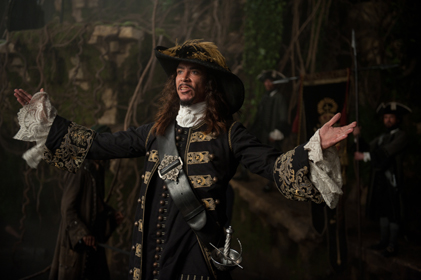
The film never bothers to explain the nature of the relationship between the missionary and Blackbeard or why Blackbeard tolerates him. Why should Blackbeard even keep this disrespectful man alive, much less let him roam freely? The film doesn’t tell us, nor does it really present this as something to consider. What is the point to Barbossa? He could have been removed entirely from the film without anyone noticing as all he really does is travel to the end of the film and then give Blackbeard a wound he could have gotten from anyone (or even touching a poisonous plant). Why are the Spanish in this film? Yes, they are presented as the reason the British enter the race to find the fountain of youth, but why even bother with this plot contrivance? It would have made more sense to race Barbossa against Depp or perhaps Barbossa and Depp against the Spanish or Blackbeard. Tossing in the British added nothing and made the Spanish seem pointless, especially as they serve no purpose in the film – even at the ending, when they destroy the fountain of youth, they fail to do so, which makes them meaningless to the plot as the other characters could have taken their time getting there. In effect, the way the Spanish are treated in this film would be like making a bar fight movie where the US Marine Corps swoops into the bar, searches it and leaves again. That may make for an interesting moment in the film, but it adds nothing to the story itself.
The only bit of intelligence which does develop meaning on screen is the relationship between Cruz and Blackbeard, but therein lie several problems. First, this means that the main emotional impact of the film is between characters who are new to the story. This devalues Barbossa and Depp, who are the main characters. Secondly, the film is so obsessed with making sure that Depp gets to ham it up in each scene that the emotional impact is constantly being undermined by the juggling clown dancing across the screen. Third, this subplot has no relationship to most of the film. Indeed, the need for Cruz to save her father doesn’t even arise until the final minutes of the film and little before that hinted that this would be the point to the film.
In effect, what you get in On Stranger Tides is a film that includes many excellent elements, but none of which get fleshed out, none of which get tied into the film and none of which are necessary for the plot. Even the title is meaningless as it gives no sense of what the movie is about. Compare this to the prior films, which were driven by very specific storylines that arose quickly, motivated each of the characters toward confrontation, and drove the film relentlessly toward a conclusion. Nothing like that can be found here – this is just some stuff that happens until it ends.
It fascinates me that in an age of manufactured films where art gives way to formula that someone could have gotten the formula so wrong in this instance. It makes me wonder what they were thinking?
[+] Read More...
Pirates of the Caribbean. Hmm. What can we say about Disney’s Pirates of the Caribbean franchise? Well, the first film was actually quite brilliant. What appeared to be nothing more than another lazy summer blockbuster provided one of the tightest and most original stories in years. It included amazing effects, great sets, tremendous writing with moments of intense cleverness, and fantastic acting. It was such a strong movie that it spawned a franchise that has run much longer than the sequels deserve.
Then came Pirates of the Caribbean II: Dead Man’s Chest. Nothing about this film worked and it proved irredeemable except as a gateway to the third film, Pirates of the Caribbean III: At World’s End, which came close to recapturing the glory of the first film except for one giant caveat: At World’s End’s story was tight and interesting and original, the acting was good, and the visuals were fantastic, but every single scene in that film ran one line of dialog too long. For whatever reason, the filmmakers tried to throw a moment of comedy at the end of each scene, like Lucas did with Anakin in Phantom Menace ("oopsies"), and in the process turned brilliant scenes stupid. Moreover, they stupidly handed over the last forty minutes to the special effects nerds and told them to bore people to death. Lop off the CGI ending and the pointless attempts at humor, and this would have been a truly inspired film. In fact, I’m so sure of this that I keep meaning to one day edit the movie myself to achieve this.
With that backdrop, we now come to Pirates of the Caribbean: On Stranger Tides. Based on the strength of I and III, I wanted to like this film, but that really wasn’t possible. Indeed, the first time through, the film simply makes no sense. The characters go from one location to another for no apparent reason except to give the appearance of motion before meeting for the ending. Elements gets tossed into the film in ways which seem meaningless. For example, the Spanish get introduced seemingly out of the blue and then they vanish. They do reappear near the end, but they don’t really add anything to the plot before they disappear again. Geoffrey Rush is brought back as Barbossa (a huge plus as he makes these films) but then he gets sequestered from the plot. And so on.
The dialog too felt like nonsense. It felt formless and like the actors were reading to the scene rather than speaking from their characters. The only character who had any consistent definition was Blackbeard (Ian McShane). The sets felt unoriginal as well, and the stirring visuals were missing this time. Also, there just didn’t seem to be much originality in the story.
Upon further viewing, I began to notice something interesting. Within the film, there are all the elements for a great film. You have Barbossa, who is just a joy to watch. You have the confrontational relationship between the missionary and Blackbeard, which is quite deep, quite philosophical and quite interesting. They also have theological debates wrapped up tightly in single lines of dialog. The relationship between the missionary and the mermaid is interesting too on many levels, as is the relationship between Penelope Cruz and her father Blackbeard, which is complex and nuanced and ultimately comes down to an impossible choice of whether a daughter should sacrifice herself to save the life of her father, even if he is evil. The Spanish are interesting too. They were the world’s superpower of the era and seeing them interact (or not interact) with the other characters provides a fascinating perspective. It’s a bit like watching characters fight with each other as the US Army does its thing in the background.
So that all sounds pretty good, but then there’s the catch. Despite the presence of some smart elements, the film fails to employ them properly. Indeed, the film doesn’t seem to have any idea how to use them at all. It’s like this film was created by asking five or six very bright writers to come up with plots, and then a moron was asked to condense their plots and form them into one film. And in the end, you could literally toss out 90% of the film without changing the plot. That’s horrible writing. Consider this:
The film never bothers to explain the nature of the relationship between the missionary and Blackbeard or why Blackbeard tolerates him. Why should Blackbeard even keep this disrespectful man alive, much less let him roam freely? The film doesn’t tell us, nor does it really present this as something to consider. What is the point to Barbossa? He could have been removed entirely from the film without anyone noticing as all he really does is travel to the end of the film and then give Blackbeard a wound he could have gotten from anyone (or even touching a poisonous plant). Why are the Spanish in this film? Yes, they are presented as the reason the British enter the race to find the fountain of youth, but why even bother with this plot contrivance? It would have made more sense to race Barbossa against Depp or perhaps Barbossa and Depp against the Spanish or Blackbeard. Tossing in the British added nothing and made the Spanish seem pointless, especially as they serve no purpose in the film – even at the ending, when they destroy the fountain of youth, they fail to do so, which makes them meaningless to the plot as the other characters could have taken their time getting there. In effect, the way the Spanish are treated in this film would be like making a bar fight movie where the US Marine Corps swoops into the bar, searches it and leaves again. That may make for an interesting moment in the film, but it adds nothing to the story itself.
The only bit of intelligence which does develop meaning on screen is the relationship between Cruz and Blackbeard, but therein lie several problems. First, this means that the main emotional impact of the film is between characters who are new to the story. This devalues Barbossa and Depp, who are the main characters. Secondly, the film is so obsessed with making sure that Depp gets to ham it up in each scene that the emotional impact is constantly being undermined by the juggling clown dancing across the screen. Third, this subplot has no relationship to most of the film. Indeed, the need for Cruz to save her father doesn’t even arise until the final minutes of the film and little before that hinted that this would be the point to the film.
In effect, what you get in On Stranger Tides is a film that includes many excellent elements, but none of which get fleshed out, none of which get tied into the film and none of which are necessary for the plot. Even the title is meaningless as it gives no sense of what the movie is about. Compare this to the prior films, which were driven by very specific storylines that arose quickly, motivated each of the characters toward confrontation, and drove the film relentlessly toward a conclusion. Nothing like that can be found here – this is just some stuff that happens until it ends.
It fascinates me that in an age of manufactured films where art gives way to formula that someone could have gotten the formula so wrong in this instance. It makes me wonder what they were thinking?