Friday, June 17, 2011

Film Friday: Pontypool (2009)

Today’s film is Pontypool (another Canadian horror/science fiction film: Cube and eXistenZ), and odds are you’ve never heard of it. Pontypool is a truly unique zombie film. Indeed, it’s more of a psychological thriller akin to Hitchcock's The Birds than it is a zombie movie. And if you love zombies, talk radio or smart horror films, this film is for you.

** spoiler alert **

Based on the Tony Burgess novel “Pontypool Changes Everything,” and inspired by Orson Welles's radio broadcast of The War of the Worlds, Pontypool combines two modern crazes -- talk radio and zombies. The film centers around Grant Mazzy (Stephen McHattie), a shock jock who lost his job in the big city for pushing things a little too far. Mazzy has a new job in the small town of Pontypool, Ontario, where he and his producer Sydney Briar (Lisa Houle) don’t see eye to eye on how to run his broadcasts. As they argue their way through his first broadcast, they start getting reports of a riot at a local doctor’s office. The nature of the riot is unclear as the rioters seem to be shouting gibberish about the disappearance of Honey the cat. Soon the reports get more ominous until they find themselves under attack.

Pontypool differs from every other zombie movie because it disdains what has become the standard zombie formula. Almost without exception, zombie films involve a small group of people trapped by zombies, who shoot their way out and try to find somewhere safe. These films invariably turn into gross-out fests and shooting galleries almost from the opening scene. Pontypool doesn’t. You don’t even see a zombie for a long time and you never see a gun. Instead, you watch Mazzy and his staff of two (Sydney and Laurel Ann) struggle to make sense of what is going on based on the sketchy reports they are getting. And it is gripping.

With Pontypool the infection process itself becomes a mystery to be solved: why are people acting so strangely? How is this infection spreading? Can it be stopped? Zombie films never go into this except in the most cursory of ways because they are really action films. But Pontypool isn’t an action film, it’s a genuine psychological drama. The tension here does not come from close calls in fight scenes, but from things like the characters returning to their broadcast, when you know they should be focusing on the real problem, from the descriptions they get of what is happening, from characters suddenly acting strangely -- are they infected or just strange -- and from the sense of the ticking clock as they must solve this mystery before the zombie mob gets them. That’s what makes this film tense and interesting.

Also, the interactions between the characters are smart and well within character. There are no stupid characters, no Hollywood-type Rambos or people falling apart, and no one declares themselves king of the post-apocalyptic world. This is just normal humans responding to a crisis and it feels real. Plus, the strong performance by McHattie as Mazzy (who plays the first believable talk radio host I’ve seen on film) keeps your eyes glued to the screen.

Moreover, Pontypool has an interesting take on the creation of the zombies. In general, the zombie genre has been stale for some time. Night of the Living Dead essentially started the genre in 1968, after converting the ghoul into what we think of as the modern zombie -- mindless corpses that roam the earth looking to eat braaaaains. In 2002, 28 Days Later introduced fast twitch zombies -- infected humans, rather than animated corpses, who are faster than normal humans because of mega doses of adrenaline and are intensely, mindlessly violent. But that’s been it by way of zombie innovation. Sure, sometimes the zombie-ism is caused by a meteor or a virus or spoiled milk, but in each case, the effect is identical: the person becomes infected. . . dies. . . and wakes up as a mindless killer hungry for the great taste of human.

This film is different. The zombies here are normal seeming people who fixate on particular words once they become infected. This sends them into a sort of waking catatonic state where they become violent as they spout nonsense (like Progressives). I won’t say more because I don’t want to ruin the mystery. But the infection agent and mechanism in this film are not like anything you’ve seen in any zombie film before.

Finally, a word on politics. This film is Canadian, which doesn’t insulate it from politics, but I found the film to be refreshingly free of liberal messages. Sydney shows herself to be a liberal in one scene, but McHattie counters her with conservatism, though it’s never clear what his leanings are. There is some French Canadian v. English Canadian politics going on, but that means nothing to Americans. So ultimately, conservatives won’t feel like they’re being pounded with liberalism during this film.

Pontypool is unique within the genre. It’s extremely well-done. It’s got great acting and excellent writing. There's limited violence, limited gore, and the story doesn’t fall apart or become an excuse for a twenty minute bloodbath at the end. I highly recommend it.

Know any other cool zombie films?

[+] Read More...

Wednesday, June 15, 2011

Early Western Stars of the Small Screen

By Tennessee Jed

After Andrew’s Top 25 Westerns, Andrew and I decided to do an ongoing series about the western genre, looking at actors, bad guys, TV and film. Since westerns on television were pretty much children of the 50ʼs and 60ʼs, it seemed appropriate for me, as a certified geezer, to take the first crack at it. This “sub-genre” of the western lasted pretty much from 1949 to 1973, actually peaking in 1959 when as many as 25 prime time shows were traditional westerns as were many of the top 20 shows in the Nielsens in any given week.

In this article, we explore those individual actors who became larger than life as the indisputable stars of their shows. No attempt is made to rank them. And several of the best western series ever made will be excluded because they were anthologies or feature ensemble casts where the show was not carried by a single actor, and as such, are better suited for a separate article. Without further fanfare, here is one man’s list of some of the very biggest stars of the small screen in the western genre and why they mattered.

William Boyd - Hopalong Cassidy was created in 1904 as a pulp novel character who was a vulgar, hard drinking, fighting, cattle wrangler. When a film was made in 1936, Boyd was asked to read for a minor role. Instead, he requested to read for the lead and won the part. Dressed in fancy all black costumes, Boyd changed the character to a much more likable and moral figure and starred in over 60 matinee films. Early recognition of TV’s potential caused him to purchase all rights to the Hopalong character, netting him a fortune, and on 6/24/49, Hopalong Cassidy became the very first western series broadcast on television. NBC used edited versions of his feature films while waiting for new episodes to be produced. The success of the show quickly prompted similar shows for other stars of the “B” western film genre that had become popularized during the late 30ʼs and 40ʼs.

Jack Carlton Moore - Under his stage name “Clayton,” Moore is best known for portraying The Lone Ranger on television and in two feature films. The Lone Ranger, originally broadcast as a serial radio drama in 1933, followed the exploits of John Reid, sole survivor of a group of six Texas Rangers who were bushwhacked by the outlaw Cavendish gang. Left for dead, Reid is found by the Indian Tonto (Jay Silverheels) who nurses him back to health. Together, they dig six graves, and Reid wears a mask to disguise his true identity. The show ran from 1949 to 1957. Moore was a model with only a couple of bit roles in “B” films when he was spotted by a coproducer of the series. He trained his voice to resemble that of the radio character. The Lone Ranger character is trademarked by his mask, powder blue suit, silver bullets, horse silver, and of course, the William Tell Overture, which became mega-famous by its use on the show. Moore was replaced briefly by John Hart after a contract dispute, but had become so entrenched in the role that audiences rejected Hart despite the mask. The rights to the show were sold and Moore was rehired. Moore and his character remain one of the most iconic in the history of westerns.

The Singing Cowboys - Driven by the success of Hopalong Cassidy, the two unrivaled box office champions of “B” movie westerns in the 40’s quickly jumped aboard TV’s western bandwagon. We’re talking about none other than Orevon Grover Autry, aka “the Singing Cowboy,” and Leonard Franklin Slye, better known as Roy Rodgers, aka “King of the Cowboys.” Gene, as he became known, was 4 years older than Roy and their careers were eerily similar. Both started out as recording artists before breaking into western matinee films in the mid-thirties. Throughout the forties, they became the biggest draws in “B” westerns (or “horse operas” as fellow practitioner John Wayne called them), where they were known for featuring their own ballad singing in their films. In the 1950s, they moved to TV, where their half-hour shows were aimed at the youth market (such as myself). Master marketers, these two did wonders for 50’s children’s fashions (known today as “retro” western shirts favored by country rock artists), plus lunch boxes, action play figure sets, cap guns, and the like. Both men are hall of famers with Hollywood stars, and could never be left off a listing such as this -- another singing cowboy, “Tex” Ritter, was father of the late actor John Ritter, but he never achieved the mega star status of Autry and Rogers.

Autry may be as well known for his Christmas songs such as “Rudolph the Red Nosed Reindeer,” and later ownership of the California Angels baseball team as his acting career. When Autry joined the service in WWII, Rogers became the undisputed champ of the genre, retaining the title even after Autry returned. In addition to acting, Rogers worked as a migrant farm laborer and founded the legendary western vocal group “The Sons of the Pioneers.” Rogers was paid a nice tribute in the Bruce Willis film, Die Hard.

Richard Boone - Boone starred in the western drama Have Gun Will Travel, which aired from 1957 to 1963 on CBS -- usually ranking either third or fourth in the Nielson’s. Based in San Francisco, Boone’s character is known only by the name “Paladin” (a play on words derived from the name given to the top knights of Charlemagne in the “Chanson du Roland”). Essentially, he was hired muscle for those in need (much like Edward Woodward’s The Equalizer). A former Union officer in the Civil War dressed in all black, Paladin would resort to violence only as a last resort, and in more than a few instances, ended up siding with the target if his original “client” was found to be in the wrong. What made this show special was that Boone played what amounts to a 19th century James Bond, being intelligent, witty, urbane, and well educated in addition to being deadly fast with a pistol. One of the main writers was a young Gene Roddenberry, and this show was in my view, along with Cheyenne, the best written of all the television westerns. Boone, who was related to frontiersman Daniel Boone, was a good enough actor to star in areas well beyond westerns. As such, he and his character Paladin probably do not reach the iconic status of the others mentioned, but personal prejudice requires his inclusion. As a l.o.l. aside, I was young and naive enough at the time to think the character’s actual name was Wire Paladin, admittedly a first name I had not heard before. Look at his card (above), damn it!! Was I not just being logical? . . . and the theme song . . oh my, best ever.

Clint Walker - Walker is best known as “Cheyenne Bodie” in the television series Cheyenne, which ran between 1955 and 1963. The show was the first to be developed from scratch by a film studio, i.e. it was not developed from pre-existing film or radio properties. Orphaned as a boy and raised by Cheyenne Indians, Cheyenne was a drifter, allegedly looking for a place to settle down, but usually needing to keep on the move to find work. He often worked as a civilian army scout, cattle boss or farm hand. Trouble had a way of finding Cheyenne, and like some 19th century Mary Worth, he always seemed to find people to help. Tall, dark, handsome, soft spoken and brooding, Walker was in the mold of Gary Cooper’s “strong silent type.” A sample of dialog I still remember to this day-- Bad guy: “blah, blah, blah, what do you say to that, Bodie?” Cheyenne: “I say I think you’re trying to talk me to death.” Like others, Cheyenne was loathe to use violence, but was as adept with his fists as with his gun. The show had surprisingly complex plots for its time and featured future stars like Angie Dickinson, Dennis Hopper, and James Garner, who appeared numerous times as different characters before getting his own Warner Brothers series Maverick -- I would argue for Garner’s inclusion on this list were it not for the fact he became so well known later in non-western roles, plus he shared the Maverick franchise with Jack Kelly and Roger Moore. As such, he was perhaps slightly less iconic in his role than Walker. He did create a new approach to the western lead character, however: the ramblin’ gamblin’ slightly “bad” boy who uses his charm and brains rather than his brawn or gun skills to win the day. For that, I thank him.

There are numerous others that easily could be included on this list. James Arness (Gunsmoke), Hugh O’Brian (Wyatt Earp) Chuck Connors (The Rifleman) John Russell (The Lawman) and Michael Landon (Bonanza) quickly come to mind. Why I didn’t include them essentially boils down to either of two reasons. First, in the case of Gunsmoke, Bonanza, or even Rawhide with Clint Eastwood, the series had enough of an ensemble cast that the show itself became the star rather than any individual lead actor. Secondly, if I included all the stars that belonged, there simply wouldn’t be enough space. This, more than anything, is why I didn’t include Connors, O’Brian, Steve McQueen (Wanted Dead or Alive) or even James Drury (The Virginian).

That’s the list. It may be far from perfect, but of course, I never claimed it to be definitive. I would certify everyone on it to be worthy of special status within that deliciously delightful sub-genre, the TV western. Hopefully, going forward, Andrew and I can come up with more articles on westerns, be it a look at stars of the silver screen, bad guys (my man Morgan Woodward, of course) and more. What do you folks think? Who qualifies for “how did you leave him out” status?

[+] Read More...

Friday, June 10, 2011

Film Friday: Adventures in Babysitting (1987)

I love Adventures in Babysitting. It’s a funny film with a great story and great characters. It also does three things you just don’t see very often in Hollywood: (1) it perfectly captures real suburban angst, (2) it sends all the right messages, and (3) it has the rarest of rarities in Hollywood, a “strong” female role. They don’t make them like this anymore. . . notwithstanding rumors of a remake next year.

** spoiler alert **

Babysitting is the story of Chris Parker (Elisabeth Shue), who agrees to babysit Brad and Sara Anderson and Brad’s friend Daryl Coopersmith, who decides to stay over. While the night initially appears like it will be uneventful, things change when Chris’s friend Brenda calls. Brenda has run away from her home and needs Chris to pick her up from a bus station downtown. And thus, they are off to THE CITY.
The Angst. . . The Angst. . .
The first thing that makes Babysitting a special movie is that it perfectly captures suburban angst. No, I’m not talking about the laughable oppression and desperation of literary fiction angst, I’m talking about genuine angst: everyone who grew up in suburbia knows there be monsters in THE CITY: gangs, criminals, car thieves, perverts, rapists, rats, and nobody will lift a finger to help you. If you get a flat tire in the wrong neighborhood, you’re dead! This film plays on all of that.

Indeed, just as they enter the city, Chris’s car gets a flat tire and she has no spare. This puts them at the mercy of a tow truck driver who naturally looks like a pirate and has a hook for a hand. When he stops briefly at his home to catch another man with his wife, the kids find themselves in the middle of a shootout. This leads in short order to being chased by car thieves, a tour of the seamy underbelly of Chicago including a hilarious stop at an all-black blues club, and finding themselves in the middle of a gang fight. Along the way, Chris learns something about her boyfriend, they end up at a frat party, they meet Thor (Vincent D’Onofrio), and they top it all off with a wild chase scene on top of a skyscraper. Can they make it home before the parents?

This is exactly what white suburban kids fear is going on in the city at night, and what parents fear will happen if they get the wrong babysitter. That’s why this film speaks to so many people -- it gently pokes fun at our overblown fears and we're laughing at ourselves as much as the characters.
All The Right Messages
Babysitting isn’t a message movie. It does not beat you over the head with any trendy social theories or any obvious philosophy. But that doesn’t mean it doesn’t have a meaningful message. Indeed, what it does do is at every turn, the film supports the right kinds of messages. Consider these:

● We learn not to judge people based on our preconceived notions when tow truck driver Pruitt turns out to be a good guy who wants to help them, when car thief Joe turns out to save them, when the seemingly angry blacks at the blues club warm to the white kids once the kids make an effort to fit in, and as the kids show themselves to be mature and possessing of moral courage you never would have guessed they have.

● The bad guys don’t prosper.

● Chris does the right thing helping Brenda and gets rewarded at the end with a happier life. But she does the wrong thing by taking the kids, which causes her problems.

● Brenda learns that running away from home is a mistake, and she pays a price.

● Chris learns not to stick with cheating boyfriend Mike, and is rewarded when someone better (frat guy Dan) comes along.

● Dawson/Thor does the right thing by helping the kids even though they don’t have enough money, when he realizes he’s a role model for Sara.

● Car thief Joe shows us that life is more important than property.

● Brad and Sara show us that we should care for our siblings and our friends.

● Brad learns not to be obsessed with Chris and to be happy for her happiness.

● Frat guy Dan wins Chris by being a gentleman and defending her against his friends who see her as a centerfold and by going out of his way to return Sara’s skate. Dan also clues us in that real life beauty beats airbrushed beauty every time.

These are all solid messages -- good deeds/traits are rewarded, bad deeds/traits get punished. This is very refreshing as most movies today don’t consistently provide such positive messages and they rarely do so in a seemingly “message free” environment, i.e. most films today are heavy-handed about what you’re supposed to “learn.” It’s nice to see a movie that doesn’t preach, but also isn't morally vacant.
Strong Female Role
Finally, I’ve spoken before about the problem Hollywood has with women. Generally, actresses have been relegated to only a couple types of roles, none of which are all that flattering or interesting. In recent years, many actresses have claimed to find “strong roles” in over-sexed cartoony dominatrix killers, but that’s ludicrous. In fact, it makes me wonder what these actresses really mean when they say “strong roles”? Personally, I’ve always considered a strong role to be any character you would respect in real life. And that is Chris Parker.


"Don't f*ck with the babysitter!"


There is nothing Chris cannot do. And she does it with her wits, her will power, her courage and whatever authority she can muster. In many ways, she’s the civilian version of the young lieutenant in a war film who earns the respect of his troops and leads them safely through difficult odds. Consider that she is in the nightmare suburban scenario, a world of hidden dangers with which she is entirely unfamiliar. Yet, she finds a way to get her car fixed, get Brad medical treatment after the gang fight, avoid the car thieves, rescue Brenda, and still get the kids home on time.

Even better, at no point does she use sex to solve her problems (the typical Hollywood solution for female characters). This is significant for two reasons. First, a “strong woman” would never use sex as a bargaining chip. The leather-clad dominatrixes and slinky spies are not demonstrating some strength of character within themselves, they're acting out a male sexual fantasy. Secondly, you can’t be a strong character if you don’t have a moral code because strong characters must stand for something and you can't pull that off when you don’t believe in anything. Chris has a moral code, as she demonstrates repeatedly. There are many times she could easily make the kinds of “deal with the devil” Hollywood favors to get out of the situations she finds herself in, but she doesn’t. Instead, in each case, she finds a way to solve her problem while still maintaining her self-respect.
Conclusion
This is what makes Adventures in Babysitting such a special film. The individual incidents are funny, but nothing special. Where they become special is in seeing a group of kids doing the right thing in the face of the ultimate suburban nightmare. And topping it all off is the performance of Elisabeth Shue who nails the Chris character as she grows and matures on screen and proves that not all female characters need to sell their bodies to the audience. Strong characters in general are hard to find in Hollywood, but strong female characters are nearly impossible.

[+] Read More...

Wednesday, June 8, 2011

TV Review: Fringe (2008-)

By T-Rav

Fringe is, in my opinion, the best show running on network television (an important qualification, as I don’t wish to offend cable viewers; yes, there is some truly great stuff on AMC.). This FOX series does what only the best sci-fi shows can do; it has character-driven plots rather than a string of simple “freak-of-the-week” episodes, and not only makes viewers use their noodles but invests them emotionally in the events on the screen. As Andrew has alluded to in reviews of past programs such as The Twilight Zone, this simultaneous appeal to the brain and the heart is critical for the genre, and Fringe pulls it off in style.

For those who are unfamiliar with it -- which based on the Nielsen ratings, is probably a lot of people -- the show takes its title from a clandestine FBI division of the same name, established to investigate a series of bizarre incidents around the country that test the known laws of physics. Headquartered in Boston -- specifically in the basement of a Harvard laboratory -- the organization's three core members (and the show's three core actors) form a dysfunctional, humorous, and often touching team as they investigate the weirdest of the weird. I would say that it's like "The X-Files," only good, but then I might get smacked. So I'm not saying that.

To briefly recap: FBI Special Agent Olivia Dunham (Anna Torv), a conventional law enforcement official, is investigating a mysterious pathogen that killed everyone on a passenger jet when her partner and lover is struck down by the disease. Desperate to find the perpetrators, Dunham seeks out two unusual civilian specialists: Peter Bishop (Joshua Jackson), a roguish but gifted tech contractor, and his -- "eccentric" would be putting it mildly -- father, Dr. Walter Bishop (John Noble), a brilliant scientist who has spent most of the past two decades in the loony bin. Together, the trio begin cracking not only this but a string of other cases normal sleuth work is hard put to understand, much less solve: mind control, instantly lethal bacteria, teleportation, shapeshifters -- and that's just the first season.

In terms of quality, 2010 was undoubtedly the best year for Fringe thus far; the second half of Season 2 and the first half of Season 3 were together one of the best sequences of episodes you will ever see in any series. To explain why, I need to deviate onto another series for a minute. Fringe is produced by J. J. Abrams, the mind behind Lost. While the latter phases of the show were ripe for ridicule -- I'll have you know I was one of those who teared up at the finale, thank you very much -- it's important to remember how much that show changed the TV landscape. In the past few years, there have been any number of sci-fi shows trying to reproduce the phenomenal success Lost had at the beginning -- Threshold, FlashForward, The Event, a lot of others I’ve already forgotten -- and most have been failures. The reason for this, as I see it, is that they focused too much on the mystery side of the equation, setting up grand head-scratchers and then trying to explain every detail as quickly as possible. While Lost itself certainly had that component, I don't think that was its main element. The main element was the characters and the situation they found themselves in, acting as a metaphor for the human condition. The mysteries were a backdrop for the drama, not the drama itself, which may be why I didn't see the finale as a cop-out (No, I don’t want to rehash this argument, I’m making a point, darn it!).

This is important, because it is in this field of character development that Fringe has established itself as the worthy successor of that other J. J. Abrams production. Turning away from the overly complex and somewhat poorly received freakishness of the early days, the second season focuses more on the often twisted connections between Olivia, Peter, and Walter, and their implications for the fate of the world -- or worlds. We learn that there is a parallel universe, very similar to our own, and that most of the disturbances the Fringe Division investigates are the indirect results of the weakening of the space-time fabric separating the two: a weakening that occurred back in 1985, when Walter found a way to. . . well, without giving too much away, he saved his son’s life, but as a result shattered literally thousands of lives, permanently strained and twisted the relationship between the scientist and his son, and is ultimately responsible for many of the events under investigation. Moreover, Walter also touched and/or scarred Olivia's youth, when he experimented on her and other children with a drug that gave them superhuman abilities. In addition, Olivia and Peter move into a romantic relationship, thus creating a bizarre bond between the three, fraught with emotional land mines. Clear enough?

The revelations of these recent episodes sound muddled the way I've written them, but the show itself pulls them off very well, because of the superb acting of the key players. John Noble, whom those of you of a more geeky persuasion than myself (and I know they're out there) may remember as Denethor in the third LOTR, is simply a delight to watch. His eccentric-minded Walter, tripping acid for inspiration and finding childlike pleasure in practically anything (especially pudding), has also become the heart and soul of the show, as a once-prideful scientist broken and humbled by his own hubris -- more on this in a minute. Joshua Jackson as the clever, wisecracking, and insightful Peter adds another lighthearted touch, and Anna Torv, who was criticized early on for being too cardboard an actress, has given Olivia an increasing amount of depth and emotion over time, resulting in a character as complex as the others. Everyone's acting abilities were tested this year when the show began spending time in the other universe, where different versions of their characters existed and had to be made believable: a test they passed with flying colors and made Fringe that much more mesmerizing.

Finally, I would be remiss if I didn't mention the various philosophical/psychological themes Fringe visits in its episodes. One borrowed most clearly from Lost would be the conflict of faith and reason. Although a sci-fi show through and through, for which it makes no apologies, Fringe does not neglect the intangible aspects of existence, such as the human psyche and the seeking of the divine. The characters are driven by the idea that there is a right and wrong, a good and evil, however vague or confused their grasp of these concepts might be. Walter says it best in Season 2's "White Tulip," for most fans one of the greatest episodes of the series, when he begs a time traveler not to try to change history, citing his own bitter experiences with Peter as proof of unexpected consequences and the rebuke from one's own conscience: "I never believed in God, but when I looked at my son, I realized that I had broken his laws... I have traveled through madness to figure this out. So will you." Modern television being what it is, of course, the show does not argue from this for a specific religious belief, but it does imply the necessity of a transcendent moral code and respect for the dignity of human life. And frankly, aren't all the great TV shows those which uphold this idea, however abstractly?

But I've rambled on too long. And I haven't even mentioned the importance of The Observers, The Pattern, "Massive Dynamic," or the supporting characters also played superbly by Lance Reddick, Blair Brown, and Jasika Nicole. So I conclude this part-review, part-paean to one of the best shows on television by urging you to check it out for yourself. Having wrapped up its third season (with an ending I still haven’t figured out), Fringe shows every sign of continuing the mix of appeals to head and heart.

[+] Read More...

Friday, June 3, 2011

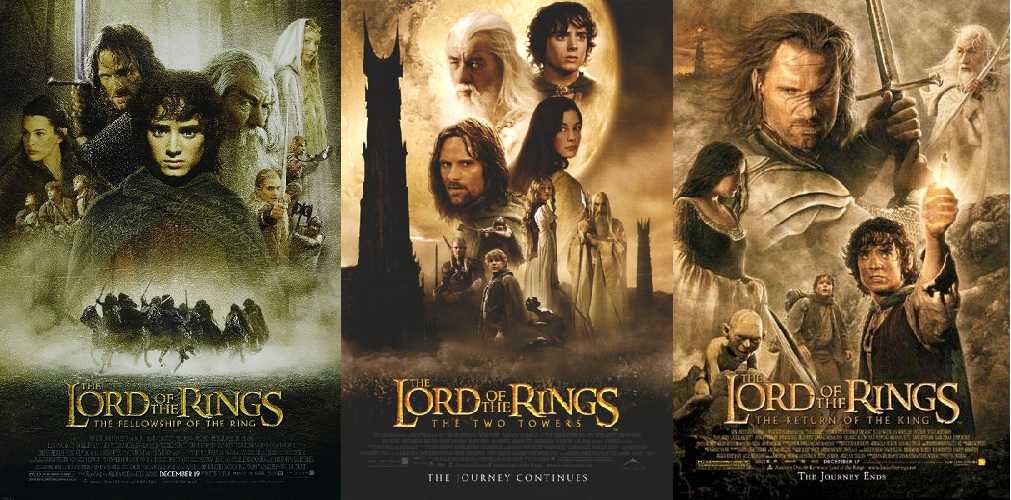
Film Friday: The Lord of the Rings (2001, 2002, 2003)

The Lord of the Rings trilogy is a top-notch fantasy action/ adventure and I absolutely and unequivocally recommend it. I own each film and have seen them many times. So if you love these films, let's stop there, mehl-on (that’s Elvish for “friend”). But if you want to see what’s wrong with these lifeless, shallow films and why they never came anywhere near their potential, then read on.

** spoiler alert **

Let me start by saying my criticism IS NOT that the films aren’t identical to the books. The Lord of the Rings trilogy are my favorite books, but I understand that books need changes to become effective films. My criticism IS that Peter Jackson made too many of the wrong kinds of changes, and thereby turned a nuanced, meaningful story with characters we care about deeply into an emotionless plot-driven film that's hard to care about.

Characters Lost: The first clue that something was going wrong with the characters occurred even before the film was released. One of the actresses gave an interview in which she repeated the marketing line that they were staying 100% faithful to the book, except where they absolutely had to make changes -- which is, of course, a lie. She then ominously said they had to change the characters because “the book doesn’t really have a lot of characterization.” This was a sign Jackson didn't understand the books and was about to strip the characters of their character to "Hollywood" them up. Consider these:
Frodo: In the book, Frodo resists leaving the shire. He’s not mentally or emotionally strong and he’s certainly not ready for an adventure, nor is he particularly mature. This makes his journey all the more impressive, as he must grow into the role thrust upon him. This is also why his decision to leave the group after Gandalf’s death is such a strong moment. He realizes he is endangering his friends and he chooses to leave them to save them. This is THE moment Frodo finally accepts his responsibilities, but we’re not sure he’s up the task.

Jackson tosses this away and turns Frodo into the modern fake-reluctant hero. While Frodo professes not to want to the responsibility, he is shown to be mature, competent and ready for the challenge, and he volunteers easily. Thus, there is no moment where Frodo grows up. There is never any doubt he would continue the journey with the ring after Rivendell. There is almost no motive for him leaving the group after Gandalf’s death, except that Boromir made him think his friends were becoming dangerous to him. Even the Nazgûl chasing him don’t seem all that dangerous because the film leads us to believe that he’s a competent adventurer ready to meet the challenge.

These are dramatic changes that rob the character of growth, the story of uncertainty, and the scenes of emotion. One of the key points in the book is that the least likely people can play vital roles in saving mankind. This is lost in the film because Frodo is set apart from the very beginning as a special character who is up to the task and only needs to be shown the direction to march. This cheapens his victories and lessens the drama of his choices.

Gimli/Legolas: Friendship Devalued: What Jackson does to Gimli is an atrocity. Book Gimli is a headstrong, excellent warrior who butts heads with the other companions. Moreover, as a Dwarf, Gimli dislikes and distrusts Elves, because of conflicts between the two races that go way back. This matters because it establishes the relationship between Gimli and Legolas, and sets up the group dynamic. Indeed, the ring companions don’t trust each other. They all have different motives and ancient grievances and this makes it hard for them to work together. But as they prove themselves to each other, they slowly earn each others’ trust and respect. Nothing shows this change more than the growing friendship between Gimli and Legolas, the most unlikely friendship in the group -- they don’t actually become friends in the book until Gimli greets Galadriel kindly, something he doesn't do in the film. Jackson throws this away and makes Gimli into pure comic relief. He also makes Gimli and Legolas into almost-instant friends.


Spot the dwarf. (click to enlarge)


This has several nasty consequences. First, it sucks out the very characterization Jackson claims is missing in the books because it denies Legolas and Gimli the chance to grow. Secondly, it eliminates an important dynamic within the group -- the need to come together. Third, it trivializes what they are doing. The world is facing its end as Sauron's rise is at hand. These people are fighting for their lives and the lives of all the other members of their various races. But Jackson’s decision to turn Gimli into comic relief turns this whole thing into a joke. Indeed, Jackson even has them engage in a counting game throughout the battle scenes, which makes their actions seem like a light-hearted videogame rather than the murderous struggle against desperate odds that it is.

Gandalf: When Gandalf dies in the book, it’s a shocking, weepy moment. In the film, not so much. Why? Because Jackson fails to connect us to his character. One reason is that his importance to the group isn’t obvious in the film because the group are already friends. Thus, nothing will change after his death. In fact, the group doesn’t even stop to mourn except that Boromir thinks the Hobbits need a break. The message: Gandalf is just an expendable member of the group. By comparison, in the book, Gandalf holds the group together and there's a real chance the group will fall apart after his death.

Also, the film never addresses what Gandalf means to the others personally. For all his skill, Aragorn is a lost soul. He literally roams the wilderness afraid to face his responsibilities, i.e. returning to Gondor and claiming the throne. Gandalf is the conscience trying to get him to face his responsibilities. Frodo has been manipulated into this quest by Gandalf with the assurance that Gandalf would always protect him. When he dies, Frodo must fend for himself and his will comes close to breaking. None of this makes it into the film. Aragorn is presented as a single-minded, determined hero, and his issue with reclaiming the throne is given short shrift in one quick scene with Liv Tyler. Frodo is the volunteer who is ready to take on the world. Because Gandalf’s importance to these people is lost, his death has little personal meaning. His death is no longer the death of a friend, a mentor, and the guiding hand that held them all together, he's just another member of the group. . . and one you don't even see that often.

Since he now means so little, his death means little to us. Since his death means so little, his resurrection means just as little. In fact, his resurrection isn’t even a resurrection in the film, it’s more of a reappearance. In the book, it’s clear Gandalf died and was reborn as Gandalf the White. In the film, he just sort of shows up again. Thus, the significance of his self-less act is cheapened, i.e. he goes from sacrificing himself for the group to just getting into a very hard fight.
CGI Stupidity: This is one of the most visually beautiful films of all time. They found incredible natural scenery in New Zealand, used fantastic costumes, and had stellar effects. Things like the city of Minas Tirith were flawless and amazing. But like children who can’t help themselves, they had to abuse the CGI:
Significance Diluted: Part of what makes the humans in LOTR The Book so heroic are the dire odds they face. The fact they stand their ground against these odds demonstrates their courage. Moreover, because of the small number of defenders, each death is tragic and costly. The film throws that away because Hollywood can’t stop itself from filling every millimeter of screen. Instead of the 2,000 defenders in Helms Deep mentioned in the book (including Jackson's gay hairdresser Elves) compared to Saruman’s 10,000 Orcs, or the 9,000 defenders at Gondor against Sauron’s 250,000 Orcs, the film creates a battle of millions on each side. Suddenly, the importance of any particular defender disappears. In other words, gone is an army of precious individuals and in its place the audience gets two giant CGI blobs slamming into each other. How can you feel any sense of loss for that? Not to mention, this makes some of the dialog pretty silly, like when King Théoden says, “so few came.” Really? There's no room for more on the field!

Not to mention this kills the realism. No battle in history, not Waterloo, Verdun or anything in World War II had anywhere near the number of troops shown on the field. This is probably more people than were alive in all of Medieval Europe. Thus, by trying too hard, they not only reduce the significance of each defender, but they create a battle that just doesn’t look real.

Moreover, even beyond the numbers, the CGI is downright stupid. Why does the movie begin with a line of Elves all the way to the horizon doing what appears to be a Dallas Cowboy Cheerleader linekick in perfect formation? Why is everyone wearing identical uniforms? And why are all the humans’ uniforms freshly laundered and their armor undented and shiny? Why are Orcs, an undisciplined army of thugs, standing in perfect Napoleonic squares? Why? Because everyone in Hollywood apparently suffers from Obsessive Compulsive Disorder combined with a uniform fetish. This is stupid and it sucks the realism right out of these battle scenes. Can I overlook it? Sure, just like I could overlook a cartoon rabbit defecating in the background of each scene, but that doesn’t excuse its inclusion in the film.

Realism Denied: Finally, even in up-close battles, the CGI people still go too far. Legolas in particular is subject to this. As he’s fighting the Orc Warg (wolf) riders in Rohan, he looks more like Rubberband Man than anything solid as he slides around the wolves and jumps from one to another to kill them off. Why are the war elephants at Pelennor Field 50 feet tall? It doesn’t make any sense or add anything. . . except that it lets the CGI people have Legolas swing from elephant to elephant like digital Tarzan, which they no doubt thought would be cool -- but just looks bizarrely unrealistic. These things detract from the realism the film otherwise works so hard to achieve. It’s literally like adding Roger Rabbit to Saving Private Ryan. And why include a fake-looking, comic-y “cave troll” in Moria in the middle of one of the most serious battles in the book? Because they couldn't stop themselves.
So let me finish with this point: my complaint is not that the movie is not the book (though I am offended they kept proclaiming they followed the book). My complaint is that the characters are lifeless and the story lacks any sort of emotion because every decision Jackson made reduced our emotional investment in the characters, reduced the reality of the film, and reduced the stakes for which they were fighting.

These things may not have interfered with your enjoyment, but you’ve got to admit that if Jackson had kept with what I say, this would have been a much stronger film.

[+] Read More...

Wednesday, June 1, 2011

Guilty Pleasures: The ScottDS Edition

by ScottDS

Wikipedia defines a guilty pleasure as “...something one enjoys and considers pleasurable despite feeling guilty for enjoying it.” At the end of the day, my personal definition of a guilty pleasure, as it relates to films, is: “A movie that, if I mention to a friend that I like it, will elicit a reply to the effect of, ‘Really? That?’” Some of this might have to do with my film school background and we all know film students are only supposed to like little indie films and dark dramas about tortured artists. [sarcasm off]

I like all of these movies. Some I own, others I haven’t seen in years, but the mere thought of them never fails to bring a smile to my face. Away we go...!

Congo (1995) – Based on the Michael Crichton novel and starring Dylan Walsh, a then-unknown Laura Linney, and Ernie Hudson, this film tells the story of an expedition to the Virunga region of the Congo. Linney’s character works for a telecom company and has been sent by her boss to search for a rare diamond but she’s also on a mission to locate her missing fiancé. Meanwhile, Walsh’s character, a primatologist, is attempting to take his sign language protégé gorilla Amy back home. This movie is a blast! It never takes itself too seriously, Tim Curry and Joe Don Baker chew the scenery – Curry plays a Romanian philanthropist; Baker plays Linney’s boss – and the gorilla effects, courtesy of the late Stan Winston, aren’t bad. There’s some downright ridiculous dialogue in the film along with some entertaining cameos from Joe Pantoliano, Delroy Lindo, and Bruce Campbell as the aforementioned fiancé. Whenever this film airs on TV, I know to clear my schedule for a couple of hours. “Stop eating my sesame cake!”

Executive Decision (1996) – Produced by action maestro Joel Silver and directed by former (and current) editor Stuart Baird, this film is probably more relevant now than when it was released. It involves the hijacking of an international flight by Islamic terrorists and the Special Forces team that’s sent to retake the plane. Kurt Russell is David Grant, a think tank expert who doesn’t quite get along with the mission commander, played by Steven Seagal (this conflict comes to a rather abrupt end). This film is fun and, despite the real-world nature of the plot, it’s not dreary or depressing to watch. The characters are likable, the flying effects are near perfect (though some of the model work at the end is a bit shoddy), and I admire any film with the guts to show the lead character learning how to fly in the first act. What do you think will happen at the end? The film does a few things that most films today probably wouldn’t do, including mentioning Islam and Allah by name, as well as crediting Israeli intelligence for their help. “If you screw up, you’ll never know it.”

Dick Tracy (1990) – I remember dressing up like Dick Tracy for Halloween that year (despite not yet having seen the film) and buying the making-of book at the 2nd grade book fair. Warren Beatty directs and stars in this big-screen adaptation of Chester Gould’s comic strip. I saw the film once when I was younger and didn’t appreciate it. I watched it again years later and thought, “This is pretty good!” It’s as much an ode to old Hollywood – complete with dance numbers, stylized matte paintings, and obvious studio backlot locations – as it is a loud 90s-era blockbuster, complete with Oscar-winning make-up effects, a heroic Danny Elfman score, original songs by Stephen Sondheim, and a design aesthetic that uses only seven colors. Beatty acquits himself nicely here, despite looking nothing like the original illustrated character. Glenne Headly is charming as Tracy’s girlfriend, Tess Trueheart. I’m indifferent to Madonna but she’s just fine as nightclub singer Breathless Mahoney. The supporting cast steals the show, starting with an Oscar-nominated Al Pacino as crime boss “Big Boy” Caprice. Add to that Seymour Cassel, Charles Durning, William Forsythe, Paul Sorvino, and cameos by James Caan and Dustin Hoffman, and you have yourself an underrated film that managed to create a comic book world without CGI. “You are not out! When you are dead, then you are out!”

Brain Donors (1992) – Directed by Adam Sandler regular Dennis Dugan, executive produced by the Brothers Zucker, and written by their Naked Gun collaborator Pat Proft, this film is a screwball comedy loosely based on the 1935 Marx Brothers film A Night at the Opera. The jokes and physical gags fly by at a mile a minute and the actors are perfectly cast, including John Turturro in the Groucho role of an ambulance-chasing lawyer, British comedian/filmmaker Mel Smith in the Chico role, and prop comic Bob Nelson in the Harpo role though, unlike Harpo, he gets to talk. Rounding out the cast is the late Nancy Marchand playing the Margaret Dumont dowager role. The story is typical latter-day Marx Brothers, including a young couple in love and sleazy villains who are after the dowager’s money. It’s a shame this film isn’t better known, having bombed miserably at the box-office. It manages to take some great Marx Brothers-style set pieces and mix them with some sexual innuendo that went completely over my (then) 9-year-old head. They throw everything in, including the kitchen sink (really!). “You can have my children. In fact, they’re out in the car if you want them.”

Trapped in Paradise (1996) – Or, as co-star Jon Lovitz refers to it, Trapped in S---. Written and directed by George Gallo (best known for writing Midnight Run), the film tells the story of the Firpo brothers – restaurateur Bill (Nicolas Cage) and his two recidivist brothers just out of prison, Dave and Alvin (Lovitz and Dana Carvey) – who rob a bank on Christmas Eve in the town of Paradise, PA. Due to a snowstorm, they find themselves stranded and treated wonderfully by the townsfolk, including the bank manager and his family. There are some twists at the end and it seems everyone is after these guys, including the feds and a couple of escaped cons that also want the money. The cast includes some familiar faces, including Donald Moffat, the lovely Mädchen Amick, and a hilariously deadpan Richard Jenkins as a harried FBI agent. Dare I say it, this film is something Frank Capra might’ve made 70 years ago. It’s not perfect and the romantic subplot is a bit ham-handed but there are some fun gags and Cage’s mannerisms are in fine form here. It’s also nice to see a well-shot comedy that takes advantage of the widescreen 2.35:1 aspect ratio. “Four lefts is a circle, you idiot!”

Alien 3 (1992/2004) – I’m biased because I saw the extended “Assembly Cut” on DVD before I saw the theatrical version. To this day, director David Fincher (this was his feature debut) disowns the movie and, despite being approached, refused to have anything to do with the new cut and declined to be interviewed for the 2004 DVD and 2010 Blu-Ray sets. As for the new cut of the film, in a word: wow! I was floored. I’m no sadist but I love the feeling invoked by the first frame: you’re f---ed. The acting is exemplary. While there are some conceptual flaws and character inconsistencies, these guys could’ve made their money by performing the film on stage. I think this is the best looking of the Alien sequels, thanks to the late Alex Thomson’s stark cinematography. Much of the sets (which consist of two colors: rust and gray) were constructed for a previous draft of the script but they add to the foreboding atmosphere with darkness lurking around every corner, large (and lethal) fans, and shafts of light. The visual effects are fine but the rod-puppet aliens are not up to par, despite being state of the art for their time. Elliot Goldenthal’s score is wonderfully melancholic. I should qualify for affirmative action because liking this film (in any version) puts me in a minority. “...we tolerate anybody. Even the intolerable.”

Drop Dead Gorgeous (1999) – This dark comedy, shot in mockumentary format (which wasn’t as common then as it is today), chronicles the contestants in the Sarah Rose Cosmetics Mount Rose American Teen Princess Pageant in the fictional town of Mount Rose, MN. It features some familiar faces, including Kirsten Dunst, Denise Richards, Ellen Barkin, Amy Adams (in her film debut), and Kirstie Alley as Richards’ mother and pageant organizer. (Plus a cameo by Adam West!) The film isn’t nearly as mean-spirited as you’d think but it doesn’t hesitate to poke fun at small-town life and it also has a nice un-PC streak as well. One of the pageant judges is clearly retarded and another might be a sexual predator. One contestant is being raised “Asian American” by adoptive Asian parents who neglect their own Asian daughter. Another is anorexic and needs to be wheeled around in a wheelchair for her talent portion. On a slightly political note, I’m glad no one knows about this movie because, if the media did, we would’ve seen footage from it airing non-stop in late 2008. (Take a guess.) “I’ll be doing a dramatic monologue. Right now, I’m thinking Othello. Or Soylent Green.”

Joe Versus the Volcano (1990) – I think this film is a masterpiece but, considering how well it didn’t do at the box-office, I’m probably alone. Written and directed by John Patrick Shanley (who would later adapt Congo) and starring Tom Hanks and Meg Ryan in their first of three on-screen pairings, this film tells the fairy tale story of Joe Banks, a hypochondriac who is diagnosed with an incurable “brain cloud” and, in exchange for being able to briefly live like a king, is sent to the island of Waponi Wu where he will jump into a volcano, sacrificing himself to appease the gods. Hanks is his usually everyman self, Meg Ryan is hilarious in three separate roles, Dan Hedaya steals the show as Hanks’ dyspeptic boss, and Robert Stack, Lloyd Bridges, and Ossie Davis all lend solid support (per usual). This film is unique and downright odd at times but it all works, thanks to Shanley’s vision and steady hand at the wheel. I saw this film during a rather unpleasant time in my life and fell for it instantly. If I ever meet Mr. Shanley in person, I owe him a big hug. “Dear God, whose name I do not know… thank-you for my life.”

There’s more, but I’ll spare you. That means my piece on Weekend at Bernie’s will have to wait till next time!

[+] Read More...

Sunday, May 29, 2011

Top 25: Guilty Pleasures

I may have overstated things slightly when I said this would be the most consequential post of all time. Yeah, probably. To celebrate our official grand opening today, we’re going to do something COMPLETELY meaningless: list my “guilty pleasure” movies. Yep, horrible, horrible movies that I just can’t resist when they come on television. The only caveat, they can't be cult classics -- so don’t expect to see Flash Gordon or Rocky Horror Picture Show. Here they are ranked in order of how close I am to quoting them from memory. . . oy:

1. Predator 2 (1990): It’s difficult to fully describe the awfulness of this film. Every moment is a cliché. Characters randomly spout lines ripped off from B-movies and take actions that make no sense. And forget continuity, the film was re-edited 20 times before they released it. Despite this, it’s still fun to watch Danny Glover hunt the Predator and vice versa. Also, because of the heavy cliché factor, it’s like watching every cop movie ever made at once. “Mike, goddamn it. This ain't your personal little war, you know.”

2. Deep Blue Sea (1999): Thomas Jane, LL Cool J, Samuel Jackson and three genetically manipulated killer sharks?! What could possibly go wrong? Well, the film feels like a quickie sequel to a better movie, how’s that for wrong? Still, I can’t not watch. There’s just something about LL Cool J explaining the theory of relativity that makes this sucker compelling. “Ooh, I'm done! Brothers never make it out of situations like this! Not ever!”

3. Conan The Destroyer/Red Sonja (1984/1985): These two might be the same film, I'm not sure, but they might as well be. Both seem like someone who had never seen Conan the Barbarian decided to make a sequel and prove they could do it on a third of the budget. The plots are little more than “stupidly hire a hero to protect someone I want to kill, send them out for a walk, and proceed to final confrontation.” The acting of Arnold Schwarzenegger and Brigitte Nielsen is not credible. And the sets were stolen from a high school play. But somehow these work as sword and sorcery flicks and the characters are likeable. “My brother's sister's cousin never said anything about bars.”

4. Immortal (Ad Vitam) (2004): I know, you’ve never heard of this one. Count yourself lucky. I saw this late one night and haven’t stopped thinking about it since. It's the first film shot entirely against a blue screen and it's nonsense. But it offers such a strange world that I keep thinking about it and wondering if there isn’t a decent movie buried in there somewhere? “The greatest power of all. The power to procreate with God.”

5. Speed Racer (2008): This film vacillates between being written by six year olds and being a fever dream, but I love the colors and effects and it’s got heart. Is it a good movie? Don’t make me laugh. But as pure escapism, it doesn’t get much better than this. “It's the only thing I know how to do and I gotta do something.”

6. Krull (1983): This film sports some talent (Liam Neeson, Freddie Jones, Francesca Annis) but does precious little with them. A weak plot (find out where the movie will end, go there and kill the bad guy with a circular boomerang), poor staging (rush to the middle of the stage and then read lines), and plastic sets make this film never quite feel real. Still, it cobbles together a pleasant little adventure film. “The man has raisins in his braincase.”

7. Beerfest (2006): Not nearly as funny as it should have been and not all that well made. Poor acting and poor sets. But the concept is worth the price of admission and the story is entertaining. Also, what can I say? I’m German. This film tugs at my ancestral roots. “It's time to scheiz or get off the crapper.”

8. Smoking Aces (2006): This film is so hip it forgets to be good. The director loses control of his timeline and forgets about some of his characters. But it’s got ATTITUDE like no other film. This film made me want to be a hitman! “He's got some clarity issues.”

9. Alien Resurrection (1997): This film may be failed parody. I'm not sure. But either way, it's pointless and stupid and nothing in it make sense. But it’s got some cool effects and some fun scenes, if you can get through the offensively obvious gimmicks and hokey dialog. Apparently, I can. “I thought you were dead?”

10. Planet Terror (2007): I’m scratching my head on this one. It was meant to be hokey and cheesy and it does that in spades, and in the process, it achieves the right level of badness to become a cult classic. Yet, I'm the only one in the cult. Still, I’ve got plenty of robes, so give this one a couple dozen chances. “That boy’s got the devil in him.”

11. The Fog (1980): Hal Holbrook. Adrien Barbeau. Janet Leigh. Jamie Lee Curtis. And a cast of spooky dead lepers who were tricked into crashing their ship upon the rocks of this small California town 100 years ago! How can this John Carpenter film go wrong? By being totally lightweight -- even the best scenes were forced into the movie by the studio. Still, this could be my personal favorite Carpenter film. It’s creepy, efficient and unique. “The celebration tonight is a travesty. We're honoring murderers.”

12. Leviathan (1989): Hey, let’s rip off Alien and The Abyss only without the production values! So why like this one? It’s copied good movies and condensed them into an easy to absorb topical. “I bet you were imploding in your pants.”

13. Poltergeist III (1988): Oh oh, somebody left the sequel machine on. P3 doesn’t include the original cast and it’s little more than a collection of things jumping at you. But it’s fast moving and it’s scary enough to entertain. “That’s not Carol Anne!”

14. Blue Thunder (1983): Malcolm McDowell chases Roy Scheider around Los Angles in helicopters. Everyone in this movie is pretty dense and the plot is paranoid and dishwater thin, but the movie works. The flying scenes are neat and Scheider is likeable. “You're supposed to be stupid, son. Don't abuse the privilege.”

15. Hackers (1995): Computer films never show what computers are really like. According to this film, hacking is like riding a skateboard through a videogame as young clubkids Angelina Jolie and pre-Trainspotting Johnny Lee Miller save the world from an evil corporate hacker. Still, it’s stylishly shot, has a cool techno soundtrack and most of the actors are up-and-comers. “Ugh. Hard copy.”

16. Bloodsport (1988): A highly-manipulative, faked martial arts tournament interrupted by moments of manipulative, unbelievable “plot” combine to trick you into thinking you’re watching a movie. Yet, somehow Bloodsport manages to be both tense and patriotic -- even with “the Belgian Waffle” in the lead. “Very good. But brick not hit back!”

17. The Core (2003): Yeah, I know. . . it’s crap. What’s your point? I like the actors. “Hang on. This isn't going to be subtle.”

18. The Quick and the Dead (1995): This film is an over-the-top collection of Western clichés, meant to look down pretentiously upon the ignorati who enjoy Westerns. Besides that, it’s one ass kicking film filled with amazing gun play, cool characters, a stunningly great cast, and a stylized American West that makes you want to buy a gun. “You see it's a gun fight. We both have guns. We aim, we fire, you die.”

19. Wing Commander (1999): Never-will-be teen actors in space acting out a film based on a videogame. But it’s an ok action/science fiction film with a believable world. “Better than sex with myself.”

20. Doom (2005): Do you smell what the Rock is cookin’? It ain’t a best actor award. But this film has uber-cool Karl Urban, the even cooler Rock, and the adorable Rosamund Pike killing monsters without end. . . or plot. “Aw, there's something behind me, isn't there?”

21. Cannonball Run (1981): Smokey and the Bandit was monumental and culturally relevant. . . this wasn’t, but heck was it fun. Who wouldn’t want to be part of this race? Come on, show of hands! “That must've been the entry of the National Safety Council.”

22. Xanadu (1980): I can’t explain it. The story is weak, the acting is worse and the visuals are horribly dated. But the soundtrack is strong and there’s something about the lightness of the film that makes it enjoyable. “Guys like me shouldn't dream anyway.”

23. Circle of Iron (1978): Bruce Lee wanted to make a movie using Zen principles. But he died and they made it anyway, with a man who lacked all of Lee’s charisma. Yet, somehow, this intellectually pretentious film works. Maybe it’s David Carradine’s triple roles? “The whole world is in commotion and you wish me peace!”

24. Tremors II: Aftershocks (1996): Fred Ward and Michael Gross?! Who could resist? Certainly not the Mexican Army, which calls them in to solve their little Graboid problem. Only these Graboids walk! “I am COMPLETELY out of ammo. That's never happened to me before.”

25. Final Destination 2 (2003): If there’s teenagers getting killed, I’ll be there. And when you cut out the middle man and death itself is doing the killing, well, that’s simply irresistible. Number 2 is the best in the series because it’s got less filler than the first and more point than 3-4. “Only new life can defeat Death.”

Anything on the list you want to claim is actually a good film? And what’s on your list?

[+] Read More...

Friday, May 27, 2011

Film Friday: Predators (2010)

I’ve been debating whether Predators deserves a full review. I try to review films only when I have some point to make about them, and I wasn’t sure I did with Predators. But the more I thought about it, the more I saw something worth discussing: Predators is a great action flick because it goes back to the old-school way action films were made, which is something we haven’t seen in years.

** spoiler alert **

Since the 1980s, action films have been made according to formulas. Their highs and lows are generically scripted and the details get filled in according to the type of action hero choosen: muscle men, martial artists, hot chicks or street-wise tough guys. Plots are little more than MacGuffins, and each story includes a standard set of required situations: the capture, the escape, the betrayal, the showdown and the fake first death. All the while, CGI explosions cover the screen to distract you from the crappy story. Predators disdains that formula and acts more like an old-school action film, where the actors have to pull you in, where the story is interesting in and of itself, and where the “action” derives from the actions of the characters rather than the CGI explosions.

Predators is a sequel of sorts to Predator and its progeny, though it barely mentions those. The story opens with Adrien Brody being parachuted into a jungle. In the jungle, he meets seven other people. They are all killers. For example, Alice Braga is an Israeli Defense Force sniper, Walter Goggins is a murderer on death row, and Louis Ozawa Changchien is a Yakuza enforcer. The only one out of place is Topher Grace, who is a doctor. It doesn’t take long for them to realize they are on an alien planet and they’ve been brought here to be hunted. The rest of the movie involves these characters struggling to defend themselves against the predators. There is even an excellent cameo.

Everything about this film works. But let me highlight four areas in particular:
1. Death to CGI! The scenery is excellent because it's real, i.e. it's not CGI. The monsters are excellent and real. The action feels authentic. At no point does this film wander off into CGI cartoon land. In fact, you leave the film wondering if they even used CGI. And the benefits of this are huge because it gives this film a solid connection to the real world.

2. The Plot. While I like films like Commando and The Transporter, the truth is they have no plots. They offer just enough conflict to justify the action and no more. Predators actually relies on its plot. In fact, there is surprisingly little action in the film and most of it comes later in the film -- it takes almost an hour before you even see the predators for the first time. In the meantime, the characters try to solve the mystery of where they are and why they are here. This is very reminiscent of old-school action films where the action was considered a climax to the plot rather than a plot-substitute. And even though the plot is largely obvious, it's still sufficiently unpredictable from moment to moment that it keeps your interest.

3. The Writing. Everything about this film feels authentic. It's entirely believable that this group of people would be chosen and it's entirely believable these people could put up a tough fight against the predators. They react as one would expect given who each of them is, e.g. they aren't all the bland modern self-sacrificing reluctant hero. The way they behave is believable. Their dialog not only suits them perfectly, but is tailored to each character, i.e. they talk like what they are. Even the humor is believable as there are no comic relief characters and the plot is never compromised to set up a joke -- the jokes derive from things you actually expect these characters to say and they are used to break the tension, but without becoming comedic. Moreover, it's so well written that it's full of lines that make you think "that's the best line in this film" over and over again.

4. Adrien Brody. Finally, the most impressive thing about this film is Adrien Brody. I could say "the acting" because they're all good, especially Grace and Goggins, but the guy who carries the film is Brody. Interestingly, while I’ve come to respect Brody’s acting ability in films like The Village and The Jacket, I had serious doubts he could pull off an action hero. But pull it off he does. He plays an American mercenary with a black ops background, and he plays the role perfectly. He speaks quietly and authoritatively and has a commanding presence. He moves smoothly and ruthlessly. He never acts stupidly or arrogantly and he never forgets his experience just to move the plot. All in all, watching him is like watching a special ops team on the Discovery Channel. I simply can’t say enough good things about the job he does.
This is why Predators succeeds so well and why it made $120 million. It’s smart, tense and it keeps your interest for reasons other than big shiny things blowing up. It’s the first action film in a long time where you don’t know who will live or what comes next. It also avoids all of the clichéd scenes that now make action films so lame, i.e. there's no moment where we discover that our government is secretly behind this, no double cross by the hero’s lifelong buddy, and no scene where the hero surrenders to save a puppy. There is just a highly believable story with engaging characters. And that's a heck of a lot more than we get out of most action films these days.

[+] Read More...

Friday, May 20, 2011

Film Friday: Cube (1997)

I know. . . I know. . . you’ve never heard of Cube. Well, you should have. Cube is a Canadian science fiction/psychological thriller that’s become a cult classic. It's got an interesting story, a very believable atmosphere, and it's surprisingly gripping. It’s also got a fascinating take on the nature of evil. Sadly, it squanders a bit of its potential with political correctness, but overall it’s absolutely worth seeing.

** spoiler alert **
1. The Plot:
Imagine you wake up in a strange room shaped like a cube. You have no idea where you are or how you got there or even why you are there. In the center of each wall (including the floor and ceiling) are hatches you can open. Each hatch leads to an apparently identical room, except for color. Only, some rooms are booby trapped in ingenious ways. That’s the premise of Cube as a group of people find themselves stuck inside this deadly maze.

Beyond this, Cube is a sort of character study mixed with a mystery about the nature of the cube -- both what it is and why it is? It’s in the character study that political correctness rears its ugly head and hurts an otherwise fine film. It’s in the nature of the cube that this film truly excels. But before you read ahead, be warned that I need to discuss the two significant twists to address these points.
2. The Characters:
Cube focuses on six people who find each other inside the cube. There is Quentin, a level-headed police officer who is looking for practical solutions. David Worth (David Hewlett of Stargate Atlantis) is the voice of surrender. Joan Leaven (Nicole de Boer of Star Trek DS-9) is an expert mathematician. “The Wren” is a criminal who has escaped from seven prisons. Kazan is an autistic man. And Dr. Hellen Holloway is a big time leftist. She’s bitter, paranoid, and spouts off conspiracy theories and oppression theory.

As a group, these characters are well chosen to provide plenty of drama. They have conflicting personalities and the actors bring a lot of tension to their interactions. But the writers fail to exploit this excellent choice of characters because they opt for doctrinaire political correctness rather than character development. Thus, rather than watching these characters grow and evolve, we are instead given shallow and predictable leftist clichés.

Quentin is the prime offender in this regard. Cube was made before 9/11 when the left still openly described all police officers as lovers of violence who beat their wives and get a sexual thrill from imposing “the man’s fascist system” on minority communities. Thus, police officer Quentin very quickly transforms from an interesting character into a mindless cliché psychopath who beat his wife and likes to impose fascism on an unwilling society. Naturally, at least if you think like a leftist, Quentin becomes an over-sexed murderer who revels in violently oppressing the other characters. This is both annoyingly predictable and squanders what started as a well-written character. And lest you think Quentin being black is unexpected, you need only listen to Holloway to understand that he's been brainwashed to think he's part of whitey's club. The other characters fall into similar patterns too. The white guy is complicit in the evil, the leftist is the only one speaking truth to power, and only the retarded kid can save them all.

Don't get me wrong, this is still a good movie and it's not as annoying as it sounds, but Cube would have been so much better if they had gone for real characters instead of predictable leftist PC clichés.
3. The Cube:
Where Cube really gets interesting is in the nature of the cube itself. Who made the cube? The evil military? Nope. Some crazed James Bond villain? No. The answer is that no one in particular made it and that’s a pretty original idea. Indeed, as the story goes on, Worth admits that he saw the plans for the cube when he was hired to work on part of it. From him, we learn the cube was essentially put together on autopilot. Someone in “the system” got the ball rolling. From that moment on, the system did its thing and thousands of people were put to work making the cube without ever knowing what they were building. It might even have evolved as individual designers and workers made changes to their parts. Now it exists and it does what it was designed to do even though no one is out there directing it.

Obviously, this was meant as social commentary about the dangers of individuals not asking enough questions, with the point being that if we don't know exactly what we are doing, then we could be aiding "the system" in creating something evil. Ok, point taken. What I find more interesting though, is the idea that something evil could be created by sheer momentum. Indeed, the cube is the first "villain" I can think of that wasn't intentionally created, isn't being used for some specific evil purpose, and doesn't have any particular motivation. It's not trying to take anything over or oppress anyone, it's not motivated by revenge or greed, nor is it even just trying to survive. . . it just is.

This is also strangely believable. Indeed, we constantly hear of government programs that have fallen through the cracks and which continue for decades before anyone discovers they are there. It isn't hard to envision this cube doing its thing for decades until some bean counter stumbles upon an unexplained "maintenance charge" on some balance sheet. So in many ways, this is a criticism of overly expansive government where the government has become so big and complex that the right hand no longer knows there even is a left hand. That’s what makes this film so fascinating.

I absolutely recommend this film (despite its PC failures). It's got good action and is surprisingly gripping, and it leaves you with plenty to think about. Avoid the two sequels, however! They completely miss the point of the cube and they turn it into nothing more than a standard military conspiracy to eliminate undesirables.

[+] Read More...