Showing posts with label Suspense. Show all posts

Thursday, August 7, 2014

Summer of Films: F/X (1986)

Last week, I mentioned that Body Double was one of a group of films from the 1980’s that weren’t famous or influential, but which were nevertheless quite good and which found long lives with audiences. F/X is another of those films. F/X had no bankable star, no big name director, did not come from a book, and had a budget of only $10 million. It doubled its money, but can hardly be called a hit. Yet, it spawned a belated sequel and a television series, and it continues to find an audience today.
Plot
Roland “Rollie” Tyler (Bryan Brown) is the best special effects man in the movie business. He’s so good that the Department of Justice asks him to help them. They are holding a mobster named Nicholas DeFranco (Jerry Orbach), who is turning state’s evidence against the mob. To protect him, they want to stage a fake assassination so everyone thinks he’s dead. For that, they need Rollie’s help.
Rollie agrees to help, but things go wrong when he finds himself double-crossed by corrupt DOJ agent Martin Lipton (Cliff De Young), who causes Rollie to really kill DeFranco... or does he? Rollie flees and must now figure out what really happened and expose the truth as he is hunted by the corrupt agent. Meanwhile NYC police detective Leo McCarthy (Brian Dennehy) doesn’t believe DeFranco is dead and he begins investigating the Department of Justice agents involved.
What Made This Film Work
Directed by theater director Robert Mandel and starring barely-known Aussie Bryan Brown (Breaker Morant), F/X began life as a proposed low-budget television movie, but was upped to a feature film by producer Dodi Fayed, of Princess Di fame. Fayed made the decision to hire Mandel to direct because he was looking for someone other than an action director because he wanted a film in which the audience cared about the characters...

...he wanted a film in which the audience cared about the characters... Imagine that!

That decision is what made F/X what it is, which is a film you like because the characters interest you and you want to see what happens to them. Indeed, these are very richly drawn characters with lots of relatable traits. What’s more, the film is very smart in how it imparts these character traits in that it never once stops the plot to share them with you.
For example, the film spends considerable effort letting you get to know Rollie. You learn what motivates him and how his own pride can be used to manipulate him. You learn how amazingly talented he is and how good he is at thinking on his feet. You see his passion for special effects, and you learn both how he could be taken in so easily and how he could be such a formidable opponent when things turn. You meet the love of his life. And so on. In fact, the first fifteen or twenty minutes are really spent telling you everything you need to know about Rollie to really like and respect him, and to earn the credibility to achieve everything he does.

BUT... none of this is done in the usual action-film manner. There are no flashbacks. There are no ten minute weepy asides. There is no five minute saccharine sweet snapshot of the lead character’s life which finishes as the kids hug him and his wife kisses him goodbye for the day. Instead, you watch the plot unfold, and as you watch the plot, you learn all these things about Rollie from watching his actions, his responses, and how others respond to him. Essentially, you are awash in characterization, but you don’t even realize it.
You get to know Detective McCarthy the same way. McCarthy also presents values we truly embrace: tenacity, honor, a sense of duty, and a disdain for politics. And he comes across as someone you want to see succeed. To pull us in even more, as with Rollie, the film then puts various obstacles in McCarthy’s path to give us a need to cheer him on as he tries to find Rollie and solve the mystery. In fact, what’s really interesting here is that McCarthy and Rollie don’t even meet until the end of the film. No blockbuster could have resisted a series of chase and fight scenes between the two, but this film does because that would be fake drama.
In addition to the two main characters, the supporting characters too are given substantive roles that are strongly written even when they are very minor characters. There are no clichés, no cardboard, and no plot convenience characters, even among the guys who only show up for a minute or two. Consider, for example, McCarthy’s contact in the police records department, Marisa. She’s barely in the film, yet we know that she has strong feelings for McCarthy which she realizes will never become reality. We see that she is bright, dedicated, and not above going around the system for a good cause. You have McCarthy’s boss, who we see can no longer defend McCarthy, but still defends him personally. You have loyal secretaries with clever lines, dedicated police, not so dedicated police, a bad guy you really dislike and a bad guy you almost feel sorry for... neither of whom is a maniacal puppy kicker – they earn their bad guy status through their deeds. Each of these characters has as much, if not more, characterization built into them than the main characters in most blockbusters today. And as with Rollie, this characterization is presented in their words and deeds and interactions, i.e. they never stop the plot to force feed you character moments.
The end result is this. You have two leads showing you the film from two different perspectives. You like both and you want to get to know them and you want to see them both succeed. They are both very interesting. They are also surrounded by a world of characters that are likewise interesting in their own right. The writing is solid. The dialog is smart and feels realistic. The characters are believable. The film doesn’t make huge logical jumps. It doesn’t rely on chance or coincidence to work. No character does things they don’t seem trained to do. Likewise, the action scenes are really good. They tend to be short and believable. There are no drawn out fight scenes. The film isn’t unnaturally butcherous, but it’s also not unnaturally pacifistic. Rollie will kill because he needs to. He doesn’t whine about it and he doesn’t gloat about it or glory in it. He does what a desperate, but determined man would do. This lends a real sense of reality to a film.

Ultimately, this all makes for solid, enjoyable film with a high degree of re-watchability.

Thoughts?
[+] Read More...

Friday, May 9, 2014

Film Friday: Trance (2013)

Danny Boyle is a mixed bag for me. I loved Trainspotting and the first half of 28 Days Later. I hated the second half of 28 Days Later. 28 Weeks Later and Sunshine bored me. And Slumdog Millionaire felt like the film version of a tourist trap. Today we talk about another Danny Boyle film, Trance and I put this in the “loved” category, with a minor reservation. Indeed, with a great cast, nice direction and a strong story, I highly recommend this one.

The description of this film did not sound promising: “A fine-art auctioneer joins forces with a hypnotherapist to retrieve a stolen painting.” Hmm. Sounds like some erudite version of Matlock, doesn’t it? It’s not. Before I tell you what it is though, let me say that I went into this film knowing nothing at all and I found that to be a very pleasant way to watch this film. So you might want to skip this review and do the same, though I will carefully avoid spoilers. In any event, come back and share your views.
Plot
The story opens with the main character giving you a brief history of how art theft once worked and what the auction house he works for now does to stop modern thieves. Our hero happens to have a specific role in that, which requires him to spirit away the most expensive piece of art in the event of a robbery and drop it into a huge time-lock safe. The hero, by the way, is Simon (James McAvoy). No sooner does Simon tell us this, than a robbery takes place. As thugs release smoke grenades, Simon does his thing, only before he can drop the painting into the vault, he runs into Franck (Vincent Cassel). Franck takes the painting from Simon.

The movie has begun.

To dance around some spoilers, Simon attacks Franck even though his employer has explicitly told him never to do that. Franck, in turn, knocks Simon out with the butt of his shotgun. Simon seems badly hurt. Franck then disappears with the painting... only, the painting isn’t in the case. Somehow, it has vanished.
When Simon gets released from the hospital, Franck and his crew find Simon and they try to get him to tell them where he put the painting, but Simon has amnesia from the blow to the head. To overcome this, Simon’s doctor suggests that they seek the help of a hypnotherapist. This is how they come to meet Elizabeth (Rosario Dawson), who undertakes to help Simon recover his lost memory.

That last line probably has you thinking that this film will be really dull with Simon going through a journey of discovery about childhood trauma as he weeps on Elizabeth’s couch. It’s not. (Remember my spoiler warning.) Elizabeth figures out who Simon is and what he’s after and she decides she wants a piece of this, so she makes a deal with the group for a share of the take if she can help Simon figure out where the painting ended up. From there, the story turns into a bit of a mystery of what really happened to the painting, who is on what side, and how did this all really happen in the first place. You will be surprised.
Really A Top Notch Film
As I said, this is a Danny Boyle film. I actually didn’t know that when I went in, but I see it now that I know. Boyle has a strong style that employs witty dialog, great use of color and music, a solid eye for images, and solid pacing to all of his scenes. All of those things are at play here. Boyle sometimes has an unfortunate penchant for drifting far left in some of his films, but this one is politics free, except perhaps for a bit of feminism near the end. So that’s not a problem.

The film also has a strong plot, though it’s not as profound or revealing as Trainspotting or as creative as 28 Days Later. What makes the plot so strong is three things. First, Boyle takes his time revealing his secrets. He doesn’t prematurely eplotulate onto the screen, so you will find yourself amazed throughout as the plot unfolds. In fact, at almost every turn, you learn something new about the characters and you come closer to understanding what really happened.
Secondly, Boyle doesn’t mind keeping things ambiguous. I know a lot of people hate this and that’s probably why the film wasn’t embraced by the general public, but it makes the film a lot stronger. Indeed, there are several minutes toward the middle-end where you have no idea if what you are watching is the real world or a dream brought on by hypnosis. And that really helps you feel what the characters are going through as the whole scheme starts to unravel near the end.

But third and most importantly, Boyle never cheats. In so many heist films, things happen that can’t be explained, so many holes are left ignored, and the film passes off these problems with a wink and some fake after-the-fact presentation that only fills in the holes in a broad way but aren’t things the audience could ever have guessed. This film isn’t like that. Yes, this film has some serious twists as it drives toward the ending and, no, you won’t figure it all out, but this film gives you all the clues you need to figure it out. In fact, watching it a second time, it’s shocking how blatantly all the pieces are strewn about the film. You just don’t understand their importance until later.

For these reasons, I really highly recommend this film: (1) great cast, (2) solid direction with great eye for images, (3) fast paced, (4) the twists and turns are organic to the story and are fully earned, yet they are unpredictable and change the movie in fascinating ways, and (5) the story is strong and holds your attention throughout.
I do, however, have a huge caveat. Before I discuss it, let me warn you that this will involve BIG, HUGE spoilers!! Ok. When the ending finally unfolds, you discover who is really behind the heist and why they did this. The reason has to do with Simon’s character being less than savory. You are suppose to feel uplifted by a sense of vindication in this, i.e. that the victim has turned the tables on their abuser. Unfortunately, there are some problems with this that produce the exact opposite feeling. First, it doesn't fit the Simon we know. Simon is presented as violent and obsessed and that is why he was put through this. However, throughout the film, there is no sense that this is Simon’s true personality. Throughout the film he plays a genuinely nice guy who is meek and seems to be a victim himself. So it’s very hard to believe that he was this other person the film claims and it just doesn’t feel right.

Secondly, for this to feel right, we need to see Elizabeth as the victim who is justified in striking back. But that becomes really hard because of some choices the film makes. First, to make this work, she uses Franck as well as Simon and Franck becomes a very sympathetic character over time. So that doesn’t feel quite right. More importantly, however, because of her messing with Simon’s mind, Simon brutally kills an innocent woman and Elizabeth doesn’t really seem to feel any sense of responsibility for this. That makes her just as rotten as Simon, if not worse, and it wipes out the happy/sexy feel that the film tries to end upon. Thus, while the film is really well done and enjoyable up to this point, the ending is a bit jarring when it's meant to be sexy and light, and that ultimately hurts the film.

Thoughts?
[+] Read More...

Thursday, June 27, 2013

Film Friday: Presumed Innocent (1990)

Presumed Innocent is the best legal thriller ever filmed. It’s gripping, it’s tense. It’s incredibly realistic. It’s populated with real characters with real motivations. It’s unpredictable. It’s thoroughly enjoyable. Needless to say, I recommend it.

** Major Spoiler Alert **
Plot
Presumed Innocent is a legal thriller that revolves around the murder of an assistant district attorney a few weeks before the district attorney must stand for re-election against a challenger who is proving to be more than a match. Desperate to get the murder solved immediately, the district attorney assigns the top prosecutor, Rusty Sabitch, to investigate the murder. Unfortunately, Rusty was having an affair with the victim and soon becomes a suspect. As the story twists and turns, it becomes a courtroom drama that leaves you more and more convinced that Rusty did it.
Why This Film Works
Legal thrillers are one of the more popular genres. Sadly, most legal thrillers are garbage. Whether it’s cardboard characters or plots that are laughably fantastic, few legal thrillers are more than generic action films where the heroes wear suits instead of guns. Some even rely on chase scenes to create drama. . . lookin' at you Grisham. So when you come across a legal thriller with brains and integrity, it’s pretty impressive. Presumed Innocent is such a thriller. And what makes this film work is the complexity of the characters and how their motivations drive their actions which in turn drive the plot, rather than the plot dictating their actions. Indeed, this film is driven by the conflicts that arise when characters with different motives clash and when their own internal motives conflict. This creates uncertainty for the audience as to how events will play out and it gives the film a natural and real feeling as the plot springs from the consequences of the actions of the characters rather than from abstract plot points.
Consider for example, the main character: Rusty Sabich (Harrison Ford). On the surface, Rusty is a hard-nosed prosecutor. He’s a bit of an idealist who has lost his idealism and never quite made it to the top because he lacked the ambition to be the top dog. He makes up for that by drowning his time in minutia. He also has a lovely wife and son, who he seems to love. But as we scratch the surface, we learn that there is another side to him as well. This side had an affair with a woman at the office, Carolyn Polhemus, and he became obsessed with her. Even now, long after the affair has ended, he still seems obsessed.

Rusty’s character will be tested when he is asked to investigate Polhemus’ death. Can he overcome his obsession? Will his affair with her come out? Hiding it goes against his duty to his boss and will hinder his investigation. Taking on the assignment also will alienate him from his wife. All of this causes tremendous drama throughout the film. Adding to that drama, by the way, was the brilliant casting of Harrison Ford. Ford brings so much confidence and good will to the role that we find it hard to believe that Rusty can be so weak and obsessed as he seems, and that makes these revelations shocking for us in a way that casting someone more malleable would not. Indeed, it’s jarring to think of Ford as obsessed and that pulls us into the character in a visceral way and unsettles us.
Rusty alone would have been great drama, but he’s just the beginning. Conflicting with Rusty, you have Rusty’s boss Raymond Horgan (Brian Dennehy). Raymond is a friend of Rusty, but he’s also a politician with questionable integrity, and as Raymond slowly loses his bid for reelection as the District Attorney, he starts to lash out at Rusty. When he loses, he even decides, out of spite, to drag Rusty down as punishment for his own failures. This adds massive amounts of drama to the story, which is then made all the stronger in that the winner of the election, Nico Della Guardia and his underling Tommy Molto, both dislike Rusty. So when the evidence points toward Rusty, they run with it and spin everything against Rusty. Even the characters Rusty encounters while doing his job, like Dr. Kumagai, are in divided camps over the election and may or may not be helping or hindering the investigation. All of this gives the sense of Rusty being under siege both from without and within as he races against the clock on a doomed mission that will blow up on him much more spectacularly than you ever could have guessed.
At the same time, you have Rusty’s wife (Bonnie Bedelia), who is a desperate housewife. She feels like her world has collapsed, as she’s blown her chance at a career because she can’t finish her dissertation and her marriage is a failure as Rusty had the affair. And while Rusty is in the middle of being prosecuted, he needs to work to repair his relationship with his wife, or at least not make it worse.

All of this makes for a deep, deep film because each character feels real, i.e. they don’t just exist to make the plot work, and because most of them are unpredictable because their motives conflict with their obligations to Rusty, so you don’t know which way they will go until they finally act. Further, since these conflicts drive their actions and therefore the plot, the story feels tight. It doesn’t feel like a plot with characters jammed into it. This is excellent writing, and it continues even beyond the main characters. Indeed, you have fantastic characters throughout this film. Think about Polhemus, who uses men to work her way up the ladder and throws them away the moment she spots weakness within them. She plays with fire by building up insecure and weak men and then ripping away the security she has given them the instant she realizes they are weak. In this way, she causes them to feel deeply insecure and brings about their obsessions with her, which will ultimately be her undoing. Alternatively, consider Sandy Stern (Raul Julia) whom Rusty hires to defend him. Stern comes across as part oracle part statesman. He is easily one of the most impressive attorneys ever presented on film and the scenes with him are a joy to watch – made all the better by the truly solid acting of Julia. I know many attorneys who said they went to law school because they wanted to be Sandy Stern. Consider also Judge Larren Lyttle, who is one of the most realistic judges you will find on screen. He’s commanding and professional before the jury, but funny and friendly in his private conferences. He’s thoughtful and tempered and fair, yet no nonsense. He also has a complex past.
And that brings us to the legal aspect. As a lawyer, I pull my hair out when I see films make a mockery of the legal system: impossible computer searches for information that doesn’t exist and wouldn’t be kept on computer if it did. Juror misconduct. The famous “that’s highly unusual, but I’ll allow it” from judges who seem to start and stop their trials randomly to allow the plot to work. Rulings that make no sense. Attorneys who break all the rules of procedure and ethics as their opponents inexplicable sit on their hands. These things are cheating by lazy writers. Yet, Presumed Innocent never falls for that. The reason this film feels so well constructed is because it stays true to the characters and it stays true to the law. Presumed Innocent follows real trial procedures and uses rulings that would actually be issued. This was a fantastic decision because it imposed a sort of discipline on the writer (Scott Turow), which forced him to really think through how everything needed to happen for his story to make sense. In other words, he doesn’t fake it, i.e. this story happens the only way it could in real life. That is perhaps the greatest thing you can say about a story, that the writer presented a story which simply could not have worked in any other way, and that is the case here. Not only was this an excellent and entertaining story, a creative story with an original, unpredictable and twisting plot-line acted out by deep and complex characters, but in the end there is no other way this film could have gone given the underlying facts. That is evidence of truly inspired writing. It’s also no coincidence that Presumed Innocent, in my opinion, is not only the most realistic, but also the best legal thriller out there.
[+] Read More...

Friday, May 17, 2013

Film Friday: The Woman in Black (2012)

Every once in awhile, a movie surprises you. I can definitely say that’s the case with The Woman in Black. Let’s see, we have a low budget, clichéd, Victorian Era haunted house film staring Harry Potter and directed by a newbie. Yeah. This thing had “weak” and “derivative” written all over it. So imagine my surprise to find one of the best horror films in a very long time.

** spoiler alert **
Plot
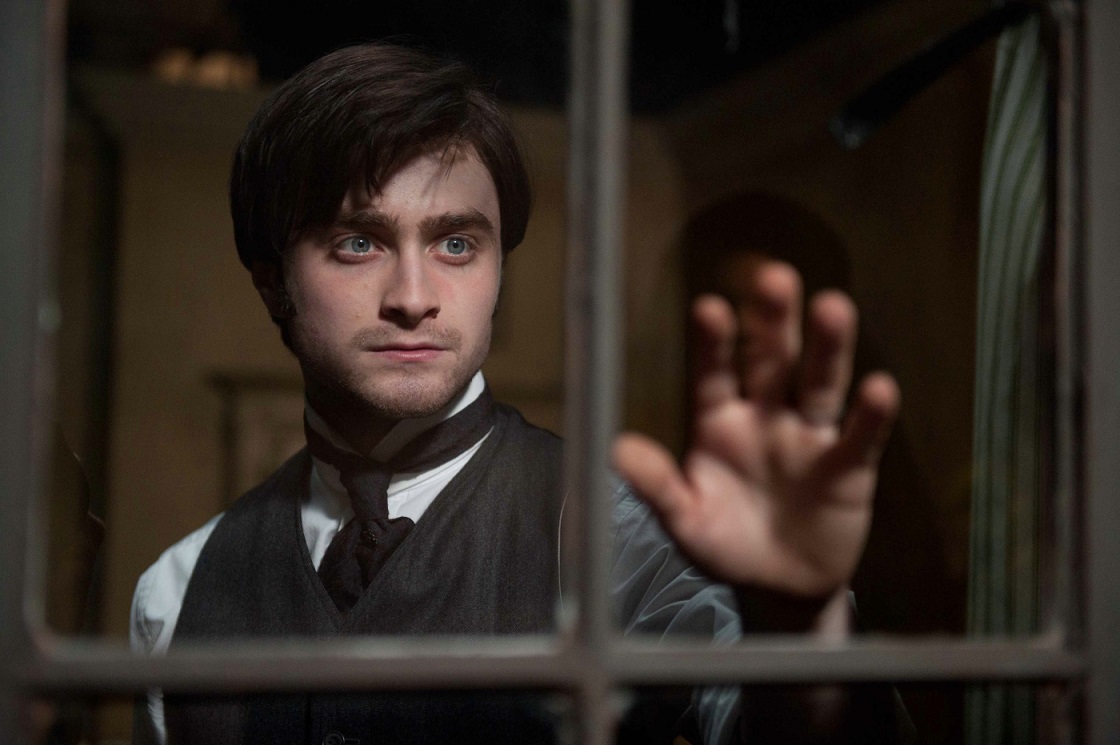
The Woman in Black stars Daniel Radcliff as Arthur Kipps, a junior lawyer in a Victorian Era law firm who is about to be fired. His wife died giving birth to his son and he’s spent the next five years living aimlessly and distracted. As a last chance, his boss sends him to some podunk village in the middle of nowhere to handle the estate of a woman name Alice Drablow and to sell her house, a creepy place called the Eel Marsh House, which is situated in the middle of a marsh. She had just died.
When Kipps arrives in the village, he finds the locals to be extremely hostile. They all want him to leave immediately. But he needs to finish his job or he will be fired, so he proceeds to Marsh House. As he looks through Alice’s papers, he learns that Alice had a sister named Jennet Humfrye. Jennet was mentally disturbed and blamed Alice and her husband for her son dying in the marsh. They never found the body.

As Kipps works, he starts seeing signs of a young woman. For example, he sees a hand on a window and a shadow run across a room. Doors open and close and a rocking chair moves itself. He then returns to the town for the night. When he gets back to the town, a young girl dies in his arms. She poisoned herself. He then learns that most of the children in this town have died, always of suicides, and the townsfolk hate him because they think he’s started the wave of suicides to begin again. Kipps ignores them and returns to Marsh House where he soon finds himself playing cat and mouse with the ghost of Jennet, who seeks revenge against all she encounters by taking their children from them.
What A Well Done Film!
Ok, here are all the warning signs with this film: Radcliff was still fresh from Harry Potter, and it wasn’t clear he was up to anything else. The film was produced by Hammer, who make cheap and generally kitsch films. Never heard of the director. The critics called the film “traditional to a fault,” which reeks of clichés, and they said it wasn’t scary enough for modern audiences. The Victorian-Era setting also sounded like it would be a problem because we don’t relate to the way they handled their fears. But none of this turned out to be a problem because the director made some brilliant choices.
This film was directed by James Watkins who gets a ton of credit for taking the “creepy imagery” horror story we first saw with the wave of Japanese films like The Grudge and adding a layer of creep to it. He did this in two ways that I think merit discussion. First, he understood that distance adds to the creep factor. Most of the “creepy imagery” horror stories try to scare you by showing you creepy images, like undead kids standing in your living room. But after a quick scene or two, the directors invariably hike up the shock value by having the creature touching the hero or jumping in their face to scare them. While this is effective in stepping up the shock, it simultaneously wipes out the fear-of-the-unknown factor because now we see the thing and we know its intentions and the limits of its powers. All that creepy ambiguity and dreaded potential vanishes. Emotionally, this is the difference between being handed a wrapped gift and being handed an open box.

Watkins does it differently. He spends a lot more time with things happening at a distance. You will see a hand across the room against a window for a brief moment or an empty rocking chair at the other end of the room. You will see a shadow move across the other end of a hallway, a ghost walking toward the house from a grave, and a face appearing a few feet over Kipps’ shoulder. What this does is it gives you a sense that things are closing in on Kipps. That’s ominous and it keeps you thinking, “Run for your life before it’s too late!” By comparison, in The Grudge, your “flight instinct” never activates because you know she can’t escape the thing. Moreover, because of this approach, Watkins never gives us a good look at anything nor do we get a sense of its intentions or its powers until late in the film. That keeps the fear of the unknown running strong within us because we don’t know what the danger really is or how bad it could be. That’s instinctively horrifying to us. Lesser directors simply aren’t willing to be this patient.
Watkins also uses motion very effectively. Strangely, this is something you rarely see in the “creepy image” movies. I think the reason is that those directors focus on creating horrific single images for you to examine and they want you to think about that image, not the action of the scene. Watkins, by comparison, uses motion to show how Kipps is being surrounded. For example, you get to watch a ghost walking toward the house from a grave at one point; you are watching this from the second floor. Think about the horror of knowing that thing just entered the downstairs. Is it coming up the stairs? Has it blocked the exit? That is so much stronger than just seeing an image of the ghost somewhere in the house because it makes you feel that you are now trapped. Remember, when it just appears in the house, you invaded its turf, but seeing it enter the house means it’s hunting you. . . and it’s now between you and the door.

Another shot involves Kipps resting his eyes while he sits in a chair. As he does, we see a long hallway over his shoulder and we see a ghost start down the hallway toward him. . . and us. This is a great idea which builds terror with each passing second and it stuns me that you almost never see anyone do this on film. I don’t know why not. The one complaint I do have about that scene, however, is that Watkins changes the perspective very quickly from watching over Kipps’ shoulder to seeing from the ghost’s perspective. It was an effective scene, but it would have been so much more effective if you had been left to watch helplessly as the thing approached you.
Beyond the creeps, the other thing Watkins does is to keep the film from feeling like a giant cliché. I’ve said before that there’s nothing wrong with clichés if they are handled right. Clichés give us comfort. They are like sign posts of the familiar and they only become a problem if a film merely repeats the cliché as if this is somehow worthwhile. But so long as something new or different is done at critical moments, then the cliché works fine. That’s the case here.

For example, one of the oldest clichés in the book is the outsider who comes to the small village and is accused of bringing evil with them. This film starts that way as well with the villagers shunning Kipps as they believe he has restarted the wave of suicides. The cliché tells us that they will attack him at the worst possible time and thereby ironically help the ghost. Only they don’t. And when they don’t, it feels refreshing because you feel like the director isn’t just going to feed you clichés. The film is full of moments like this, where the cliché doesn’t happen.

Ok, let me add to the ** spoiler alert ** ... I’m going to discuss the ending now. Skip to the conclusion if you haven’t seen the film.

One of the biggest clichés in these films is that when you have a woman ghost, it’s because something happened to her child(ren). And once you reunite the ghost with the body of her missing child, everything ends happily. Of course, that’s after the titanic struggle where the hero gets knocked around by the ghost until the ghost sees the dead body and then rainbows appear. This film starts down that road, but it doesn’t turn out that way. In fact, one of the most refreshing aspects of this film is that it doesn’t devolve into a typical Hollywood CGI-extravaganza at the end. To the contrary, it keeps the feel of the film up to that point, with a low-key ending.
Moreover, I really liked the ambiguity at the very end of the film. My first thought on the ending was that Kipps had failed to solve the problem with Jennet. After all, getting killed along with your son sounds like a loss no matter how you score it. But then I began to wonder. Maybe he actually succeeded. It strikes me that the ending was meant to be positive because you see the family reunited. So either Jennet took her revenge but her revenge was ineffective because she inadvertently made him happy. . . or maybe this was Jennet’s way to reward Kipps? We know that Kipps’ life was meaningless without his wife, so maybe Jennet thought she would reward him by reuniting the family? Keep in mind that Jennet is a bit mental, so this might make more sense to her. Granted, that’s kind of rough on Kipps’ son, but I can’t say that he seems all that unhappy. So I’m left to wonder what the ending really means, but I suspect it means he did solve the problem. In any event, finding that kind of interesting intellectual twist at the end a movie that was much better than I expected, was quite a pleasant surprise.
Conclusion
All in all, this was an excellent film. It looked like it would be a poor film based on a cliché with bad acting and a high chance of a poor director, but it really didn’t turn out that way at all. I enjoyed this thoroughly. It gave me something to think about. It creeped me out at times. And I never once felt bored or disinterested. Is it the best horror film ever? No. But it is one of the best in a good long while.
[+] Read More...

Friday, January 11, 2013

Film Friday: 13 (2010)

I’m going to recommend a movie to you, but I’m not completely sure why -- I’m not even sure I enjoyed it. The movie is 13 and I’m recommending this film because it feels unique. In the modern world of highly-packed films with formulaic plots, this is not that. This is no smooth Hollywood production. It’s not clever. It’s not pretty. What it is though, is interesting.

** heavy spoiler alert **

Note the spoiler warning. This film isn’t full of twists and it’s not packed with surprises, but it’s one of those films where the drama is best when you learn what is happening as you watch.

13 is a remake of the French film 13 Tzameti and it has quite a cast. It stars unknown Sam Riley as Vincent, an electrician from Ohio. He learns that a man who has just died had some sort of high paying job he was to perform. Vincent decides to take this man’s place and hopes they let him do the job instead, whatever it is. Others in the cast include Alexander Skarsgard, who becomes Vincent’s contact, Ben Gazzara, Ray Winstone, Mickey Rourke, who was recently broken out of a Mexican jail, 50 Cent, who can’t act to save his life, Michael Shannon, who defines overacting in this film, and Jason Statham who becomes the antagonist.
As the story progresses, Vincent is given a train ticket which he uses to head north. He’s being followed by the police and is told to evade them. Then he’s picked up and taken to an old, abandoned mansion, where a contest is to be held. The contest involves a form of Russian Roulette, where the competitors stand in a circle and fire on the person before them as rich people bet on them. This contest combines the random element of not knowing if the gun is loaded along with a speed element as anyone shot cannot discharge their own weapon.

This is an interesting film on many levels. In some ways, I hate it. It’s an ugly film. It feels like it’s shot on low grade film stock. It’s dark. The actors are all kind of ugly. The setting is nasty, it’s not anywhere you would have a picnic. The story is really dark too, and keeps getting darker. These things make the film unpleasant, but they also work in that they make the film much more real than most modern movies. Even the unreal idea of organizing something like this contest is easy to accept since this is done in a dank old mansion with ugly people rather than some ritzy studio set. Indeed, throughout, the film has a quality to it which makes you believe this is really happening, something you never get in the glossy films Hollywood normally makes.
I’m also not sure I like the acting. It’s either horrifically bad or strangely brilliant. Again, it’s hard to tell. Riley can’t maintain his accent and periodically fails to sound American. Mickey Rourke is a walking cliche of Mickey Rourke on film. 50 Cent looks scared of the camera. Michael Shannon is clearly trying to get noticed so he gets more roles. Ben Gazzara, well, he's very likeable, but you get the feeling he died three days before filming began. The only actors who really prove to be competent are Statham, Winstone and Skarsgard. Yet, somehow, the acting works. Each of these characters stands out in a way which the writing itself doesn’t merit.

The other thing that’s interesting about this film is the simplicity of the plot. These days, films like this are typically made to be so hip and stylized that you expect double-crosses and triple-crosses and some amazing reveal at the end where you realize the whole thing was a quadruple-cross from the get go. But this film doesn’t do that. This film moves from scene to scene with a strange sort of simplicity and that makes the story stronger. Now, that’s not to say the film is predictable. To the contrary, you never really know what will happen next because the film keeps throwing unexpected things at you. These aren’t big things, they are things like a player asking for a chair or a player having a problem loading a gun, but they are enough to keep you from ever feeling like the plot just moves smoothly to preordained points. Instead, it feels like the film is being made up minute by minute and that adds a real sense of unpredictability to a movie even though the story itself is very predictable.
I think there are several lessons here. For one thing, realism can sell even an unreal movie provided all of its pieces feel real. The moment you start adding glitz, the unreality gets highlighted, but so long as you stay true to the more gritty way reality is, the more believable the film will feel. Secondly, this film shows how much minor disruptions, like a player asking for a chair or a janitor picking up garbage, can help make a film feel more real. These aren’t moments that you would consider “plot points,” but they injected moments of the unexpected into the film which made a predictable plot feel unpredictable.

As I said, this is a fascinating film because none of the elements are very good -- the visuals, the acting, the writing, the plot... all second tier. But all together, they seem to rise above their defects and create a movie that is compelling, even if it wasn’t a movie I liked per se. I recommend giving this one a try.
[+] Read More...

Friday, June 22, 2012

Film Friday: Phone Booth (2002)

If I told you that a movie takes place entirely within a phone booth, you’d probably wonder how interesting that could be. Well, with only minor exceptions, the movie Phone Booth takes place entirely within a phone booth and the street surrounding the booth. And as unlikely as it sounds, this movie is gripping! It’s also a rather conservative film.

** spoiler alert **

Phone Booth is the story of uber-jerk Stu Shepard (Colin Farrell), a small time New York City publicist. He lies to his clients, tricks newspapers into publishing stories about his clients, flirts with having an affair and generally mistreats everyone in his life. Every day at the same time, he uses a phone booth to place a call to the woman he’s flirting with, so his wife doesn’t see a cell phone record. On this particular day, Stu receives a call when he steps into the booth. The call is from an unknown man (Kiefer Sutherland) who argues with Stu and seems to know everything about him. As Stu is about to hang up, the caller tells Stu that he has a rifle pointed at the phone booth and that if Stu leaves the booth, he will be killed. Stu must then deal with a series of challenges including the police.
Phone Booth is a fascinating film precisely because of the difficulty in getting a film like this to work. You have limited visuals you can offer the audience because the film is confined to a very small set. You need the perfect actors because they have to carry the plot with little help from modern storytelling techniques. There is no CGI, no high speed chases, and only one man is in danger. Not to mention, you need to come up with a reason why this film stays confined to the phone booth and why the conflict you will use to keep the audience hooked must play out there.

In fact, the idea of a film taking place entirely within a phone booth was originally pitched by writer Larry Cohen to Alfred Hitchcock in the 1960s. Hitchcock liked the idea, but he and Cohen couldn’t come up with a reason why the story would stay confined to the phone booth. Thirty years later, Cohen came up with the right idea: a sniper. What Cohen did was invent a character, the caller, who wanted to toy with Stu. Making him a sniper justified keeping the story in the phone booth. As an interesting aside, this film ultimately had its release date pushed back because of the DC Sniper.

But more importantly than coming up with the sniper, Cohen brilliantly gave the character a truly twisted motivation. Specifically, the caller sees himself as the good guy, and he thinks his calling (pun intended) is to get Stu to admit the lies he’s been telling himself and others, which the caller thinks will make Stu a better man.

This is a fascinating motive if you think about it. On the one hand, the caller is right. He wants Stu to be a better man, and if Stu stops lying he would be. This in turn would make everyone happier and better off in Stu’s world. Thus, in many ways, this is an admirable goal, and you could easily see this being an uplifting movie about a priest or therapist or friend who struggles to teach this to Stu. BUT, the way the caller chooses to go about this goal ultimately makes him a sadistic and evil villain. This makes the character very interesting.
At the same time, this desire to cure Stu gives Farrell a lot to work with. Farrell is forced to admit to his wife that he is flirting with another woman. He’s forced to admit that he’s been misleading his intern. And ultimately, he’s forced to admit that his self-image isn’t what he projects. And in the process, Stu grows tremendously as a character, with a truly cathartic moment coming when he finally decides to free himself of the caller’s trap. This is great writing. But even more so, this is great acting. I’m not sure another actor could have pulled this off. Farrell plays Stu so odiously at first, but somehow keeps you from hating him. I attribute this entirely to the likeability Farrell projects onto the screen. He then makes every moment believable as Stu struggles with staying in the phone booth as the outside world (including Police Captain Ramey (Forest Whitaker)) tries to get him out. And finally, he is absolutely convincing as someone who has an epiphany in the midst of what appears to be a breakdown. Farrell proves beyond any doubt that he is a top actor in this film and he makes this film work.
There’s also an interesting political undercurrent here, though the film is in no way political. This is one of those films which I would describe as premised on conservative values even as it does not espouse conservatism. For example, the things Stu has done “wrong” align strongly with traditional moral beliefs. Lying is wrong (something liberals excuse if the motive is a good one). Infidelity is wrong, but even more so, flirting with infidelity is wrong. This goes against the liberal ideas of no-fault relationships, that men naturally stray, and that we should not judge people’s behavior. When Stuart breaks down, we are then introduced to the idea of shame, another traditional belief liberals now reject. We are shown through the sniper that just because you have good motives doesn’t excuse your bad deeds. This flies in the face of much of liberalism which says force is justified to make people better. Finally, we are shown the idea of self-help. Indeed, Stu does not rely on the cops to save him, he helps him self and finds the only true solution. This again goes against the liberal idea that the individual is powerless to help themselves and must rely on government experts to save them. I’m not saying these points are intentional made as a political statement, but they are how the story operates and the unconscious message it sends.

In the end, this is a fascinating, gripping film. This film shows that all the things Hollywood thinks you need, e.g. CGI, chase scenes, shootouts at touristy locations, etc., aren’t necessary. All it really takes is solid writing. I highly recommend this film.

[+] Read More...

Friday, May 11, 2012

Film Friday: Triangle (2009)

This film is brilliant. It’s tense, it’s incredibly well-written and well-directed, and it’s thought provoking. Unfortunately, non-spaceship science fiction films have a hard time finding audiences. Plus, the whole Bermuda Triangle angle has been saturated by a bevy of lousy films. But this one deserves to be noticed and you should see it.

Triangle is a science fiction, suspense movie about a group of people who find themselves on an abandoned cruise ship, the Aeolus, when their sailboat overturns during a freak storm. Once onboard the Aeolus, they quickly come under attack from an unknown enemy, a crewman who is wearing a bag over his head. Up that point, this is a fairly straight forward Bermuda Triangle film. But then the film takes an incredible turn into the unexpected as each of the survivors is killed except a young mother named Jess. Jess manages to kill the attacker just in time to see the survivors board the Aeolus again. . . including herself. Soon, events repeat from an entirely different perspective.

Why This Is A Brilliant Film

This film is brilliant on so many levels. For one thing, the twist of finding Jess repeating events rather than simply finding a creepy ghost ship presents something not seen before in Bermuda Triangle films. Ditto on her observing the loop as an outside witness rather than just being aware she is personally repeating events. The ending is also genius. And even more importantly, this film never cheats.

When I finished watching this film the first time, the ending blew me away. It was like The Sixth Sense in the way it fundamentally changed the nature of the story and I immediately started the film over again just to see if the director had included any clues, because I never saw the ending coming. Imagine my surprise to find that not only is all the evidence there, but the film keeps pounding you in the face with the clues. . . yet you never see them!

** MAJOR spoiler alert, I am about to discuss everything **

Before I can continue, I have to lay out the ending and the twists. When the survivors first board the Aeolus, they are attacked by what appears to be a rogue crewman, a man wearing workman’s clothes and a sack over his head. Jess eventually kills him by pushing him over the side of the ship. That’s when events begin repeating. As they do, Jess first tries to help the other survivors, but then decides she must kill them so she can complete the loop and return home to save her son. That’s when you learn that she was in fact the mysterious crewman all along. She is eventually killed the same way she killed her other self before, and she wakes up on the shore. Once there, she rushes home to her son expecting a happy ending. Only she sees another version of herself with her son. She kills this other self and claims her son, but the trauma of seeing his mother killed by his mother upsets the boy and they fight. This causes an accident, which kills her son. That’s when she realizes that the only way to save her son is to go to the marina and start the loop over. Essentially, she voluntarily re-enters the loop with the intent of killing her friends so she can return and save her son. Wow!

But does the beginning of the movie hold up to these new facts? Actually, it does. When Jess first shows up, she seems stunned, hesitant and upset. We are told something is wrong with her and that her story about her son being at school is lie. But we quickly dismiss this because we’re told she has an autistic son who could well be in school on Saturday and her being stunned could be the result of a fight with her son and with the cold reception she gets from her new boyfriend’s (Greg) friends.

Interestingly, the opening is crawling with double meanings. For example, she’s asked several times if she feels “guilty” about her son. Without knowing the ending, this sounds like her guilt is about leaving him at home while she’s having fun. Knowing the ending, this is a much more pointed comment. She’s also asked how her son is and she responds: “The same, every day is the same, if I do one thing differently, I lose him.” Again, this could be a mother struggling with an autistic child, but it’s also a clear description of the plot as it points to both the time loop and her need to complete the loop to save him.

Once they board the Aeolus, the clues become much more blatant. Jess says several times that she feels like she’s been on this ship before. Further, you learn that Aeolus was the father of Sisyphus, who cheated death and was cursed by the gods to push a boulder up a hill every day, only to have it roll back down, just as Jess is repeating events every day. There’s even a record player which keeps repeating the same few notes over and over (caused by Jess). These are major clues. Not to mention they find her keys, an impossibility, her watch alone is set to ship time, and the other survivors immediately begin swearing that Jess told them things we never saw her do, suggesting a double. The other characters also tell her several times that “this is all just in your mind” and they suggest that she’s in “her own world” at the moment and not reality.

There’s also one more major give away. We assume the crewman who is trying to kill them is a man because it looks like a man in the work clothes and with the bag over his head. But it turns out to be Jess. And when we learn this, we notice something incongruous about the crewman image: her shoes. Indeed, it’s blatantly obvious from her shoes at that point that this is Jess, and one of the characters even identifies her that way. But the viewer never notices this key clue until after the crewman is revealed to be Jess. So did the director cheat and not show us her feet before? Actually, no. They are clearly visible three times before you know this is Jess, but the director uses the action to pull your eyes toward other parts of the screen at those moments and you never notice. Once you know to look for them, it’s obvious, but until then, this major clue really is hidden in plain sight. Amazing.

Moreover, once events begin repeating and we watch Jess watching the loops, only certain portions of the original dialog get repeated -- the biggest clues as to what is going on. So you are constantly hit with these clues throughout.

All of this dangles before our eyes. We know something traumatic happened to Jess before she boarded the sailboat and it relates to her son, that she feels guilty about it, that she is doomed to repeat this day like a mythical figure who tried to cheat death, that she believes she must kill everyone to “save” her son (who we didn’t know needed saving), that she’s done this hundreds of times already, and that she is the attacker. She even tells us this is about her son, “if I do one thing differently, I lose him” and “I have to get back to save him.” And these things get repeated over and over. Essentially, the writer shows us his cards and dares us to solve the riddle. Yet we never notice any of this because the writer gives us other possible explanations which we accept because they are less fantastic, e.g. her behavior being the result of her autistic son. That’s great writing.

Finally, I want to comment on the ending, which is truly brilliant. One problem with time loop stories is that it’s usually easy to break the loop, so there’s often an unwritten rule in these films that everyone will agree to ignore that possibility. Here, you don’t need to. Early on, when she wants to break the loop, but her every attempt is frustrated by a later version of her. This tells us that the option of breaking the loop just isn’t available to her because the other hers will make it happen.

Then she decides she must complete the loop when she pieces together why all the other versions of her want to kill the other survivors. They are doing this because it’s the only way to get home and save her son. This means she actively wants to complete the loop, just as she wants to restart the loop after her son is killed. This is a fascinating twist that the looped character actually wants to complete the loop, and this eliminates the usual questions of why the loop character isn’t smarter.

The one complaint I have with the film is that her knowledge of her son’s death seems to leave her after she gets some sleep on the sailing boat. It’s possible she suddenly thinks this whole thing is a dream, or it’s possible the loop works that way and she needs to re-learn events once she’s in it. Either way I’m not sure and that’s one area where this film could have been stronger -- if she had simply bought into the need to finish the loop at all times. But in any event, this is truly thought-provoking, creepy, and exciting film. I highly recommend this one.

[+] Read More...

Wednesday, May 2, 2012

Guest Review: Tinker, Tailor, Soldier, Spy (2011)

A Film Review by Tennessee Jed

Do you remember those old movie posters proclaiming “Youʼve read the book, now see the movie”? The trouble is, more often than not, people who see films after reading books on which they are based exit the theater disappointed. There are plenty of reasons underlying the phenomenon. Movies must condense the story to a time frame acceptable for modern cinema, often glossing over important characters or plot developments. Just as often, readers already set in their mindʼs eye what the characters look, sound, and act like, leading to an automatic rejection of the cast in the film version. In worst case scenarios, screenwriters make wholesale changes to the story for any number of reasons.

But sometimes, a film based on a best selling book gets it just right. And, once in a very great while, a story comes along that is so nuanced and complex, the old adage actually gets turned around: “If you do plan to see the movie, you better read the book first!” Tinker, Tailor, Soldier, Spy is just such a film and novel. Letʼs review why that is the case.

** spoiler alert **

This film, released in September 2011, is based upon the best selling novel of the same name by former British spy David Cornwell under his pen name, John LeCarre. The novel is his fictionalized account of the greatest scandal in the history of the British Secret Intelligence Service (a.k.a. The Circus) which occurred in the late 1950ʼs when several individuals within the service were exposed as Soviet moles. They became collectively known as the “Cambridge Five.” The highest placed, Kim Philby, somehow managed to escape detection during the initial scandal, eventually defecting to the Soviet Union in 1964. Cornwell (a.k.a. LeCarre) had been employed by both MI-5 and MI-6 and says he was forced out after his identity had been revealed to the Soviets by Philby. It was at this juncture he started his career as a novelist, creating the ongoing character George Smiley, an intelligence official who has appeared in at least ten books. The antithesis of the service as portrayed by novelist Ian Fleming and his protagonist James Bond, Le-Carreʼs Smiley books are considered by many to be the best and most authentic espionage books ever written.

The title is taken from some of the words to an old British nursery rhyme, and used as code names for senior advisors to the head of S.I.S., Control (John Hurt). They include Bill Hayden, “Tailor” (Colin Firth), Roy Bland, “Soldier” (Cirian Hinds), Toby Esterhase, “Poorman” (David Dencik), Percy Alleline, “Tinker” (Toby Jones), and George Smiley “Beggarman” (Gary Oldman).

Plot - The events in the film are set in the 1970ʼs rather than the 50ʼs and 60ʼs. We first view Control sending an agent named Jim Prideaux (Mark Strong) to Hungary to speak with a Military General who has offered to share intelligence. The mission goes awry, Prideaux is shot in the back and captured. Control and his ally and chief lieutenant Smiley are forced out as a result of the political fallout, and Controlʼs chief rival, Alleline becomes the new head of S.I.S. Control, already old and in poor health soon dies. However, Oliver Lacon (Simon McBurney), civilian overseer of S.I.S. brings Smiley out of retirement. He wants Smiley to investigate old rumors that “Karla” the head of Soviet Intelligence (known as “Moscow Center”) has a highly placed mole in S.I.S. code named “Gerald.” Alleline rose to power as a result of what appears to be high quality intelligence from a soviet mole he is running in an operation code named “witchcraft.” He appoints his ally and former London station chief Bill Hayden as his chief deputy and right hand man. His hope is to use the “witchcraft” intelligence to regain the confidence of the American “cousins” and entice them to once again share their own intelligence.

Smiley enlists young intelligence officer Peter Guillam (Benedict Cumberbatch) to assist with his investigation. Other key characters include Ricky Tarr (Tom Hardy) as the agent who originally uncovers the potential existence of “Gerald”, and Connie Sachs (Kathy Burke) chief soviet analyst. She was also sacked after the Hungarian operation for accusing the Soviet cultural attache of being an agent, without being able to prove it. What follows is very realistic, if conventional, investigative work. Eventually, Smiley uncovers enough evidence to strongly suspect the identity of “Gerald” and lays a trap for him. There will be no revelation here as to which senior official turns out to be “Gerald” (the fictional version of Kim Philby.)

What Works Really, Really Well - the film is incredibly well photographed, and is stunning in 1080p. Most interior shots are all polished wood and somewhat dimly lit. Direction is superb in terms of cinematography and set up of scenes. While I donʼt know exactly how the master was filmed, it does have an extremely nice but cool feel to it. Acting is uniformly excellent throughout, a tribute to the casting director. Special mention must be given to Gary Oldman in the lead role. He follows Sir Alec Guinness in playing Smiley. Guinness did so in a BBC mini-series adaptions of two of the three novels that make up the so-called “Karla Trilogy” pitting Smiley against Karla. In my view, Oldman need not take a back seat. He was nominated for the oscar for leading actor, losing to Jean Dujardin.

Everything about this film seems real, and that stems from the story itself as well as the screenplay adaption (which was also nominated for an oscar). The characters are credible and believable, perhaps not surprising considering LeCarreʼs “insider” status.

What Doesnʼt Work - The novel is a lengthy, complex tale. Even the author was concerned that it could not be condensed down to feature film length. The original adaption with Guinness was, after all, split into a seven episode mini-series. That is a valid criticism, although the film makers do a reasonable job of retaining the essence of the novel. Other critics complained that given the necessary condensation (or in spite of it), viewers unfamiliar with LeCarreʼs book would be unable to follow the story. In this criticism, I wholeheartedly concur. There are so many characters with unfamiliar names to keep track of, and the dialogue is loaded with “insider” terminology.

Other LeCarre fans insisted trying to pair down the story to feature film length sacrifices the very depth of character development for which the books are justifiably famous. I also believe the very realism that is overall a strength, makes for a very slow developing film. Thereʼs not much in the way of physical action here, and certainly no colorful villains like “Odd Job” or even “Red Grant”.

The Bottom Line - I must be honest and say I have not read all the John LeCarre Smiley books as I have with Ian Flemingʼs Bond stories. They can be a bit of a slog, and are probably not for everyone. But I do understand the allure of LeCarre and Smiley as the “connoisseursʼ” espionage stories. As such, the film will work immensely better if you are familiar with Smiley and his longer term development. I think it would be a shame to miss this film, but if you do plan to see it, this is one time I recommend you “read the book” before screening it. At the very least, check out a good plot synopsis or summary of which several are available on-line. While it will give away the ending, it may just allow you to appreciate better how good, in many respects, this film really is.

[+] Read More...

Friday, March 16, 2012

Film Friday: After.Life (2009)

I’d never heard of After.Life until the other day. The film bombed in theaters, making only $3.2 million on a $4.5 million budget, and that’s a shame. This is a fascinating movie and is well worth watching. I can’t call it a great film, but it is an interesting film.

After.Life stars Liam Neeson as Eliot Deacon, the owner of a funeral home, and Christina Ricci as Anna, an unhappy school teacher. After a quick intro where we learn that Ricci and her boyfriend Paul Coleman (Justin Long) don’t really get along, Ricci wakes up on Neeson’s embalming table at the funeral home. She’s had an accident and has been pronounced dead. Neeson’s job is to prepare her for burial. But here’s the thing, she’s pretty sure she’s not dead. Neeson assures that she is. He explains that she had a car accident and was pronounced dead by the coroner at the scene. He shows her the death certificate and the wound on her head. She also suffers from periodic paralysis, which Neeson attributes to rigor mortis. But how can Neeson speak to her if she’s dead? He claims he has a gift which lets him speak to dead people.

The big thing this movie has going for it is mood. The whole film is creepy and you never once doubt the possibility that Ricci could be either dead or alive. And best of all, the film achieves this as a genuine psychological thriller, not a modern horror movie. Indeed, it rarely sinks to cheap scares or gross outs.

Neeson gives a strong performance, as I’ll discuss below. Ricci is quite good as well. Long is weak as the boyfriend who can’t shake the idea that Ricci might be alive, but he’s a sideshow. The real heart of this film lies is the question of whether or not Ricci is really alive or dead. And in that regard, this film is thought provoking. Why do we cling to life? Or do we? What would it take to convince us that we are dead? And how would you prove you wanted to live? I would have preferred a little more depth on the answers provided here, but the film certainly raises the questions well.

Beyond that, there’s nothing I can say without giving you a major spoiler warning. This film’s ambiance comes from trying to understand what is really going on and I’m about to tell you, so don’t read on if you haven’t seen the film.

** Spoiler Alert – I recommend seeing this film before continuing. **

Let’s talk about Neeson. Neeson gives a spectacular performance in this film. About three-quarters of the way through the film, it becomes fairly clear that Ricci is in fact alive and that Neeson is some sort of twisted serial killer. What’s interesting about Neeson’s portrayal up to this point, is that you can absolutely believe both scenarios. On the one hand, he comes across as exactly the kind of respectable man who would be a funeral director. He also plays the idea of the “gift” of being able to speak with the dead perfectly and you never doubt that it’s possible he is telling the truth. At the same time, he shows these moments of intense-but-controlled anger, which give you the sense that he could easily build up enough rage to be a killer.

But even more importantly, he gives a genuinely believable motive. I’ve discussed this before, that bad people rarely think of themselves as evil. To the contrary, they think of themselves as justified or even doing something noble, and that’s the case here. Neeson believes that people who don’t value life don’t deserve to have it. And if you listen closely, you will hear Neeson on several occasions offer Ricci a chance to prove she values life by walking out the door to freedom. This is her trial and she is judging herself, only she doesn’t know it.

This is such a strong motive that it both makes the character instantly credible and it helps you understand his methods. He’s not some standard psycho who tortures people because it gives him pleasure. In his mind, he’s executing people who judge themselves unworthy. His fake-death game is the trial. And interestingly, he seems willing to let himself get caught if the person does in fact walk out the door. That is a fascinating motive and it’s highly believable. Not only does this make his insanity “rational,” but it adds the element of risk which serial killers and gamblers view as such a turn-on. Indeed, this feels like a much greater risk than any other movie serial killer has taken because he puts his fate in the hands of his victims.

The writer was also smart to expose this motive slowly. You start to get a sense for it early and with each passing scene it becomes more clear. This makes for a more fascinating film than those where you have a cliché scene where the otherwise-normal killer suddenly rips off their mask and spews their motive in a melodramatic speech because this film lets you discover the motive as you would in real life -- through small hints.

Now, I’ve said this is an interesting film, not a great film. There are several reasons for that. The story itself is great, as is the struggle between Ricci and Neeson, but Long is a rather poor distraction -- he is a standard, irrational “movie” character. But the bigger problem is that while you watch the film, lots of things don’t make sense. In particular, this seems like a rather impossible way for a serial killer to work. He’s basically relying on people to be injured and then for the coroner to mistakenly declare them dead. That’s a hard bit of disbelief to overcome. But here’s the thing, the film actually answers this, it just doesn’t do it clearly enough that most people will realize what is really going on.

When Ricci has her accident, she is actually forced off the road by a white van, not the truck which Neeson tells her killed her. The white van is the same white van Neeson drives at the end of the film when Long has his accident. What is going on is that Neeson picks a target. He causes them to have an accident. Then, because he’s at the scene, he gives them a shot of Hydronium Bromide, which mimics death and fools the coroner. This explains all of the seeming coincidences, like how he gets his victims. It also explains the coincidence of Jack being Neeson’s son and yet being in Ricci’s class and then getting to know Long -- it’s no coincidence at all, he was sent to target both. If the film had given just a little more hint of this, then I think it would have been better received because, as it is, I suspect most people left the film feeling this was all too coincidental to be real.

I also would have liked to see the film explore a bit more into the question of why Ricci wants to live. This started well, but I think the writer didn’t quite have a solid answer other than “because the plot needs it.” So there is a missed opportunity there.

In any event, the interesting take away from this film is Neeson’s character, who is one of the most convincing serial killers in a long time because he truly seems motivated by a twisted sense of righteousness, rather than the usual “just because I’m evil” attitude most serial killers display. And it’s fascinating to watch him toy with fate by offering to let these people leave and then simultaneously letting them judge themselves. It’s an interesting way for him to wash his hands of his dirty deeds.

There is much here to like and to think about. I definitely recommend this film.

[+] Read More...

Friday, February 24, 2012

Film Friday: Black Swan (2010)

Academy Awards are not a measure of greatness. To the contrary, they’re often better at marking films you should avoid. Black Swan received five nominations and won for Best Actress. Bad sign. Add in that this was billed as a snotty, behind-the-scenes, “insider” look at the world of ballet, plus my displeasure with Darren Aronofsky over The Wrestler, The Fountain and Below, and this looked like a loser. Imagine my surprise when I watched this and found it to be one of the best films in years. Seriously.

On its surface, Black Swan is the story of ballet dancer Nina Sayers (Natalie Portman) who has won the role of the black/white swan in the play “Swan Lake.” She is plagued with doubts, a sexually harassing director (Vincent Cassel), a jealous stage-mom, and a young competitor Lily (Mila Kunis) with effortless natural talent. The story begins right before she wins the role and ends after her first performance. Sounds thrilling, doesn’t it?

Actually, this is a classic example of the marketing not quite telling you what the story is really about. In truth, this isn’t about ballet at all. It’s a psychological thriller. And you should give this film a chance without thinking it’s a film about sniping at a ballet. You won’t be disappointed. Before I continue down this path, however, let me put up the spoiler warning because pretty much anything I talk about after this point will be a genuine spoiler:

** Spoiler Alert – I recommend seeing this film before continuing. **

One of the first things to strike you when you watch this film is how nasty everyone seems. Cassel is a sexual harasser who thinks he has the right to openly demand that his leading ladies sleep with him. He’s smarmy, rotten, and indifferent to the harm he’s doing to these women. His last conquest, who he has apparently forced into retirement, lives in a perpetual jealous rage. Sayers’ mother is like a living version of Norman Bates’ mother. She watches Sayers like a hawk, even creeping into her room at night, and keeps her trapped in the apartment. She also pounds Sayers with constant barbs about how she gave up her career as a dancer to raise Sayers. Lily is even worse. She’s a flirt and everyone loves her, and she seems to try very hard to befriend Sayers, but this just hides her betrayal.

All of this gets woven together so wonderfully that my first thought watching the film was that Sayers was truly alone, surrounded by hateful people all with their own agendas, who are trying to destroy her to satisfy their own perverse desires. And as their actions become more extreme, this film seemed headed toward a spectacular explosion.

But you soon start to realize something is wrong with Sayers. In fact, the plot moves so expertly that you don’t see the signs until you are deeply within her psychosis. For example, we see excessive shyness and social awkwardness, but it doesn’t seem outrageous. We see a rash, which she scratches, and her mother obsessing over her scratching it. We see her sneak into the star’s dressing room and steal her lipstick because she’s dreaming about being a star. It seems harmless. None of this raises our suspicions, especially because her conduct seems to be a response to the nasty, aggressive people around her.

Soon we start to see the truth. She is intensely frigid to the point of being obsessive. And her view of the others as sexual predators may not be true at all. For example, Sayers sees Cassel as a sexual predator, yet he never actually forces himself on her. She sees Lily the same way, but maybe Lily’s just flirty and is genuinely trying to be nice? That rash? It’s no rash. She cuts herself and doesn’t remember doing it. The stolen lipstick? It’s part of an eerie stalker-like collection. And then you have the visions. When they begin, you think she’s simply mistaking one person for someone else she knows. But as they progress, it becomes clear they are paranoid visions of herself, and soon we don’t know what’s real and what isn’t.

Usually when actors try to play crazy, they shift around nervously to make themselves appear different or do something maniacal while saying things that make no sense. The idea is to standout and seem abnormal. Here, Portman and Director Aronofsky do the reverse. Rather than make Portman act crazy, she acts sane and troubled by the crazy actions of the others around her, each of whom seems slightly over-the-top and exaggerated. Thus, while Portman seems sane, it’s only because we don’t understand at first that we are seeing the world from her perspective.

The visions are the perfect example of this. Rather than treating the visions as real and overacting to them, as is typically done, Portman very cleverly, through her acting not her words, tells the audience that she knows these are visions and knows they aren’t real. This adds an incredible amount of depth to her portrayal of insanity. For one thing, this feels more real because this is how most people probably fear insanity would creep upon them, i.e. that they would slowly lose touch with reality rather than it all happening at once. For another, it allows the audience to feel her insanity because they are just as confused about reality as she is. Indeed, rather than being an observer watching her rant and rave, we are a participant trying to figure out what is going on. Finally, it makes the audience feel her despair because she clearly needs help, but there’s nothing the audience can do to help her. Any film that can pull an audience into a character and make them feel the emotions of the character is brilliant and Aronofsky and Portman achieve that here through their brilliant choice to understand her insanity.

I think there are some excellent lessons here. If you want to portray insanity, focus on how the insane person sees the world. Remember that for many insane people, it’s everybody else who’s crazy. And crazy need not be stark raving mad. Portman and Aronofsky should be commended for this film. It’s one of the best I’ve seen in years.

[+] Read More...