Showing posts with label Fantasy. Show all posts

Thursday, July 7, 2016

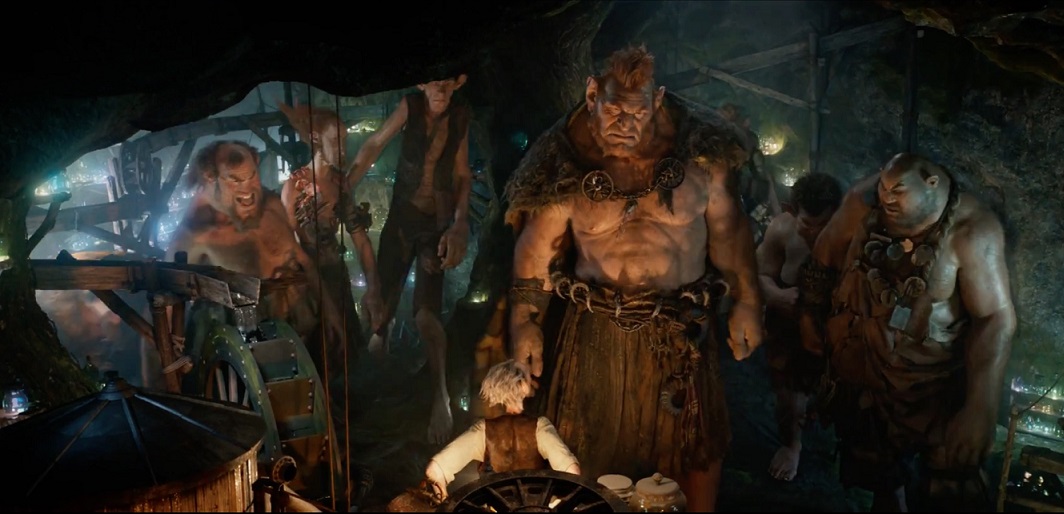
Film Friday: The BFG (2016)

When Steven Spielberg announced he was turning Roald Dahl’s book The BFG into a movie, I suspect a lot of people had the same reaction I did: “huh… I never heard of it.” But kids movies are big business and Spielberg is a talented director and a lot of the people who do know this book currently have kids, so I assumed it would be huge. But it wasn’t. And I know why it wasn't.

The Plot

The BFG is a kids story from the 1980’s. It involves a giant who roams Britain at night blowing dreams into the rooms of little kids. Why he does this isn’t very clear except that he captures dreams and then seems to like dispensing them to some kids because that gives him charm.

One night, this giant is spotted by a little girl who lives in an orphanage. Her name is Sophie, and she’s an insomniac. In a panic, the giant grabs the girl and takes her with him back to giant country. He does this because he’s afraid that humans would hunt the giants if they knew that the giants existed. As an aside, the other giants are all cruel, “cannibals” (they eat humans). The BFG eats rotten vegetables.
After the kidnapping, we learn that the giant is a moron. He makes up words and gets confused – some of the words will be familiar from Willy Wonka. He also no think good, but that’s ok because he’s a comfortable cliché. He’s the simple working man/janitor who dispenses wisdom... earthy wisdom... magic negro wisdom. He also can’t get enough of telling us just how stupid his is.

Anyways, the moron and little girl go through the motions of fearing each other and then become fast friends. We also learn he calls himself The Big Friendly Giant, and likes the way some kid he previously kidnapped shortened that to the BFG. So the girl calls him that and all is well.

But there is a problem. See, even though this giant is nice and cuddly, it turns out that there are other giants who are much bigger and much nastier and they kidnap and eat children. What’s more, the other giants have come to suspect that the moron has a human stashed somewhere.
The BFG realizes that he can’t protect the girl and he decides to return her to the human world. But that won’t work so the girl comes up with a plan to solve their problem. They visit the queen of England and get her to authorize a military strike against the evil giants. She does and the day is saved.

Meh

I’m actually a little torn about this film. On the hand, this film is beautifully shot. The effects are fantastic and believable. The acting is good. The story moves along at a good pace. There is little I can fault throughout the film. It’s even quite earnest and without cynicism... something I really do appreciate. So overall, I see where this film should have been a huge success and part of me wants to tell you to go see it.
Sigh.

But story matters and this story just never got interesting.

At no point does this story ever reach any sort of climax, and that makes the film dull. Take the meeting with the giant. Sophie gets taken by the giant. She gets dragged to his cave. In the cave, she hides from him, but he always knows where she is... so there’s no drama. The giant says he will keep her forever. She resists at first, but she’s an orphan with nowhere to go... no drama. Then she decides she wants to stay, though the BFG has done nothing to earn it... no drama. Now the BFG wants to return her, except we already know the bad guys know about her, so he can’t leave her... no drama.
Then Sophie comes up with a plan to go to the queen and convince her to attack the other giants. Before she goes, we meet the queen and see that she’s the nicest, most caring woman on the planet and it would be impossible for her not to help anyone in need. So there is no drama when Sophie makes her sales pitch. Then the queen calls out the military. She gives a command that is so simple that the film's writing is telegraphing that the plan can’t fail. Sure enough, right before the soldiers attack, all but the worst giant get knocked out of the fight with bad dreams. That makes the fight a walkover. And almost the moment the soldiers attack, it's over. No drama.

The key to any good story is to keep the audience unsure of what will happen next. Be it the outcome of a fight or battle, the need for reconciliation between two characters, the roll of a dice or the execution of a plan, the more uncertain the audience is of the success of the character they want to win, the greater the tension and the more the audience will be interested. Yet, at every single turn, The BFG telegraphs how a particular conflict will be resolved basically at the point it is mentioned.
Ernest Hemingway was brilliant in many ways. His two most important skills were his ability to make the complex seem incredibly simple (something imitators don’t understand) and the way he could take a simple point of conflict in a story and torture you by stretching it out. For Whom The Bell Tolls, for example, starts with a man who is about to explode a bridge. It seems like the bridge is going to explode in the next sentence. But it doesn’t. Instead, Hemingway spirals away to tell his story, always using the about-to-be-exploded bridge as a way to tell his story and ratcheting up the tension the whole time. Spielberg in BFG completely misses that. There is nothing that isn't resolved the moment it first gets mentioned and Spielberg spends the film defusing such tension before he even tells you there is tension.

This is why the film comes across as so utterly dull. Imagine being shown a football game, but first being handed a list containing the details of every score. How exciting would that game be? It’s the same thing here.

It’s sad. This was a film with tremendous potential. All the pieces were there, and Spielberg knows how to tell a story. This time, however, he failed... and the blame really does lie with him.
[+] Read More...

Sunday, May 4, 2014

My Favorite Films: Fantasy Films

People often connect fantasy with science fiction because they are idiots. Fantasy is something completely different and good fantasy is pretty rare. Let’s see what we can do to identify some...

1. Conan the Barbarian (1982): This movie is brilliant. It's a solid action film that has an amazing Zen to it. The film flows like the sound of one hand clapping and then driving a sword through you. It is a deep film, packed with philosophy, drama and the things that ignite characters on film: an orphaned warrior lost in the world, friendship, love, a father's love for his daughter, a King who is helpless to act against a more popular foe, a villain who seems to have grown as a person to the point of near enlightenment only to discover that he grew crooked and his villainy is many times worse, etc. It is a film you can watch when you want some rousing action. It is a film you can watch when you want a thoughtful film. It is a film you can watch when you want to explore by proxy the relationships in your life. It is amazingly beautifully shot. And it has the best soundtrack of any film... ever. In fact, you can close your eyes and just listen to the score and fall in love with this film. Awesome. It’s clear how this made Arnold into a star. The sequel and Red Sonya are entertaining too, though they are very different.

2. Army of Darkness (1992): What can I say? This film is awesome. A great story, a great actor and fantastically quotable dialog!

3. Dragonslayer (1981): A darker version of fantasy films, this story of an apprentice magician who kills a dragon is interesting and complex, and unlike many fantasy films, it involves an actual plot.

4. Krull (1983): This movie has an amazing cast before they were famous and a great story as it mixes science fiction with fantasy.

5. The Lord of the Rings (1978): This quasi-animated film which covers only the first of the three books was an incredible adaptation of the books. This version is so much better than Jackson’s version in a great many ways.

6. The Lord of the Rings (2001-2003): While I am not a fan of these films from a lost-potential perspective, they are well done, if lifeless, fantasy.

7. Harry Potter (2001, 2002, 2005): The first two films (and kind of the fourth) really captured the spirit of Harry Potter perfectly. A mix of wonder, exploration and good verses evil, these are great films. The others are dull and dark and monotone.

8. The Hobbit (1977): I don’t think I’ve ever seen a better adaptation of a book than this, and this is the gold standard for The Hobbit on film. Not only does this stay true to the books, but it captures the spirit, the feel, and the images the book presents. The new Peter Jackson version is crap.

9. Dragonheart (1986): Who knew you could come up with a sort of heist film involving a dragon? This is a good one.

10. Dungeons and Dragons: Wrath of the Dragon God (2005): Yes, a made-for-television movie makes my list. Why? Because this film really captured the feel of what Dungeons and Dragons is about, unlike all the big budget efforts preceding it, which all failed so miserably.

I don’t know if The Mummy or Labyrinth are fantasy or not, but they should probably be on the list. I would also add Jet Li’s Hero, though people probably don’t connect that with fantasy, which is normally European-based.

A couple of omissions though: I used to love The Dark Crystal, but it hasn’t stood up over time, Willow wore on me fast too, and I found the Narnia series to be workmanlike and dull.

Thoughts?
[+] Read More...

Friday, March 28, 2014

Film Friday: Oz the Great and Powerful (2013)

I am generally a fan of remakes of The Wizard of Oz. There is something universal and compelling about that film which almost invites people to remake it in different contexts or settings. That said, few (read: none) of the remakes have been very good. So I was intrigued to hear they planned to do the prequel to The Wizard of Oz. This sounded like it could hook into the desire to see a good remake while avoiding the pitfalls of actually remaking a great film. Unfortunately, Oz The Great and Powerful was doomed by a series of bad choices which just made it excessively dull.
The Plot
Oz The Great and Powerful is the prequel to The Wizard of Oz. The story begins with the Wizard (James Franco) a carnival magician, being sucked into a tornado. He is in a hot air balloon for reasons that take fifteen minutes to develop and which you absolutely don’t care about. Naturally, he crashes in the Land of Oz. Once there, he runs into Theodora (Mila Kunis), a naive girl with hidden witch powers. She immediately thinks that Franco is the wizard of a local prophecy: one who will come and free them from an evil witch. Theodora believes the evil witch is Glinda (Michelle Williams) because that is what her not-very-nice sister Evanora (Rachel Weisz) tells her.
Franco is a conman with a heart of gold, of course, and he embraces the prophecy as a means to get his hands on Oz’s massive treasure... or to help them, it’s not clear. He befriends a flying monkey who becomes his sidekick and a China doll whose legs he repairs. He then meets Glinda and learns that she’s actually a good witch and that she protects a city of Quadlings, Tinkers and Munchkins.
Meanwhile, Evanora tricks her sister, who had fallen in love with Franco somehow, into believing that Franco is two-timing her with Glinda. In her anger and sorrow, Theodora takes a green apple from Evanora. This apple withers her heart and makes her evil. It also turns her green... like Kermit the Frog. And let me tell you, it ain’t easy being green. Anyways, the two now-evil witches decide to eradicate the plague of Quadlings, Tinkers, Munchkins and Francos, and the other side fights back. The whole thing ends in a surprisingly entertaining battle of wits.
Bad Choices
I said in the intro that Oz The Great and Powerful was doomed by its choices. What choices you ask? Well, let’s discuss.

Misfired Opening: The film opens in black and white. It involves a carnival in Kansas and it has all the actors you will see in Oz playing real people here. There’s even a girl who looks like Dorothy. This is all meant to remind you of The Wizard of Oz. Even the aspect ratio changes once we hit color footage. Unfortunately, rather than being clever, this is a huge mistake because this opening is so oddly similar to The Wizard of Oz that it immediately blurs the question of whether they are doing a prequel or a remake of The Wizard of Oz. Yet, it is also so different that it feels like a truly sloppy remake. So as you find yourself watching this, you feel confused and you feel underwhelmed by their attempt to “retell” The Wizard of Oz, even though they aren’t actually retelling that story. It was a bad choice.

And that choice was made all the worse by the length of this portion of the film. The opening is just longer than 15 minutes and the problem here is that none of this is all that interesting and none of it will matter in the rest of the film. In fact, you know that nothing you are watching will be the slightest bit relevant, so it’s hard to care about the first 15 minutes of the film. So basically, the film gets off on a very wrong foot and leaves you struggling to care about the story before it even begins.
Casting.. or perhaps direction: The next problem was casting, or at least direction. Rachel Weisz does an excellent job as the evil witch. She’s a solid actress who brings just enough menace, believability, and style to the role to make her everything you need in a villainess. The only problem is that she fades into the background too often and is overshadowed by everyone else. She also turns into a generic Raimi witch at the end (something we’ve seen throughout the Evil Dead series and in Drag Me To Hell).

Michelle Williams is adequate as Glinda the Good Witch, although she’s not daffy enough to ever grow into the Glinda from The Wizard of Oz without first suffering senility or some sort of stroke.
Both of those actresses are fine, except that while they are playing the story straight, Kunis and Franco are engaged in melodrama. Kunis goes through wild mood swings that aren’t really rooted in her character and then, when she turns evil, she does her cackling best. I actually like what she does a lot. In fact, she breathes life into the role of the witch. But it doesn’t mesh with Weisz or Williams, who apparently didn’t get the memo that this was to be a melodrama.

The real problem, however, is John Leguizamo James Franco. Franco plays the Wizard somewhere between melodrama and a Sesame Street appearance. The result is that many of his actions feel like he’s acting – such as when he screams to himself “I can’t swim” when he crashes in a pool of water and he thrashes around until he realizes he can just stand up. It feels like he’s doing a routine... a routine we’ve seen done a million times. Moreover, because of the Sesame Street angle, his misbehaviors are never real, i.e. you know he’s a good guy no matter what he does, so his conversion to good is kind of meaningless. And his choice of melodrama throughout means he has no chemistry with any other character and it becomes impossible to believe that anyone would actually put their faith in him.
Take No Chances: An even bigger problem with the film is that there isn’t a single moment where the film takes any chances. Everything is exactly what you expect and there isn’t a surprising moment to be had. Even the magic trick Franco does in the intro has appeared in better films and was done exactly the same way. He claims to be the best fake magician around, couldn’t they at least give us something we haven’t seen before to help us believe that?

This has been my problem with director Sam Raimi’s post Army of Darkness career: he gives you exactly what you expect and never challenges you or gives you anything more. Essentially, he is a technician, not a creative type, and his films lack those “wow” moments, and that’s on full display here again.
An Incongruous Costume Choice: There is one costume choice I need to call out as well. Overall, the whole film has a 1930’s art deco style. Everything fits that perfectly, from buildings to costumes, and it gives the film a definite style that works really well. However, in the middle of this world of tuxedoes, bellhop costumes, decorative soldiers and evening gowns, they choose to put Kunis into black leather pants. Not only does this not fit the 1930’s style at all, but when she turns into the Wicked Witch, it makes her costume different than the one that would eventually be worn by Margaret Hamilton. It is a minor point, but it is noticeable, especially as this issue was easily avoidable.

The result of the above is this: you have a film that loses you in its first 15 minutes. The next hour and fifteen minutes are visually stunning, but emotionally empty and struggle to win you back. The characters go through the motions and you really just don’t care. There are tonal problems and the writing doesn’t impress. There are no memorable moments and nothing you will take with you once the credits roll. You will find yourself looking at your watch a lot.
At the hour and a half mark, however, the film finally kicks into gear. This is the point where good and evil prepare to square off against each other and then proceed to do battle. From this point forward, the film has a solid pace, some fantastic imagery (even if it is very similar to Curoscant from the Star Wars prequels), and a plot that becomes quite fun to watch. The story is somewhat unpredictable at that point and even the moments you can predict are so well done that you will enjoy them.

So is this worth seeing? Well, if you’re at all a fan of the Wizard of Oz remakes and homages out there, then I would say yes. Visually, the film is stunning. The last twenty minutes are truly fun to watch. The first part is dull, but you can get past that. I would recommend, however, adjusting your expectations to seeing the film as essentially a quasi-melodrama aimed at kids. So if that’s cool for you, then see it.

Thoughts?
[+] Read More...

Friday, February 21, 2014

Film Friday: Conan The Barbarian (2011)

“Behold and despair!” Yeah, that about sums up this film. This one stinks. It's pointless, plotless violence, and it's not even good violence. Avoid it.

Plot

N/A

Why This Film Stinks... as if you need to ask

Written and directed by Hollywood conservative John Milius and co-written by Hollywood nutjob Oliver Stone, the original Conan the Barbarian is brilliant. It's a solid action film that has an amazing Zen to it. The film flows like a pure mountain stream. It is the sound of one hand clapping and then driving a sword through you. It is a deep film, flowing with philosophy, drama and the things that ignite characters on film: an orphaned warrior lost in the world, friendship, love, a father's love for his daughter, a King who is helpless to act against a more popular foe, a villain who seems to have grown as a person to the point of near enlightenment only to discover that he grew crooked and his villainy is many times worse, etc. It is a film you can watch when you want some rousing action. It is a film you can watch when you want a thoughtful film. It is a film you can watch when you want to explore by proxy the relationships in your life. It is amazingly beautifully shot. And it has the best soundtrack of any film... ever. In fact, you can close your eyes and just listen to the score and fall in love with this film. Awesome.

The new movie is crap.

The end.
Oh, you want more? Ok. The new Conan has no point. Jason Momoa (Stargate Atlantis) plays Conan. He ventures from location to location killing whoever he finds in the most brutal ways possible as 3D blood flies toward the screen. His reason for existence is that his father (Hellboy) thought he was a wuss and couldn't handle a sword. Then some bad people came and they killed everyone in his village except Conan. The big bad meanie wore an enchanted mask. Conan has now grown up and he's looking for revenge as he works as a pirate to pay his bills. He kills everyone he meets... end of story. Oh, and there's a bald chick in this who is a sorceress working with the guy in the mask.
The cinematography stinks. Everything is shot in brown, perhaps because the script is crap. The action is boring. The actors stink. The characters need name tags because they are so cardboard and so alike, and that includes Conan. There isn't a moment where you will be asked to use your brain. There is a constant "chinking" noise that will drive you nuts... it's like hearing someone cock a gun every few seconds. There's nothing memorable about this film.
So why was this film made? I have two theories. The first is that this film was secretly financed by John Milius with the intent of reminding people just how amazing the original Conan was. The idea was to put out a remake so putrid that people would leave the theater in disgust and go buy the original on Blu-Ray just to get the taste of "Barbarian Cluster Fudge" out of their mouths.

Alternatively, someone said, "Hey, let's make a quick buck and exploit some famous property." And when they were asked what the storyline would be or who the writers would be, they responded, "Modern stories don't need storylines... or writers. Trust me, we'll wing it and then fix it in post."

I don't know, could be either. Don't really care either. Glad it lost more than half its budget.
[+] Read More...

Friday, January 17, 2014

Film Friday: Jack the Giant Slayer (2013)

Jack the Giant Slayer was considered a box office bomb, as it just about broke even. The critics hated it, giving it a 50% rating. They used words like “one-dimensional,” saying it lacked a good script, and called it “an attempt to cash in on a trend.” Well, I can’t disagree with any of that, but that didn’t stop me from enjoying the film. This film is a throwback to a simpler age, I just wish it had offered a stronger script.
Plot
Directed by Bryan Singer of The Usual Suspects and X-Men, Jack the Giant Slayer is the story of “Jack and the Beanstalk” done as an action film. It follows in the questionable footsteps of Red Riding Hood and Snow White and the Huntsman, and it probably draws its roots back to Van Helsing. Unlike these other films, however, it is neither dark nor cynical nor anachronistic.
The story begins with two families telling their children the story of Erik, an ancient king who defeated an army of giants from the sky by crafting a magical crown which compelled the giants to obey. The story is told to Jack, a peasant, and Princess Isabelle, a descendent of Erik. Then we skip ahead ten years. Jack has been sent to town by his uncle to sell his horse. In town, Jack sees a group of turds harassing a young woman and he steps up to defend her. This is Princess Isabelle and moments later Elmont (Ewan McGregor), the Captain of the King’s Guard, arrives to protect her and take her away. Naturally, Jack is smitten.

As Jack continues through town, he runs into a monk who appears to be fleeing the authorities. The monk offers Jack some magic beans in exchange for his horse. He tells Jack that Lord Roderick (Stanley Tucci) would pay handsomely for their return. The monk then takes Jack’s horse and flees.
Jack returns home to find that his uncle is a tad angry that Jack traded his horse for some worthless beans. He takes the beans and throws them away. Meanwhile, Isabelle has escaped the castle because she doesn’t want to marry Lord Roderick. She takes shelter in Jack’s house because it has begun to rain. When the water from the rain hits one of the beans, it grows into a beanstalk which destroys the house and grows way up into the sky. Isabelle ends up up the stalk.

Back on the ground, King Brahmwell (Ian McShane) sends a team up the stalk to rescue his daughter. This team includes Elmont, Jack, Roderick and some others. When they reach the top, they find an entirely different world. This is a world of giants. Soon enough, most of the team is dead or captured. Elmont and Jack find themselves in the kitchen where they are being baked into snacks for the giants. Roderick, however, has gone a different route. He has stolen the magical crown which lets him control the giants and he intends to lead them back down the beanstalk to take over the kingdom. He has also been responsible for killing most of the team.
On the ground, the King decides they need to destroy the beanstalk, even if his daughter remains missing.

I won’t spoil the rest.
Why I Liked This
Let’s get this out of the way: this isn’t a great film by any stretch. The effects are good, but nothing special. The acting is what you expect, but nothing memorable. The dialog is not clever – even the clever bits are obvious. The story is very, very simple. There are no unforeseen twists. There is nothing that isn’t predictable. In short, there’s nothing really to commend this film.

What this film does have though, is a sense of earnestness that makes this fun. There is no cynicism in this film. The bad guy wears a black hat and twirls a mustache, the good guys are pure and chocked full of noble traits, no good guy is secretly bad or must overcome some prior act of evil. The King isn’t stupid or an ass. He loves his daughter. Jack is heroic. Elmont is heroic. And they all rise to the occasion. And not a single character rolls his eye to the audience telling them they view the film as a joke.
Putting this in different terms, this film is a real throwback to the simpler age of storytelling where good and evil are well divided, where you’re not asked “to understand” the villain apart from knowing his motive, where the hero is a hero rather than an anti-hero, and where the world isn’t a dark, nasty place awash in cynicism, corruption and betrayal... nor is this “earnestness” meant sarcastically. This is simply a film that tells a story that is meant to be enjoyed. Moreover, there are no politics here. There’s no attempt to impart some political message about the rich or capitalism or the environment or the plight of peasants, nor is the film politically correct. It’s just a film about some people who end up fighting some giants. That makes for a pleasant, fun film.

It’s too bad this film was let down by its script, and I mean this in two ways. First, it seems clear that with the lack of cynicism, the writer was at a bit of a loss for how to come up with conflict to keep the film moving. Indeed, understanding the structure of modern scripts, you can see the points where the various negative parts usually sit, and in their place here you get characters lamenting that they are incapable of doing anything except waiting, i.e. the writer didn’t fill those parts with non-cynical plot points or conflict. The writer also struggled a bit with how to have Jack earn the respect of others around him; it happens far too quickly and too easily. I think these points are related. Had the writer focused the script more on Jack’s journey from good but stupid farm boy to hero of the Kingdom and stretched this out over the course of the movie, then I think this could have been quite a rousing film. But he didn’t. So instead, you end up with a film that is about moving between set pieces.
Secondly, the script fails for lack of cleverness. Time and again, it feels like the writer chose the line of dialog that was obvious for the moment. The few bits that are truly clever come from the special effects people or some moment in the action. That's not enough. This is the kind of movie that needs to be packed with puns, turns of phrase, and well-earned irony to be memorable, but the writing here simply never offers any of that. Indeed, in this cynical age of ours, where every character is a twisted mess with a secret villainous side waiting to happen and voyeurism can be added to any script to give it punch, a film like this needs more than such a simple and simplistic telling if it’s going to pull in an audience.

So I feel mixed about recommending this film. This is a fun movie, but don’t expect anything that will make an impression on you... but it’s not going to insult you or turn you off either. It is a decent movie and I respect what it was trying to do and I think it’s worth your time if you’re just looking to be entertained, but it never moves beyond that, and that's too bad.

Thoughts?
[+] Read More...

Friday, December 6, 2013

Film Friday: The Hobbit (2012)

The Hobbit is one of my favorite books. It is a great book. It’s also made to order to be turned into a movie because, unlike a lot of classics, this one reads like a film. It has very clearly described scenes and characters and lots of action, all of which will present a fun adventure. Even more importantly, it has great characters whose depth unfolds through their actions and the dialog. What could go wrong?

Peter Jackson.

When Jackson did The Lord of the Rings, I was excited to see it. The images they released looked amazing and he spoke about how closely he wanted to follow the books. Sounds great! Then the ominous signs started appearing. First, they added a love interest. There is no reason to do that in The Lord of the Rings, and someone who really was trying to be true to the books would know that. Then some of the actors started giving interviews and they mentioned that the script couldn’t just follow the books because The Lord of the Rings doesn’t really concern itself with character development.... because The Lord of the Rings doesn’t really concern itself with character development.

WHOOP!! WHOOP!! WHOOP!! Retard alert!
Yeah, that statement right there told me there would be problems, as indeed there were. As anyone who has read and understood The Lord of the Rings knows, the whole fricken book is character driven. It is about people who must push themselves much further than they ever imagined possible. Some must learn they cannot control events, some must come to peace with ancient enemies, some must deal with the betrayal of friends. There are characters of unswerving loyalty who find themselves accused of treachery, suicidal stands, and redemptions galore. There are friendships that get explored at their extremes. And for limited thinkers like Jackson, we’re even told what these people drink.

...because The Lord of the Rings doesn’t really concern itself with character.

//shudders

Sure enough, Jackson’s The Lord of the Rings was very pretty. And as generic fantasy stories go, it’s pretty good. It’s certainly better than Dungeons & Dragons and Eragon in that regard. But it’s an emotionally dead film. You don’t care about any of the characters because they are all generic... they are all Hollywood Reluctant Hero, Standard Grade™.

What’s really frustrating is that Jackson was handed a series of books with everything already in them. All he needed to do was put what he read on screen and he would automatically create a deeply, emotionally-satisfying film. But he stripped all of that out. If there is a moment where you learn something about the values, beliefs and worth of these characters, he took it away and replace it with Hollywood Reluctant Hero Anguish, Extra Strong™.
Then came The Hobbit. Once again, the warning signs were there. Jackson injected characters from The Lord of the Rings into the film because his marketing team said it would help. He stretched this simple story into three movies, because his marketing team said he could get richer that way. He once again swore to follow the book religiously (wink wink), because that’s good marketing too.

So I watched it. And you know what? Zzzzzzz.

The film opens with Jackson showing right away that he intends to make a dull film. Like a declaration of failure, Jackson opens the film with the story of Smaug. This is wrong. The Zen of The Hobbit, the book, is the way it grows. The story starts small. Gandalf is a bumbling old fool who seems to pick Bilbo at random to fulfill a contract... but he proves his worth little by little as the story grows. The dwarves are blowhards with no experience doing what they are about to do. They are quickly exposed, but little by little prove their worth as well... only to prove too stupid to know when they have won. Bilbo opens as a fussy wimp, a whiny, neurotic, defeatist homebody who is out of his element the moment he leaves his house. But as the story goes on, he find his inner strength. He learns the difference between confidence and arrogance. And he becomes a hero. Middle Earth too is like a puzzle, a puzzle you assemble bit by bit: you start in the safe shire. Then you are in the wild. You discover trolls. You meet the elves. You come to the Misty Mountains and you learn about Orcs and Goblins. Little by little, this amazing world reveals itself until you come to the climax of the story, the story of Smaug and the battle to take and keep the mountain.

Jackson skips to the end and hands you a cheat sheet at the opening. He thereby wipes out the growing wonder. It’s like leaving your Christmas presents unwrapped.
After the bad start, it gets worse. First, we meet the dwarves. As with Snow White’s dwarves, each of the dwarves in the book has his own personality. Some are foolish, some are arrogant, some are cowardly and most are ungrateful. Some are mischievous, some are childish. And together they form an interesting party who are much more than Bilbo can handle in the way of visitors. For his part, Bilbo is neurotic. He spends the opening of the book worrying about the mess the dwarves are making, worrying that he will be seen as a bad host if he does not let them eat him out of house and home, and generally panicking. These things are vital to the book because they define who these characters are by their negative traits and they tell the audience what the characters must overcome to succeed. It is their journey to become better people which will give the book its strength. Indeed, seeing Bilbo go from whiny coward to standing boldly before his enemies is what makes the book so inspiring.

Jackson tosses all of that out. His dwarves are all Hollywood Badass, Generic Grade™, meaning they are tough and competent and their only flaw will be overconfidence... they are all the same. Bilbo is Hollywood Reluctant Hero, Standard Grade™, meaning his only flaw is that he’s not willing to admit yet that he’s a hero (look at the determined look on his face in the images... is that anything but a hero?). There will be no growth here, as each of these characters are already fully complete. In fact, the only moment of growth will be when the dwarves decide to honor Bilbo by telling him he has earned their respect. Yawn.
Having gotten Bilbo and the dwarves together, the story continues in the same order as the events in the book, though none of the scenes are all that close to what you see in the book. It stops with them being rescued by the eagles. Nothing interesting happens in between, or maybe I passed out for two hours... not sure.

Put simply, the film bored me to tears.

Now let me be clear. I am not saying that this film stinks because it wasn’t the book. I knew it wouldn’t be the book and I’m fine with that. What I’m saying is that it stinks because it was a lifeless, dull movie. And the reason it was lifeless and dull is because you just can’t care about the characters. And the reason you can’t care about the characters is because Jackson doesn’t give them any chance to grow, to become better, to give us anything interesting. They are machines, traveling from point A to point B executing the plot.

Seriously, think about this. Do we really care that Bilbo played a rather lame riddle game with some frog-creature? Does that make a good film? Hardly. Imagine Superman and Batman doing that in their next movie. What made that scene with Bilbo and Gollum so great was that it showed Bilbo shedding his fear, gaining confidence, and pushing things too far to arrogance. It is something we can relate to. Jackson’s Bilbo doesn’t do that. He’s just going through the motions. Zzzzzz.

Thoughts?
[+] Read More...

Friday, March 30, 2012

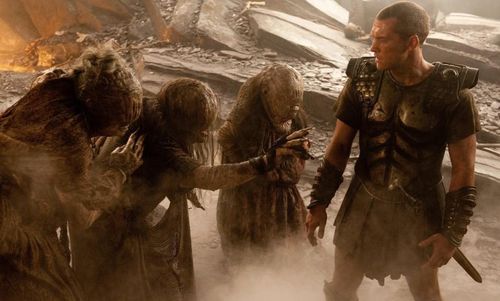
Film Friday: Clash(es) of the Titans (1981) & (2010)

The 1981 version of Clash of the Titans really was an inspired movie. Clash 2010 wasn’t. In fact, it stank. And what better way to explain why it stank than to compare the two?

** spoiler alert **

Clash 2010 has better production values. Its costumes are more realistic. It has better scenery and thus feels more real than Clash 1981. The supporting actors are better too. Mads Mikkelsen is excellent as Draco, as are Liam Neeson and Ralph Fiennes as Zeus and Hades. After that, however, things gets sketchy. . .

Surprisingly, the effects in Clash 1981 are better, not in the technical sense, but in the sense of enjoyability. The effects in Clash 1981, done by legendary special effects man Ray Harryhausen, feel more lively and maintain the spirit of mythology which surrounds Ancient Greece. You know these characters when you see them in Clash 1981. By comparison, the effects in Clash 2010 are dreary and nondescript -- you’ve seen them in a dozen other recent films and wouldn’t spot them as Ancient Greek creatures. If you were asked to draw or describe the creatures in each movie, you could easily describe the creatures in Clash 1981, but those in Clash 2010 would end up just as blurs. And that makes a huge difference in how memorable these films are.

The lead actors in Clash 1981 are better as well. Harry Hamlin portrayed the heroic young Perseus perfectly. He had enthusiasm, brashness, and was clearly captivated by Andromeda, whose life he must save. He also let the character be just naive enough that we could discover the world with him, which pulls the audience in, without making him stupid. Judi Bowker similarly gave Andromeda a regal dignity and a flirtiness in her interactions with Perseus, which made her worth saving.

By comparison, the lead actors in Clash 2010 are crap. Sam Worthington gives his usual lifeless effort. He’s dull and dumb and stiffer than a board. He whines. Even worse, his character is impossible to like. He lacks initiative. He’s not clever. He doesn’t want to be the hero, as he keeps telling us, yet for some reason he just keeps moving right along with the plot. It’s like he just had nothing better to do. He also cares so little about Princess Andromeda that you wonder why he’s bothering to save her.

Andromeda is just as bad. She’s played by Alexa Davalos, who you might remember as Olivia Wilde or Emily Blunt or Megan Fox. She’s as lifeless as Worthington and basically just mopes and occupies space. We are given no reason to like her other than her being smarter than the hillbillies around her. Frankly, by the time the mob gets her, it’s really hard to care. Heck, she doesn’t even seem to care.

But where Clash 2010 really falls apart, compared to Clash 1981, is in the substance. Clash 1981 may not have been authentic Greek mythology, but it gave you the sense that it was. The characters, the creatures and the gods all acted correctly according to what we know about them from mythology. Clash 2010 is too modern to make that claim. Consider the gods. Greek gods were flawed because they had (near)absolute power combined with the worst of human traits. They were petty, vengeful, jealous, vain, deceitful, etc. They were narcissists of the highest order, and Greek mythology crawls with their misdeeds.

Clash 1981 captured this as the story revolves around a series of characters who get caught up in the petty quarrels and sexual trysts of the gods. Indeed, the primary story involves vengeance on the people of Joppa for offending the vanity of the goddess Thetis. These gods lie and cheat and abuse their power to get their way, which is how Greek mythology paints their gods. By comparison, the gods in Clash 2010 are a reserved lot. They are mostly caring and largely passive until they are forced to act -- except Hades who has a grudge against Zeus. Indeed, they only punish the city of Argos because the people of Argos declared war on the gods first. In effect, Clash 2010 has Christianized the gods, and rather than being a gang of ultra-powerful but petty thugs, Zeus in Clash 2010 is more like the Christian God of the Old Testament and Hades is like Satan. In fact, Zeus is so caring that the thrust of his story is Zeus trying to reconcile with his bastard son Perseus. Huh?

Along similar lines, the people of Argos don’t make any sense either, and this leads to a larger point. They have declared war against the gods, but for no apparent purpose. There is no indication what they hope to achieve, nor is it ever clear if this is a philosophical issue or something else? In other words, is this a declaration of atheism or do they just want to be rid of these gods? At times the story seems to be crawling with atheistic messages, but it always undercuts itself. For example, Perseus whines repeatedly that he has no need of the gods and he’s his own man. Only. . . he’s not. In almost every scene he’s helped by the gods while the writer pretends Perseus “does it himself.” He gets magical gifts. Zeus gives him tokens he will need. The gods send an advisor/guardian angel who tells him everything he needs to know. His strength and fighting skill come from the gods. He is even told that it is his destiny to free man from the gods? Think about the ludicrousness of that statement – the mythical force of destiny has chosen Perseus to free man from mythical forces? So is this film about atheism? Who knows? The film sure doesn’t.

The problem here is that the writers never bothered to fundamentally understand the nature of the characters. Are these gods or just foreign tyrants? Are the people of Argos declaring atheism or just swapping gods? And if they’re just swapping gods, what are they seeking instead? There’s a big underwear-Gnome-class hole there. Is Perseus a hero or not? Everyone treats him like a hero, yet he achieves nothing on his own -- he is always relying on others to win his fights or tell him the way to go. Etc.

Even the mythical creatures don’t make sense in Clash 2010. Pegasus, the winged-horse which cannot be tamed, simply comes to Perseus like any other horse -- he doesn’t have to find it or tame it (nor does he really need it). Calibos, the man Zeus twisted into a wretch for killing all the winged-horses except Pegasus and who pines for Andromeda, is now little more than an animal who attacks Perseus because Hades tells him to. The deceptive and cryptic witches are neither deceptive nor cryptic. And Medusa is little more than a tall snake.

Moreover, the writers keep undercutting the story. Perseus needs to save Andromeda because. . . well? He doesn’t live in Argos and he can leave any time. He doesn’t love Andromeda either -- halfway through the film it is imply he kind of digs the girl the gods sent him (Io). So why is he trying to save Andromeda? And she doesn’t really want to be saved either. So why should we care? In Clash 1981, Perseus loved Andromeda and she really seemed to want to live. That made sense. In Clash 2010, that’s gone.

They keep undercutting the tension too. For example, Clash 2010 tells us Perseus is a poor “everyman” -- a fisherman who’s never even held a sword (what Greek male never held a sword?). But then we’re told he’s the bastard son of Zeus, and he has special powers. And when he picks up a sword for the first time, he proves to be the ultimate swordsman. . . so much for our everyman. Think about what this does to the rest of the film. With Hamlin’s Perseus, you never knew how he would do in any fight. He got gifts from the gods to help him, but he had no extraordinary skills with which to use them. Perseus 2010 does, thus with Worthington, there’s no suspense. He will win every sword fight. Yawn. Similarly, in Clash 1981, Perseus needed to figure out the puzzles himself. In Clash 2010, Perseus is given advisors directly from the gods to make sure he figures it out. Yawn. We’re even told it’s Perseus’s destiny to win the movie. Yawn.

Clash 2010 is the perfect example of what happens when you take all the “things” out of a movie but none of the substance, and then remake the movie using those things. What you get is a truly forgettable, generic film.

[+] Read More...

Thursday, March 1, 2012

TV Review: Game of Thrones (revised) (2011-????)

This article posted at Big Hollywood (LINK).

With Season Two of HBO’s Game of Thrones starting on April 1st, this is a good time to review the series to give you a chance to catch up. You may also recall that I reviewed this before and didn’t like how it had started. Well, I’ve changed my mind. To bottom line it, Thrones is a gripping series, but you have to give it time to grow on you.

Game of Thrones is based on the book of the same name by George R.R. Martin. This is part of his epic fantasy series called “A Song of Ice and Fire.” First published in 1996, Thrones won lots of awards in 1997 and has since been turned into several games. But it wasn’t until January 2011, after HBO announced the series that the book finally hit the New York Times bestseller list.

The series stars Sean Bean (Ronin, LOTR) as Lord Eddard “Ned” Stark, and it revolves around the political intrigue which surrounds his family and several rival families, most notably the Lannister family. One of the producers has jokingly described the series as “The Sopranos in Middle Earth,” and in some ways that’s a good way to describe it. Indeed, the show involves murders, plots, betrayals and family rivalries. And like The Sopranos, the show is highly unpredictable. People you don’t expect will get killed. People you trust will betray their friends. And your opinion of the characters will change over time.

Nobody highlights this better than Tyrion Lannister (Peter Dinklage), the dwarf brother of Queen Cersei Lannister (Lena Headey from 300). Dinklage plays Tyrion as a vile, arrogant monster of a human being. He’s also a bit of a joke. But as the series progresses, Tyrion becomes much more sympathetic and, strangely, he earns your respect despite his evil behavior. In fact, Dinklage steals the show and Tyrion easily becomes the most compelling character.

The plot is Sopranos-like too. It is complex, nuanced, and there are a great many characters. This is why I cautioned you above that you need to give this show time. There are several major storylines and then a half dozen additional minor storylines, and it takes a couple episodes before the show develops a rhythm. Once it does however, the show does an excellent job of keeping all these different stories moving and gives you lots to care about.

I would not, however, compare Thrones to Middle Earth for several reasons. For one thing, the sets, while excellent, are not fantasy sets. You will not see incredible castles and stunning landscapes. Instead, you get a more “historically accurate” feel from this show, i.e. lots of wood construction, furs, torches, and a “brooding ‘til ye can’t brood nay more” atmosphere. There are fantasy elements, but up to this point they have been rather few and far between. In the east, where the last survivors of the albino Targaryen family have fled, there is the prospect of a dragon. The Targaryens are seeking the help of the Dothraki, a group of barbarians led by Khal Drogo (Jason Momoa of Stargate Atlantis and Conan), and have in their possession dragon eggs. In the north, you have an incredibly large wall, guarded by the Night’s Watch, who are tasked with keeping supernatural creatures out of the realm. These creatures apparently thrive in winter, and winter in this world can last for an indeterminate number of years and is extraordinarily cold.

I also wouldn’t compare this to The Lord of the Rings because Thrones is cruder. For one thing, the dialog in Thrones has a more modern cadence to it than LOTR. Also, there is a lot of swearing in Thrones. I’m not averse to swearing by any means, but it feels anachronistic and unneeded here, and the show could have been stronger without it. The same is true of the sex. There is a good deal of sex in Thrones, and while I have no problem with sex on film or television, it feels gratuitous here as few of these scenes add anything to the plot and they go on far too long. It feels at times like the writer/director wasn’t sure the audience would entirely buy into the story and wanted to give the audience something else to keep them tuning in. And that’s too bad because I think the time could have been better spent dealing with the complex plot.

So, to sum it all up. The sex and swearing may turn some people off. The lack of fantasy elements so far may turn others off. The difficulty in getting into the show may also stop some people. BUT.... I recommend looking past all of that. This is a solid show with fascinating characters. It builds suspense very well. It will surprise you repeatedly. And it holds a lot of promise that it will just keep getting better and better.

Finally, let me make one point. This show is truly innovative in a way. Up to now, most fantasy films have been of the “farm boy goes on quest” variety. This is one of the first to reject that formula and instead present a more complete fantasy world, where you delve into political and familial relationships. These aren’t cardboard characters playing pre-determined roles on a specific quest. These are complete people struggling to make the best of the world around them and overcome whatever challenges they face. This approach feels much more original, offers more to work with as a series, and I would venture to say, this is the future of fantasy.

[+] Read More...

Friday, June 3, 2011

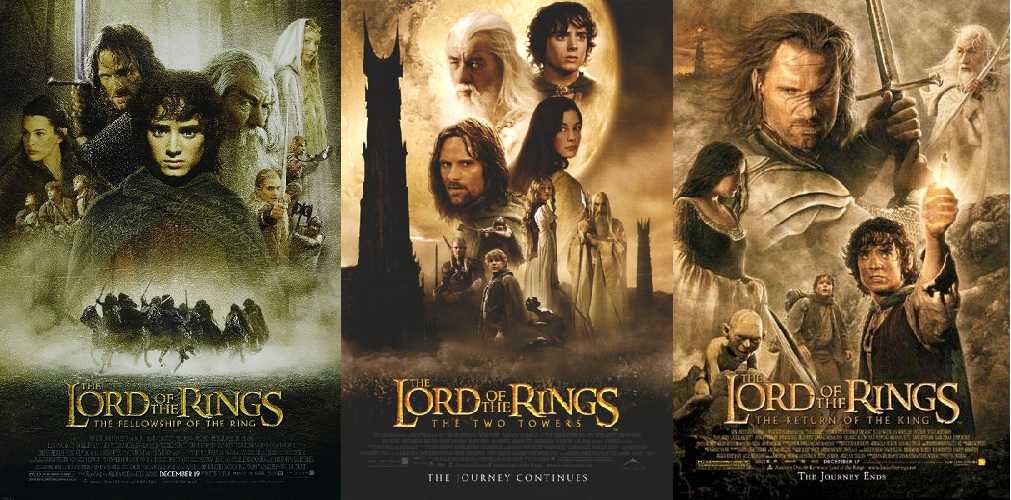
Film Friday: The Lord of the Rings (2001, 2002, 2003)

The Lord of the Rings trilogy is a top-notch fantasy action/ adventure and I absolutely and unequivocally recommend it. I own each film and have seen them many times. So if you love these films, let's stop there, mehl-on (that’s Elvish for “friend”). But if you want to see what’s wrong with these lifeless, shallow films and why they never came anywhere near their potential, then read on.

** spoiler alert **

Let me start by saying my criticism IS NOT that the films aren’t identical to the books. The Lord of the Rings trilogy are my favorite books, but I understand that books need changes to become effective films. My criticism IS that Peter Jackson made too many of the wrong kinds of changes, and thereby turned a nuanced, meaningful story with characters we care about deeply into an emotionless plot-driven film that's hard to care about.

Characters Lost: The first clue that something was going wrong with the characters occurred even before the film was released. One of the actresses gave an interview in which she repeated the marketing line that they were staying 100% faithful to the book, except where they absolutely had to make changes -- which is, of course, a lie. She then ominously said they had to change the characters because “the book doesn’t really have a lot of characterization.” This was a sign Jackson didn't understand the books and was about to strip the characters of their character to "Hollywood" them up. Consider these:
Frodo: In the book, Frodo resists leaving the shire. He’s not mentally or emotionally strong and he’s certainly not ready for an adventure, nor is he particularly mature. This makes his journey all the more impressive, as he must grow into the role thrust upon him. This is also why his decision to leave the group after Gandalf’s death is such a strong moment. He realizes he is endangering his friends and he chooses to leave them to save them. This is THE moment Frodo finally accepts his responsibilities, but we’re not sure he’s up the task.

Jackson tosses this away and turns Frodo into the modern fake-reluctant hero. While Frodo professes not to want to the responsibility, he is shown to be mature, competent and ready for the challenge, and he volunteers easily. Thus, there is no moment where Frodo grows up. There is never any doubt he would continue the journey with the ring after Rivendell. There is almost no motive for him leaving the group after Gandalf’s death, except that Boromir made him think his friends were becoming dangerous to him. Even the Nazgûl chasing him don’t seem all that dangerous because the film leads us to believe that he’s a competent adventurer ready to meet the challenge.

These are dramatic changes that rob the character of growth, the story of uncertainty, and the scenes of emotion. One of the key points in the book is that the least likely people can play vital roles in saving mankind. This is lost in the film because Frodo is set apart from the very beginning as a special character who is up to the task and only needs to be shown the direction to march. This cheapens his victories and lessens the drama of his choices.

Gimli/Legolas: Friendship Devalued: What Jackson does to Gimli is an atrocity. Book Gimli is a headstrong, excellent warrior who butts heads with the other companions. Moreover, as a Dwarf, Gimli dislikes and distrusts Elves, because of conflicts between the two races that go way back. This matters because it establishes the relationship between Gimli and Legolas, and sets up the group dynamic. Indeed, the ring companions don’t trust each other. They all have different motives and ancient grievances and this makes it hard for them to work together. But as they prove themselves to each other, they slowly earn each others’ trust and respect. Nothing shows this change more than the growing friendship between Gimli and Legolas, the most unlikely friendship in the group -- they don’t actually become friends in the book until Gimli greets Galadriel kindly, something he doesn't do in the film. Jackson throws this away and makes Gimli into pure comic relief. He also makes Gimli and Legolas into almost-instant friends.


Spot the dwarf. (click to enlarge)


This has several nasty consequences. First, it sucks out the very characterization Jackson claims is missing in the books because it denies Legolas and Gimli the chance to grow. Secondly, it eliminates an important dynamic within the group -- the need to come together. Third, it trivializes what they are doing. The world is facing its end as Sauron's rise is at hand. These people are fighting for their lives and the lives of all the other members of their various races. But Jackson’s decision to turn Gimli into comic relief turns this whole thing into a joke. Indeed, Jackson even has them engage in a counting game throughout the battle scenes, which makes their actions seem like a light-hearted videogame rather than the murderous struggle against desperate odds that it is.

Gandalf: When Gandalf dies in the book, it’s a shocking, weepy moment. In the film, not so much. Why? Because Jackson fails to connect us to his character. One reason is that his importance to the group isn’t obvious in the film because the group are already friends. Thus, nothing will change after his death. In fact, the group doesn’t even stop to mourn except that Boromir thinks the Hobbits need a break. The message: Gandalf is just an expendable member of the group. By comparison, in the book, Gandalf holds the group together and there's a real chance the group will fall apart after his death.

Also, the film never addresses what Gandalf means to the others personally. For all his skill, Aragorn is a lost soul. He literally roams the wilderness afraid to face his responsibilities, i.e. returning to Gondor and claiming the throne. Gandalf is the conscience trying to get him to face his responsibilities. Frodo has been manipulated into this quest by Gandalf with the assurance that Gandalf would always protect him. When he dies, Frodo must fend for himself and his will comes close to breaking. None of this makes it into the film. Aragorn is presented as a single-minded, determined hero, and his issue with reclaiming the throne is given short shrift in one quick scene with Liv Tyler. Frodo is the volunteer who is ready to take on the world. Because Gandalf’s importance to these people is lost, his death has little personal meaning. His death is no longer the death of a friend, a mentor, and the guiding hand that held them all together, he's just another member of the group. . . and one you don't even see that often.

Since he now means so little, his death means little to us. Since his death means so little, his resurrection means just as little. In fact, his resurrection isn’t even a resurrection in the film, it’s more of a reappearance. In the book, it’s clear Gandalf died and was reborn as Gandalf the White. In the film, he just sort of shows up again. Thus, the significance of his self-less act is cheapened, i.e. he goes from sacrificing himself for the group to just getting into a very hard fight.
CGI Stupidity: This is one of the most visually beautiful films of all time. They found incredible natural scenery in New Zealand, used fantastic costumes, and had stellar effects. Things like the city of Minas Tirith were flawless and amazing. But like children who can’t help themselves, they had to abuse the CGI:
Significance Diluted: Part of what makes the humans in LOTR The Book so heroic are the dire odds they face. The fact they stand their ground against these odds demonstrates their courage. Moreover, because of the small number of defenders, each death is tragic and costly. The film throws that away because Hollywood can’t stop itself from filling every millimeter of screen. Instead of the 2,000 defenders in Helms Deep mentioned in the book (including Jackson's gay hairdresser Elves) compared to Saruman’s 10,000 Orcs, or the 9,000 defenders at Gondor against Sauron’s 250,000 Orcs, the film creates a battle of millions on each side. Suddenly, the importance of any particular defender disappears. In other words, gone is an army of precious individuals and in its place the audience gets two giant CGI blobs slamming into each other. How can you feel any sense of loss for that? Not to mention, this makes some of the dialog pretty silly, like when King Théoden says, “so few came.” Really? There's no room for more on the field!

Not to mention this kills the realism. No battle in history, not Waterloo, Verdun or anything in World War II had anywhere near the number of troops shown on the field. This is probably more people than were alive in all of Medieval Europe. Thus, by trying too hard, they not only reduce the significance of each defender, but they create a battle that just doesn’t look real.

Moreover, even beyond the numbers, the CGI is downright stupid. Why does the movie begin with a line of Elves all the way to the horizon doing what appears to be a Dallas Cowboy Cheerleader linekick in perfect formation? Why is everyone wearing identical uniforms? And why are all the humans’ uniforms freshly laundered and their armor undented and shiny? Why are Orcs, an undisciplined army of thugs, standing in perfect Napoleonic squares? Why? Because everyone in Hollywood apparently suffers from Obsessive Compulsive Disorder combined with a uniform fetish. This is stupid and it sucks the realism right out of these battle scenes. Can I overlook it? Sure, just like I could overlook a cartoon rabbit defecating in the background of each scene, but that doesn’t excuse its inclusion in the film.

Realism Denied: Finally, even in up-close battles, the CGI people still go too far. Legolas in particular is subject to this. As he’s fighting the Orc Warg (wolf) riders in Rohan, he looks more like Rubberband Man than anything solid as he slides around the wolves and jumps from one to another to kill them off. Why are the war elephants at Pelennor Field 50 feet tall? It doesn’t make any sense or add anything. . . except that it lets the CGI people have Legolas swing from elephant to elephant like digital Tarzan, which they no doubt thought would be cool -- but just looks bizarrely unrealistic. These things detract from the realism the film otherwise works so hard to achieve. It’s literally like adding Roger Rabbit to Saving Private Ryan. And why include a fake-looking, comic-y “cave troll” in Moria in the middle of one of the most serious battles in the book? Because they couldn't stop themselves.
So let me finish with this point: my complaint is not that the movie is not the book (though I am offended they kept proclaiming they followed the book). My complaint is that the characters are lifeless and the story lacks any sort of emotion because every decision Jackson made reduced our emotional investment in the characters, reduced the reality of the film, and reduced the stakes for which they were fighting.

These things may not have interfered with your enjoyment, but you’ve got to admit that if Jackson had kept with what I say, this would have been a much stronger film.

[+] Read More...

Friday, March 4, 2011

Film Friday: Alice In Wonderland (2010)

I’m a fan of Tim Burton, but sadly he died right before making Corpse Bride. And rather than letting his memory rest in peace, the studio replaced him with a fake who’s been making films like Alice in Wonderland under Burton’s name. Alice is sloppy, unoriginal, and it kills the very spirit of what Burton was trying to capture. It’s studio-horrid.

** spoiler alert **

The Technicals

What can I say about this movie? Well, for starters, this movie is not for kids, even though Disney suggests it is. But feel free to disagree if you think your kids are ready to see eyes gouged out with needles, a moat floating with decapitated heads, and Alice drinking blood at the end. . . don’t worry, it’s purple, not red!

Visually, what Burton has done is pretty at times, but it’s all stolen. The Red Queen’s castle is Hogwarts with a different paint job. The White Queen’s castle is Rivendell from The Lord of the Rings. The way the animals were animated comes straight from the Narnia films. Some of the character actions (particularly the Dormouse) are straight from Labyrinth or Willow. And so on.

The writing is pathetic. There isn't a memorable moment or line in the film. The word choice is weak, the dialog is incomprehensible, and the plot is nonexistent. The story begins with a clichéd anachronism, as we’re presented with a lame leftist view of the British aristocracy as nose-picking, inbred fools. These people look like something from a Pride and Prejudice theme party, yet Alice acts like she’s from 1963, and this doesn't seem to bother anyone. For example, she's introduced right after burning her bra. . . er, refusing to wear her corset. She then roams around smugly and condescendingly insulting everyone. Fortunately for her, these characters are clichés and thus are too stupid to be able to fight back, so they just act shocked and cowed. She also skools the old businessman by telling him that she, a petulant, rebellious, stupid 19 year old girl who is prone to fantasies and unreliability should be given control over his firm's operations in China. Naturally, he agrees.

If I were to put a name to this “style” of storytelling, it would be "feminist revisionist period piece” or, more simply, “delusional feminist porno."

To try to seem clever during this opening, Burton and writer Linda Woolverton make several of the aristocrats mimic classic Alice in Wonderland characters, like the two nearly-twin girls who we are supposed to see as Tweedledum and Tweedledee, or the businessman we are to see as the White Rabbit. Of course, “clever” is a relative term as this trick has been done in virtually every other “child transported to fantasy world” story since The Wizard of Oz, and nothing original is done with it here.

From there, the story takes you nowhere. Alice falls down the hole, where she meets Johnny Depp, playing a schizophrenic cross between Michael Jackson and William Wallace of Braveheart. He looks like a methhead, and his character is ultimately pointless except as plot filler. Alice then learns that her destiny is to kill the Jabberwocky, and through a series of uninteresting plot points, she does. Ho hum. Along the way, she meets the Red Queen, who is bad, and she meets the White Queen, who seems to be doing a mix of pot and acid. There’s not much more to say about the plot.

Burton’s Real Failure

Alice’s Adventures in Wonderland (1865) has been loved by dozens of generations. What gives the story its staying power is the incredible world created by Lewis Carroll (real name Charles Lutwidge Dodgson). And what makes that world so incredible is that Carroll takes reality and turns it on its head by infusing the impossible with the illogical and making that reality. In other words, his world isn’t the real world only containing silly things, like The Hitchhiker’s Guide to the Galaxy, but it’s an entirely different world with a different set of rules. Thus, rather than being a mere story about strange events, Wonderland is a story about a unique place that tickles the imagination and inspires us to think about the possibilities of this new world.

Disney captured this spirit perfectly in its 1951 cartoon Alice in Wonderland, as Alice explores this world on our behalf and learns about its wonders. Tim Burton, based on his reputation, was expected to run with this concept and make the world even more fantastic or even more strange. He failed.

In the book and the Disney version, the world in which Alice finds herself is a reality. The characters within it accept its rules the same way we accept things like gravity and the way we know the sun to rise in the East. This is what creates the interesting tension, in that Alice finds herself in a world were everyone else knows what’s going on except her. And as she explores she finds that the impossible is not only possible, but common. Burton, however, tosses that structure away. What he presents instead is a world that is exactly like our own, and which plays by the exact same physical and logical rules as our own, only it contains strange looking characters with some odd traits.

That’s a huge difference. In the original and Disney worlds, we are pulled in as we learn the new rules and we love this world because anything is possible. In Burton’s Alice, by comparison, we get nothing of the sort. We already know the rules by which they live, and the only thing left to marvel at are the strangely dressed characters and their few abnormal traits. The difference between these two is like the difference between finding yourself at a tea party in a world with no physical laws versus finding yourself drinking tea at Michael Jackson's house.

Moreover, this gives the actors little to work with, and it shows. In most of Burton’s prior films, the actors could use the new realities of the worlds in which their characters live to find something to inject into the characters to make them interestingly bizarre, yet within the realm of normal for their worlds. Thus, the Joker’s psychopathic showmanship in Batman fit perfectly in his Gotham, though it would fail miserably in our world. Edward Scissorhands’ strange mechanical nature, Ichabod Crane’s terror at discovering a world of magic in Sleepy Hollow, and Pumpkin Jack’s inability to do joy instead of terror in Nightmare Before Christmas all infused these characters with drama, tension and depth. We understood who they were from how they fit in their worlds.

In Alice, there is nothing fantastic about the characters except that they are physically misshapen or strangely dressed. So the actors resorted to trying to seem “fantastic” by doing things like lisping their lines (Carter, Depp) or waving their arms around like idiots (Hathaway) or slinking about (Crispin Glover). But these things just make the characters look uncomfortable and out of place in this world, they don’t give us any sense of who the people are, nor do they make us think they are in some strange world. Instead, it feels like Burton simply shot this at a mental home. Compare that with truly unique characters like Disney’s Mad Hatter or the Caterpillar, who were fixtures of a different reality.

It really is sad. The studio took a guy with tremendous imagination and asked him to dream big, and what he came up with was a formulaic studio film using strangely-dressed characters all pretending to be crazy. Why even bother?

[+] Read More...